


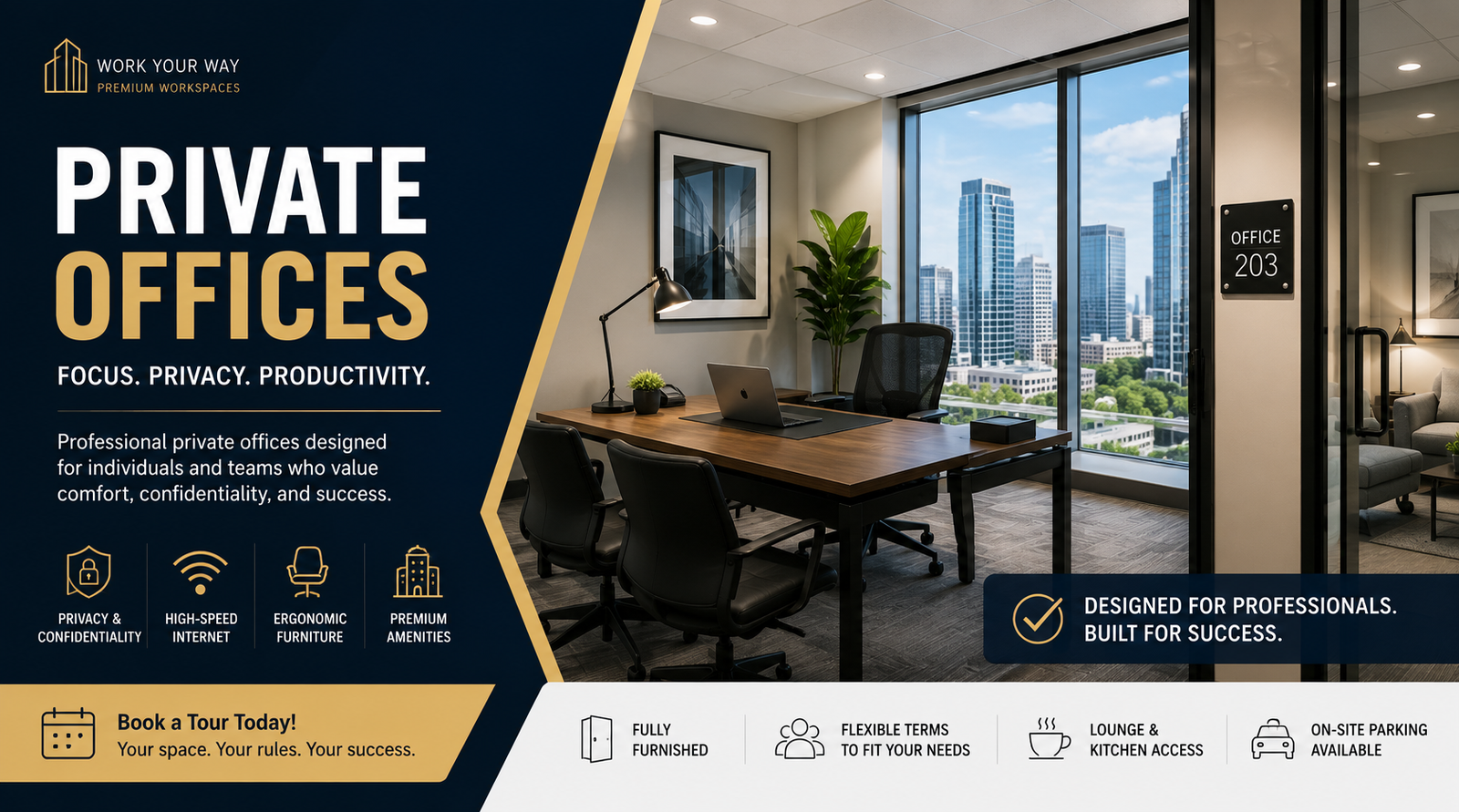
The way businesses use office spaces has changed dramatically. Companies no longer want to choose between expensive traditional leases and noisy shared workspaces. Many professionals now need a workspace that provides privacy, flexibility, and a professional environment without unnecessary commitments. This is where private offices have become a popular solution.
A private office gives individuals, startups, and established businesses a dedicated workspace designed for focus, productivity, and professionalism. Unlike open coworking desks, private office provide a secure environment where teams can collaborate, hold confidential meetings, and create a stronger business presence.
Whether you are searching for private offices near me, exploring private offices for rent near me, or comparing flexible workspace options for your company, understanding the benefits and features of private office can help you make the right decision.
This guide explains what private office are, their advantages, different types, costs, and how they compare with other workspace solutions.
What Is a Private Office?
A private office is a dedicated workspace reserved for an individual, team, or company within a professional office building or flexible workspace facility. Unlike coworking spaces where multiple people share an open environment, private office provide a separate enclosed area that offers greater privacy and control.
private office are commonly used by:
- Small businesses
- Startups
- Remote teams
- Consultants
- Freelancers
- Growing companies
- Enterprises needing satellite locations
Many modern private office providers offer fully equipped spaces that include furniture, internet access, meeting rooms, reception services, and other business amenities.
For businesses that want a professional workspace without managing utilities, maintenance, and long-term leases, private office provide a convenient alternative.
Types of Private Offices Available
private office come in different formats depending on business requirements, team size, and budget.
Individual Private Offices
Individual private office are ideal for freelancers, consultants, and professionals who need a quiet place to work.
These offices provide:
- Personal workspace
- Better concentration
- Professional surroundings
- Privacy for calls and meetings
For example, a financial advisor who regularly discusses sensitive client information may benefit from having a private office instead of working from a coffee shop or shared desk.
Team Private Offices
Team private offices are designed for small and medium-sized groups. They allow employees to work together while maintaining a dedicated environment.
They are suitable for:
- Startup teams
- Marketing agencies
- Technology companies
- Remote teams needing occasional collaboration space
A growing company can rent a private office and expand its workspace as the team grows without moving into a large traditional office.
Executive Private Offices
Executive private offices focus on premium workspace experiences. They are often located in prestigious business districts and are designed for professionals who frequently meet clients.
Common features include:
- High-end office furniture
- Conference room access
- Reception services
- Professional business addresses
Serviced Private Offices
Serviced private offices are fully managed workspaces where most operational responsibilities are handled by the provider.
They often include:
- Furniture
- Internet
- Cleaning services
- Security
- Office support
- Meeting facilities
This makes them attractive for companies that want a ready-to-use office solution.
Benefits of Renting a Private Office
Private offices offer several advantages compared with traditional offices and shared workspaces.
Improved Productivity and Focus
One of the biggest benefits of private offices is improved concentration. Open workplaces can create distractions through conversations, phone calls, and constant movement.
A private office creates a controlled environment where employees can focus on important tasks.
For example, a software developer working on complex projects may complete tasks more efficiently in a quiet private workspace compared with a crowded shared environment.
Better Privacy and Security
Privacy is essential for many industries. Businesses handling confidential information need a secure place for discussions and documents.
Private offices are useful for:
- Lawyers
- Accountants
- Healthcare professionals
- Financial consultants
- Business advisors
A private office allows professionals to conduct private conversations without worrying about others overhearing sensitive information.
Professional Business Image
A professional workspace can influence how clients view a company.
Meeting clients in a dedicated office creates a stronger impression than meeting in informal locations.
Private offices help businesses establish:
- Credibility
- Trust
- Professional appearance
- Brand reputation
This is especially valuable for startups and small businesses trying to compete with larger companies.
Flexible Workspace Options
Traditional office leases often require long-term commitments and significant upfront costs. Private offices provide more flexibility.
Businesses can often choose:
- Short-term agreements
- Custom office sizes
- Scalable workspace options
This flexibility allows companies to adjust their workspace according to growth, budget, and changing business needs.
Access to Business Amenities
Many private offices include services that would otherwise require additional investment.
Common amenities include:
- High-speed internet
- Conference rooms
- Printing facilities
- Reception support
- Break areas
- Parking options
- Business mailing addresses
These features allow businesses to focus on operations instead of office management.
Private Office vs Coworking Space vs Traditional Office
Choosing the right workspace depends on your business goals. The following comparison explains the differences:
| Feature | Private Office | Coworking Space | Traditional Office |
| Privacy | High | Low to Medium | High |
| Flexibility | High | High | Low |
| Setup Requirements | Minimal | Minimal | High |
| Client Meetings | Excellent | Limited | Excellent |
| Cost Control | Medium | High | Low |
| Best For | Teams, professionals, businesses | Freelancers and remote workers | Established companies |
Private offices provide a balance between flexibility and professionalism. They offer more privacy than coworking spaces while avoiding many challenges associated with traditional office leases.
Who Should Consider a Private Office?
Private offices are suitable for many types of professionals and organizations.
Startups
Startups often need professional spaces without spending heavily on office infrastructure.
A private office allows startups to:
- Build credibility
- Host meetings
- Support teamwork
- Control expenses
Remote Teams
Many companies operate remotely but still need physical locations for collaboration.
Private offices provide a place where remote employees can:
- Meet periodically
- Work together
- Build company culture
Freelancers and Consultants
Independent professionals often need a workspace that separates work from home life.
A private office can provide a professional environment for:
- Client meetings
- Focused work
- Business networking
Growing Companies
Businesses experiencing growth can use private offices as flexible expansion solutions.
Instead of signing a large commercial lease, companies can increase office space as their workforce grows.
How Much Do Private Offices Cost?
The cost of private offices depends on several factors, including:
- Location
- Office size
- Number of employees
- Included services
- Building quality
- Contract duration
For example, a private office in a major business district may cost more than a similar workspace in a smaller city due to higher demand and premium facilities.
Companies searching for private offices for rent should consider the overall value instead of only looking at monthly price.
A slightly higher-cost office with reliable internet, meeting rooms, and professional support may provide better long-term value.
How to Choose the Right Private Office
Before selecting a private office, consider the following factors:
Determine Your Space Requirements
Think about:
- Number of employees
- Need for meeting rooms
- Future growth plans
- Workspace layout preferences
Check Included Amenities
Different providers offer different services. Always confirm whether the office includes:
- Internet
- Utilities
- Reception support
- Conference room access
- Maintenance
Consider Location
Location matters for employees, clients, and business image.
Many businesses search for terms like private offices near me because convenient locations improve accessibility and reduce commuting challenges.
For companies operating in America, there are many options for private offices in USA, including flexible workspace providers in major business cities.
Review Contract Flexibility
Look for workspace agreements that match your business situation.
A growing startup may prefer flexible monthly arrangements, while an established company may choose a longer agreement.
Examples of Businesses Using Private Offices
Technology Startup Example
A five-person technology company needs a professional location for team meetings but does not want the cost of a large office lease.
A private office provides:
- Dedicated workspace
- Meeting facilities
- Professional image
- Room for growth
Consulting Business Example
A consultant needs confidentiality when discussing client projects.
A private office provides a secure environment where sensitive conversations can take place comfortably.
Private Office Providers and Location Options
Many flexible workspace companies provide private office solutions across different regions.
Businesses researching providers may explore options such as Lucid Private Offices locations, which offer professional workspace solutions in various markets.
Professionals interested in workspace opportunities may also look into Lucid Private Offices careers if they want to join a flexible office environment provider.
For businesses specifically searching for regional options, terms such as Lucid Private Offices Dallas or Lucid private offices cumberland may help identify available workspace locations.
Common Mistakes When Choosing a Private Office
Choosing Only Based on Price
The cheapest option may not provide essential services such as reliable internet, meeting rooms, or professional support.
Ignoring Future Growth
Choose an office that can support your business as your team expands.
Not Reviewing Additional Costs
Always understand what is included and whether additional services require extra fees.
Conclusion
Private offices have become a practical workspace solution for businesses that need privacy, flexibility, and professionalism. They provide the benefits of a dedicated office while reducing many challenges associated with traditional leases.
Whether you are a freelancer, startup, growing company, or established organization, a private office can create a more productive and professional working environment.
By evaluating your space requirements, budget, location, and desired amenities, you can find a private office solution that supports your business goals.
FAQs About Private Offices
What is a private office?
A private office is a dedicated workspace reserved for an individual or company. It provides privacy, security, and a professional environment compared with shared workspaces.
Are private offices better than coworking spaces?
Private offices are better for businesses that need confidentiality, focus, and dedicated space. Coworking spaces may be better for freelancers who want lower costs and networking opportunities.
How much does it cost to rent a private office?
Private office costs vary based on location, size, amenities, and contract terms. Premium locations and additional services usually increase the price.
Who uses private offices?
Private offices are commonly used by startups, consultants, freelancers, remote teams, and established businesses that need professional workspace solutions.
Can small businesses rent private offices?
Yes. Many private offices are designed specifically for small businesses and provide flexible options without requiring large upfront investments.
What amenities are included in private offices?
Many private offices include internet, furniture, meeting rooms, reception services, security, and maintenance support.
Are private offices flexible?
Yes. Many providers offer flexible agreements that allow businesses to choose office sizes and terms based on their needs.
You May Also Read: gps tool tracker
