

Hiring doesn’t end when a candidate accepts a job offer. In fact, one of the most important stages of the employee journey begins immediately after the offer is signed. This stage is known as preboarding, and it plays a significant role in creating a positive first impression, improving employee engagement, and reducing the chances of new hires changing their minds before their first day.
If you’ve been wondering what is preboarding, the answer is simple: it is the period between a candidate accepting a job offer and officially starting work. During this time, employers prepare new hires for success by completing paperwork, sharing important information, introducing company culture, and ensuring everything is ready before Day One.
Understanding the pre boarding meaning in HR is becoming increasingly important as organizations compete for top talent. A well-planned What Is Preboarding process helps employees feel welcomed, informed, and excited about joining the company. It also enables HR teams and managers to complete administrative tasks early, making onboarding smoother and more productive.
In this guide, you’ll learn everything about What Is Preboarding, including its benefits, pre boarding requirements, the difference between pre boarding vs onboarding, best practices, and practical examples that HR professionals can implement immediately.
What Is Preboarding?
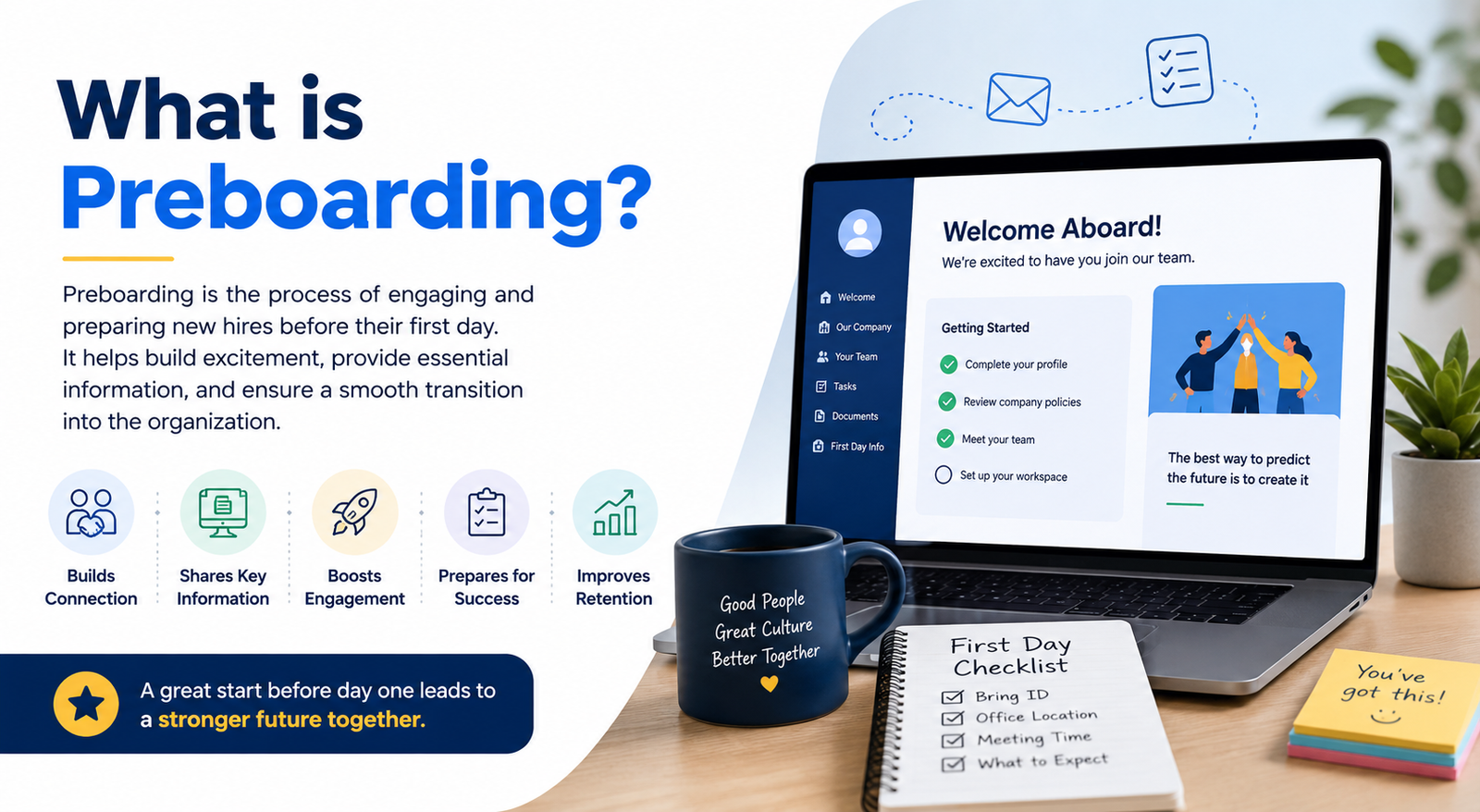
Preboarding is the process of engaging and preparing a new employee after they have accepted a job offer but before their official first working day. The primary goal is to ensure that new hires feel connected to the organization and have everything they need to start confidently.
The pre boarding meaning in HR extends beyond collecting documents or sending welcome emails. It focuses on building relationships, setting expectations, reducing uncertainty, and creating a seamless transition into the workplace.
A typical What Is Preboarding period may last anywhere from a few days to several weeks, depending on the organization’s hiring timeline. During this period, HR, hiring managers, and IT teams collaborate to prepare the employee for a successful first day.
For example, after accepting a software engineering role, a new employee may receive a personalized welcome email, complete digital paperwork, receive a company laptop before the start date, meet their future manager virtually, and gain access to learning materials. By the time they begin their pre boarding job, they already understand the company’s culture and expectations.
Why Preboarding Matters More Than Ever
Today’s employees expect more than a contract and a start date. They want communication, clarity, and reassurance throughout the hiring journey. A strong What Is Preboarding experience helps organizations deliver exactly that.
Without regular communication, candidates may feel disconnected or uncertain. In competitive industries, this silence can even lead to candidates accepting offers from other employers. Effective What Is Preboarding keeps engagement high while reinforcing the employee’s decision to join your organization.
What Is Preboarding also contributes to employer branding. A thoughtful experience demonstrates professionalism, organization, and a genuine commitment to employee success. New hires who feel valued before Day One are more likely to begin their roles with confidence and enthusiasm.
The rise of remote and hybrid work has made What Is Preboarding even more important. Since employees may not visit the office until their first day—or even later—digital communication, online documentation, and virtual introductions have become essential parts of the modern preboarding process.
Preboarding vs Onboarding
Many people use these terms interchangeably, but they represent different stages of the employee experience.
| Feature | Preboarding | Onboarding |
| Starts | After offer acceptance | On the employee’s first working day |
| Ends | Before Day One | After weeks or months of employment |
| Primary Goal | Prepare the employee | Integrate the employee into the organization |
| Main Focus | Communication, paperwork, readiness | Training, development, and productivity |
| Key Participants | HR, hiring manager, IT | HR, managers, team members |
The discussion around pre boarding vs onboarding is important because each stage serves a different purpose. What Is Preboarding builds anticipation and readiness, while onboarding develops long-term performance and integration. Organizations that invest in both create a stronger employee experience from the very beginning.
The Preboarding Process: Step by Step
An effective preboarding process combines communication, preparation, and employee engagement. Although every organization follows its own approach, the following steps are considered best practices.
Step 1: Send a Personalized Welcome
The first communication after offer acceptance should make the employee feel appreciated.
Instead of sending a generic confirmation, personalize the welcome message by congratulating the new hire, expressing excitement about their arrival, and outlining what they can expect before their first day.
A warm welcome immediately establishes trust and helps reduce first-day anxiety.
Step 2: Complete Administrative Requirements
One of the most important pre boarding requirements is completing all essential documentation before employment begins.
This may include:
- Employment contracts
- Tax forms
- Identity verification
- Payroll information
- Emergency contacts
- Confidentiality agreements
- Company policy acknowledgments
Handling these tasks early allows employees to focus on learning and meeting colleagues rather than completing paperwork on their first day.
Step 3: Prepare Equipment and Technology
Nothing creates a poor first impression like arriving on Day One without the necessary tools to work.
IT teams should ensure that every new employee receives:
- Laptop or desktop computer
- Email account
- Collaboration software access
- Security credentials
- VPN setup
- Required business applications
Remote employees should receive equipment several days before their official start date whenever possible.
Step 4: Introduce Company Culture
What Is Preboarding provides an excellent opportunity to familiarize employees with the organization’s mission, vision, and values.
Helpful resources may include:
- Welcome videos from leadership
- Company history
- Organizational structure
- Employee handbook
- Diversity and inclusion initiatives
- Internal communication channels
These materials help new hires understand how the company operates before they officially join the team.
Step 5: Introduce the Team
Meeting future colleagues before the first day helps employees feel comfortable and connected.
Managers can organize:
- Virtual introductions
- Team welcome emails
- Informal coffee chats
- Buddy or mentor assignments
- Department overview sessions
These early interactions encourage collaboration and reduce the uncertainty often experienced by new hires.
Step 6: Share the First-Day Plan
Employees should never wonder what will happen on their first day.
Provide a clear schedule that includes:
- Reporting time
- Office location or virtual meeting links
- Dress code
- Planned meetings
- Orientation sessions
- Lunch arrangements
- Required documents
Clear expectations help employees arrive prepared and confident.
Benefits of Preboarding
A well-designed What Is Preboarding program delivers advantages for everyone involved in the hiring process.
Benefits for Employees
Employees experience less uncertainty when they receive consistent communication before joining the organization.
Key benefits include:
- Reduced first-day anxiety
- Better understanding of company expectations
- Stronger connection with colleagues
- Increased confidence
- Faster adjustment to the workplace
New hires who feel welcomed are generally more motivated and engaged from the beginning of their employment.
Benefits for HR Teams
HR professionals gain valuable time by completing administrative work before the employee’s first day.
Benefits include:
- Faster document processing
- Improved compliance
- Fewer administrative delays
- Better organization
- More efficient onboarding
Instead of spending Day One collecting paperwork, HR teams can focus on creating a memorable employee experience.
Benefits for Managers
Managers benefit from having employees who arrive prepared and ready to contribute.
What Is Preboarding allows managers to:
- Plan workloads effectively
- Schedule early training
- Introduce team members in advance
- Set clear performance expectations
- Build stronger working relationships
This preparation often shortens the time it takes for new employees to become productive.
Benefits for Businesses
Organizations that invest in What Is Preboarding often experience long-term business advantages.
These include:
- Higher employee engagement
- Improved retention rates
- Better employer reputation
- Lower recruitment costs
- Increased productivity
- Stronger workplace culture
For global organizations such as United or Delta, people may search terms like What is preboarding United or What is pre boarding Delta because these companies often use structured pre-employment portals to complete forms, review policies, and prepare new hires before their official start date. While the exact process varies by employer, the underlying purpose remains the same: ensuring employees are ready, informed, and engaged before Day One.
Preboarding Checklist
The following checklist can help HR teams organize an effective What Is Preboarding experience.
| Task | HR | Hiring Manager | IT | Employee |
| Send welcome email | ✓ | |||
| Issue employment contract | ✓ | ✓ | ||
| Collect required documents | ✓ | ✓ | ||
| Complete payroll information | ✓ | ✓ | ||
| Prepare laptop and devices | ✓ | |||
| Create email and software accounts | ✓ | |||
| Share employee handbook | ✓ | |||
| Introduce team members | ✓ | |||
| Assign mentor or buddy | ✓ | |||
| Share first-day agenda | ✓ | ✓ | ||
| Answer employee questions | ✓ | ✓ | ✓ |
An organized checklist ensures that every pre boarding requirement is completed on time, creating a smooth transition from candidate to employee while laying the foundation for a successful onboarding experience.
Best Practices for an Effective Preboarding Program
A successful preboarding process is more than a checklist of administrative tasks. It should create excitement, build trust, and help new employees feel like part of the organization before their first day. The following best practices can help HR teams deliver a memorable experience.
Personalize Every Interaction
Avoid sending generic emails to every new hire. Personalize welcome messages with the employee’s name, role, team, and start date. A personalized experience demonstrates that the organization values each individual.
Maintain Regular Communication
One of the biggest reasons candidates lose interest before joining is a lack of communication. Keep in touch with new hires through scheduled emails, updates, or quick check-ins to answer questions and maintain enthusiasm.
Automate Routine Tasks
Modern HR software can automate repetitive activities such as document collection, electronic signatures, reminders, and account creation. Automation reduces manual work while ensuring every employee receives a consistent experience.
Introduce Company Culture Early
Share videos, employee stories, company values, and organizational goals before Day One. Giving employees insight into workplace culture helps them feel connected before they officially begin.
Assign a Buddy or Mentor
A workplace buddy can answer informal questions, introduce team members, and help new employees settle in more quickly. This simple step often improves confidence and engagement.
Avoid Information Overload
While it’s important to prepare employees, avoid sending too much information at once. Spread communication over several days so employees can absorb information comfortably.
Common Preboarding Mistakes to Avoid
Even organizations with good intentions can make mistakes that reduce the effectiveness of their What Is Preboarding program.
Poor Communication
Silence between offer acceptance and the start date can make candidates question their decision. Regular updates reassure employees that they made the right choice.
Waiting Until Day One
Many companies delay paperwork, IT setup, and introductions until the employee arrives. Completing these tasks earlier allows employees to focus on learning rather than administration.
Generic Welcome Messages
Employees appreciate personalized communication. Generic emails can make the experience feel impersonal and transactional.
Unprepared Equipment
Nothing creates a poor first impression faster than missing laptops, inactive email accounts, or unavailable software. Technology should be fully configured before the employee starts.
Lack of Manager Involvement
Managers play a key role in employee engagement. Early conversations help establish expectations and build stronger relationships.
Preboarding for Remote and Hybrid Employees
Remote work has transformed the way organizations welcome new employees. Since remote hires may never visit the office before starting, digital What Is Preboarding becomes even more important.
Successful remote preboarding includes:
- Shipping laptops and equipment in advance
- Creating email and software accounts
- Scheduling virtual team introductions
- Sharing online training resources
- Providing video welcome messages
- Explaining remote work policies
- Offering virtual office tours
For hybrid teams, employers should clearly explain office schedules, collaboration expectations, meeting locations, and communication tools before the employee’s first working day.
HR Software and Automation in Preboarding
Technology has made What Is Preboarding faster, more organized, and more engaging.
Many organizations now use HR platforms to automate:
- Employment documentation
- Electronic signatures
- Compliance forms
- Equipment requests
- Employee portals
- Learning resources
- Task reminders
- Progress tracking
Automation allows HR professionals to spend less time on paperwork and more time building relationships with new employees.
For example, instead of manually emailing multiple documents, an HR platform can provide a secure portal where employees complete all required forms, review policies, and monitor their progress before Day One.
How to Measure the Success of Your Preboarding Program
An effective What Is Preboarding strategy should be measured just like any other HR initiative. Tracking key performance indicators (KPIs) helps organizations identify what’s working and where improvements are needed.
| KPI | Why It Matters |
| Offer acceptance to start rate | Shows how many candidates actually join after accepting an offer |
| Preboarding task completion | Measures whether required activities are completed before Day One |
| First-day readiness | Indicates how prepared employees are when they begin work |
| Employee satisfaction | Reflects the quality of the preboarding experience |
| Early turnover rate | Measures how many employees leave within the first few months |
| Time-to-productivity | Evaluates how quickly new hires become productive |
Reviewing these metrics regularly allows HR teams to improve processes and deliver a better employee experience over time.
Real-World Example of an Effective Preboarding Journey
Imagine a growing technology company hiring a remote software developer.
Immediately after accepting the offer, the employee receives a personalized welcome email from HR and a congratulatory message from the hiring manager.
During the following week, the employee completes digital paperwork through an HR portal, receives a laptop at home, and gains access to collaboration tools.
A virtual coffee meeting introduces the employee to future teammates, while a welcome video from senior leadership explains the company’s mission and values.
A few days before starting, HR shares the first-day schedule, login instructions, and orientation agenda.
As a result, the employee begins work feeling informed, prepared, and excited instead of anxious and overwhelmed.
This example demonstrates how a structured preboarding process creates a positive experience before onboarding even begins.
Who Is Responsible for Preboarding?
Successful preboarding is a shared responsibility across multiple departments.
| Role | Primary Responsibilities |
| HR | Offer documentation, compliance, communication, payroll setup |
| Hiring Manager | Goal setting, introductions, first-day planning |
| IT Team | Devices, software access, security credentials |
| Team Members | Welcoming the employee and offering support |
| New Employee | Completing forms, reviewing resources, asking questions |
When every stakeholder understands their responsibilities, the transition from candidate to employee becomes much smoother.
Frequently Asked Questions
1. What is preboarding?
Preboarding is the period between accepting a job offer and the employee’s first working day. During this time, employers prepare new hires through communication, documentation, technology setup, and introductions.
2. What is the pre boarding meaning in HR?
The pre boarding meaning in HR refers to all activities that prepare a new employee before they officially join the organization. Its goal is to improve engagement, reduce uncertainty, and ensure a successful start.
3. What is the difference between pre boarding vs onboarding?
Pre boarding vs onboarding differs mainly in timing. What Is Preboarding happens before the employee’s first day, while onboarding begins on Day One and focuses on training, integration, and long-term development.
4. What are common pre boarding requirements?
Typical pre boarding requirements include signing employment contracts, completing tax and payroll forms, identity verification, setting up IT accounts, preparing equipment, and sharing company policies.
5. Is preboarding important for remote employees?
Yes. Remote employees often benefit even more from What Is Preboarding because it provides early communication, virtual introductions, equipment delivery, and clear expectations before work begins.
6. Is it preboarding or pre boarding?
Both preboarding or pre boarding are commonly used in online searches. However, “What Is Preboarding” (written as one word) is the preferred spelling in most HR publications and business communications.
Conclusion
Understanding what is preboarding is essential for organizations that want to create a positive employee experience from the very beginning. Rather than treating the period between offer acceptance and Day One as inactive time, businesses should use it to build relationships, complete administrative tasks, and prepare new hires for success.
What Is Preboarding A thoughtful preboarding program reduces uncertainty, strengthens employee engagement, improves retention, and helps new hires become productive more quickly. Whether you’re hiring for a small business or a global enterprise, investing in a structured What Is Preboarding strategy benefits employees, managers, HR teams, and the organization as a whole.
By combining personalized communication, clear expectations, technology readiness, and a well-organized onboarding plan, companies can transform the hiring experience into the foundation of long-term employee success.
You May Also Read: digital employee experience
