

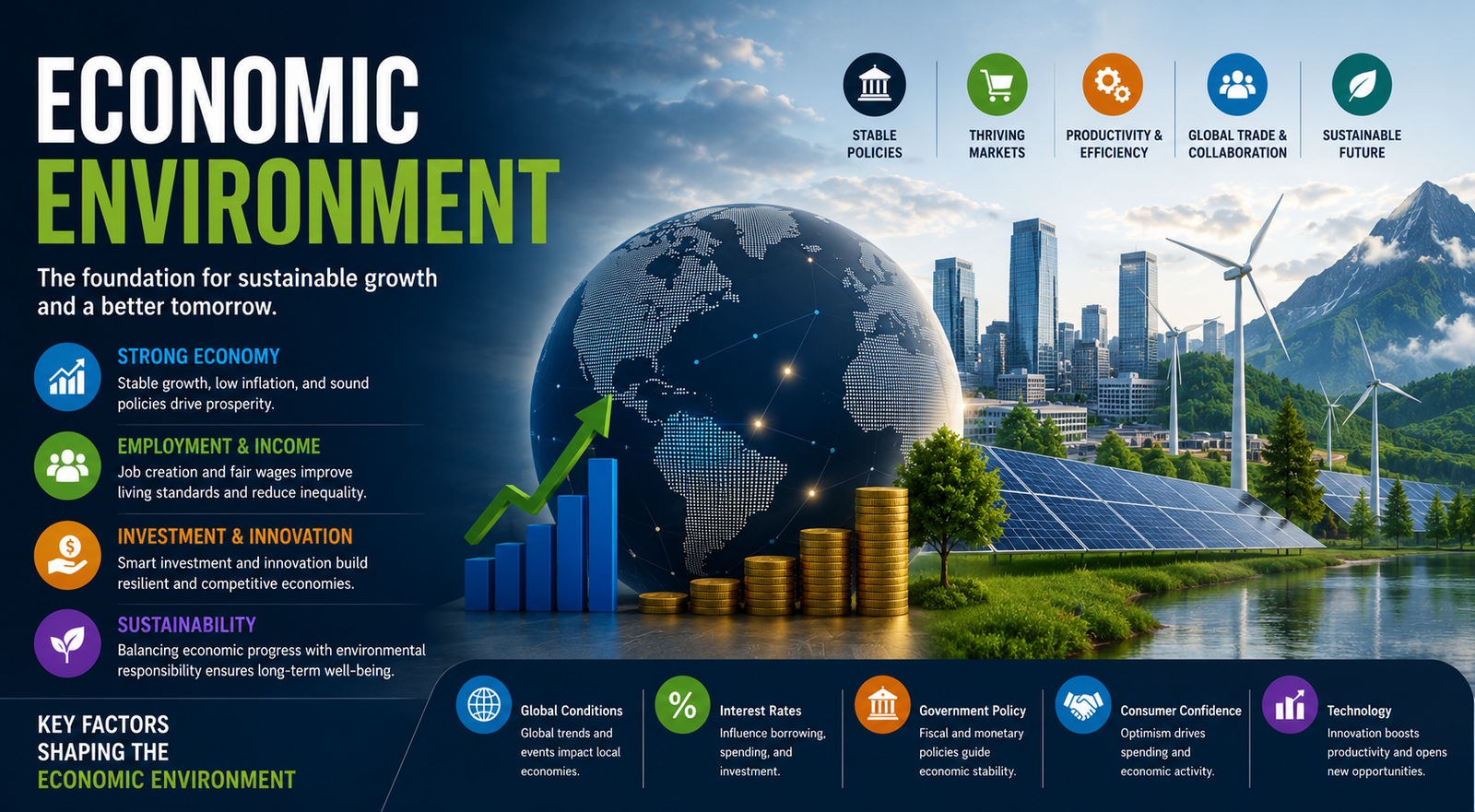
Every business operates within an economic environment that influences how it grows, competes, and makes decisions. Whether a company is a small local shop or a multinational corporation, economic conditions such as inflation, interest rates, consumer spending, employment levels, and market growth can directly affect its success.
Understanding the economic environment helps businesses predict challenges, identify opportunities, and create better strategies. For example, when inflation increases, companies may face higher production costs and changing customer buying habits. Similarly, during periods of economic growth, businesses may expand operations, hire more employees, and invest in innovation.
The economic environment is an essential part of the external business environment because companies cannot fully control these factors but must adapt to them. This article explains the meaning of economic environment, its factors, types, importance, and real-world examples to help you understand how it impacts businesses and decision-making.
What Is an Economic Environment?
An economic environment refers to all external economic conditions and factors that influence businesses, consumers, markets, and overall economic activity. These factors determine how companies operate, how customers spend money, and how markets develop.
In simple terms, the economic environment describes the financial conditions surrounding a business. It includes elements such as economic growth, inflation rates, income levels, interest rates, government policies, and consumer behaviour.
The economic environment of a company plays a major role in shaping business strategies. A company operating in a strong economy may experience increased demand, while a business operating during a recession may need to reduce costs and adjust its approach.
For students and professionals looking for an economic environment pdf or economic environment ppt, the concept generally focuses on understanding how economic forces influence business decisions and market performance.
Importance of Economic Environment in Business
The economic environment in business is important because it affects almost every aspect of company operations. Businesses analyze economic conditions before making decisions about pricing, investment, hiring, and expansion.
Some major reasons why economic environment matters include:
Helps in Business Planning
Companies study economic trends to create effective plans. For example, a business may increase production when consumer demand is growing or reduce expenses during economic uncertainty.
Influences Consumer Behaviour
Customer purchasing decisions are closely connected to economic conditions. When people have higher incomes and confidence in the economy, they are more likely to spend money. During economic downturns, consumers often focus on essential products and reduce unnecessary spending.
Affects Business Costs
Changes in inflation, wages, energy prices, and raw material costs directly affect company expenses. Businesses must adjust their pricing and operations to maintain profitability.
Supports Risk Management
Understanding economic trends helps businesses prepare for possible challenges, including recessions, rising costs, and changes in customer demand.
Economic Environment Factors
Economic environment factors include different conditions that influence business performance. These factors are usually divided into macroeconomic and microeconomic factors.
Macroeconomic Factors
Macroeconomic factors affect the entire economy rather than a single company or industry.
Inflation
Inflation refers to the increase in prices of goods and services over time. High inflation reduces consumer purchasing power and increases operating costs for businesses.
For example, a restaurant may experience higher expenses because food suppliers increase prices. The restaurant may need to adjust menu prices or find ways to reduce costs.
Interest Rates
Interest rates influence borrowing, investment, and consumer spending. When interest rates are high, businesses may avoid taking loans because borrowing becomes more expensive.
For example, a manufacturing company planning to purchase new equipment may delay its investment if loan costs increase.
Economic Growth and GDP
Gross Domestic Product (GDP) measures the overall economic performance of a country. Strong GDP growth usually indicates increased business opportunities and consumer spending.
When the economy grows, companies often experience higher demand and may expand their operations.
Employment Levels
Employment levels affect consumer income and purchasing power. Higher employment usually leads to stronger consumer spending, while unemployment can reduce demand for products and services.
Exchange Rates
Exchange rates influence businesses involved in international trade. Currency changes can affect import costs, export prices, and international profits.
For example, a company importing materials from another country may face higher costs if the local currency becomes weaker.
Government Policies and Taxes
Government decisions related to taxation, regulations, and economic policies can influence business operations. Changes in tax rates or business regulations may increase or decrease company expenses.
Microeconomic Factors
Microeconomic factors affect individual businesses, industries, and specific markets.
Customer Demand
Consumer preferences and buying habits influence business performance. Companies must understand what customers want and how their spending patterns change.
Competition
The level of competition in a market affects pricing, marketing strategies, and business growth opportunities.
Suppliers
Supplier availability and pricing can influence production costs. Businesses need reliable suppliers to maintain smooth operations.
Market Size
The size and growth potential of a market determine whether businesses have opportunities for expansion.
Comparison Between Microeconomic and Macroeconomic Environment
| Microeconomic Environment | Macroeconomic Environment |
| Focuses on individual businesses and markets | Focuses on the overall economy |
| Includes customer demand and competition | Includes inflation and GDP growth |
| Affects specific industries | Affects all businesses |
| Includes suppliers and market size | Includes interest rates and employment levels |
| Helps companies understand market behaviour | Helps companies understand economic trends |
Types of Economic
Different economies create different business conditions. The major types of Economic include:
Developed Economic
A developed Economic exists in countries with advanced infrastructure, stable financial systems, and high consumer purchasing power.
Businesses in these environments often focus on innovation, technology, and improving customer experience because markets are highly competitive.
Developing Economic
A developing Economic is found in countries experiencing economic growth, industrial development, and increasing consumer demand.
These markets often provide opportunities for businesses because new customers and industries are emerging.
Mixed Economic
A mixed Economic combines private business activities with government involvement. Many modern economies operate under this system.
Businesses can operate freely but must follow government regulations related to taxation, employment, and trade.
Economic Example in Real Business Situations
Understanding an Economic example makes the concept easier to understand.
Example 1: Retail Business During Inflation
A clothing retailer experiences increased manufacturing and transportation costs due to inflation. To maintain profits, the company may increase prices, negotiate better supplier agreements, or reduce unnecessary expenses.
Example 2: Technology Company During Economic Growth
When the economy improves, businesses may invest more in technology solutions. A software company may experience higher demand because companies have more resources for digital transformation.
Example 3: Housing Industry During High Interest Rates
When interest rates rise, borrowing becomes expensive. Many consumers may delay buying homes, reducing demand in the housing market.
Economic of a Company: How Businesses Adapt
The Economic of a company changes continuously. Successful businesses monitor economic conditions and adjust their strategies accordingly.
Companies can adapt by:
Monitoring Economic Trends
Businesses should track important indicators such as inflation, consumer spending, interest rates, and employment data.
Creating Flexible Pricing Strategies
Companies can adjust pricing based on production costs, customer demand, and market conditions.
Managing Costs Effectively
Reducing waste, improving efficiency, and finding alternative suppliers can help businesses handle economic challenges.
Diversifying Products and Markets
Businesses can reduce risks by offering different products or entering new markets.
How Businesses Analyze Economic
Companies often use different methods to study economic conditions and prepare strategies.
One common method is PESTLE analysis, where businesses examine:
- Political factors
- Economic factors
- Social factors
- Technological factors
- Legal factors
- Environmental factors
Economic analysis within PESTLE focuses on:
- Inflation trends
- Interest rates
- Consumer income
- Market growth
- Exchange rates
Businesses also monitor economic reports and industry trends to make informed decisions.
Why Understanding Economic Is Important for Future Growth
A strong understanding of the Economic allows businesses to remain competitive. Companies that monitor economic changes can identify opportunities faster and reduce potential risks.
For example, businesses that noticed the growth of online shopping early were able to invest in e-commerce platforms and reach more customers. Similarly, companies that prepare for economic challenges are more likely to survive difficult periods.
The Economic is not just about numbers and financial reports. It directly affects customers, employees, suppliers, and business strategies.
Conclusion
The Economic is one of the most important external factors affecting businesses and markets. From inflation and interest rates to consumer demand and economic growth, these conditions influence how companies operate and make decisions.
Businesses that understand Economic factors can prepare better strategies, manage risks, and take advantage of new opportunities. By continuously monitoring economic trends and adapting to changes, companies can improve their chances of long-term success.
Whether you are a student, entrepreneur, or business professional, understanding the Economic provides valuable knowledge for making smarter financial and strategic decisions.
Frequently Asked Questions (FAQs)
1. What is an Economic in simple terms?
An Economic refers to the external economic conditions that influence businesses, consumers, and markets. It includes factors such as inflation, interest rates, income levels, and economic growth.
2. What are the main Economic factors?
The main Economic factors include inflation, interest rates, GDP growth, employment levels, exchange rates, consumer demand, competition, and government policies.
3. Why is Economic important in business?
The Economic in business helps companies make better decisions about pricing, investment, expansion, hiring, and risk management.
4. What are the types of Economic ?
The main types of Economic are developed economic environment, developing economic environment, and mixed economic environment.
5. How does inflation affect businesses?
Inflation increases the cost of goods, services, and production. Businesses may need to adjust prices, reduce expenses, or improve efficiency to maintain profits.
6. What is an economic environment example?
An example of an economic environment is when rising interest rates reduce borrowing and slow business expansion because companies and consumers face higher loan costs.
7. What is the economic environment of a company?
The economic environment of a company includes all economic conditions that affect its operations, such as customer spending, market demand, costs, competition, and financial conditions.
You May Also Read: private offices
