


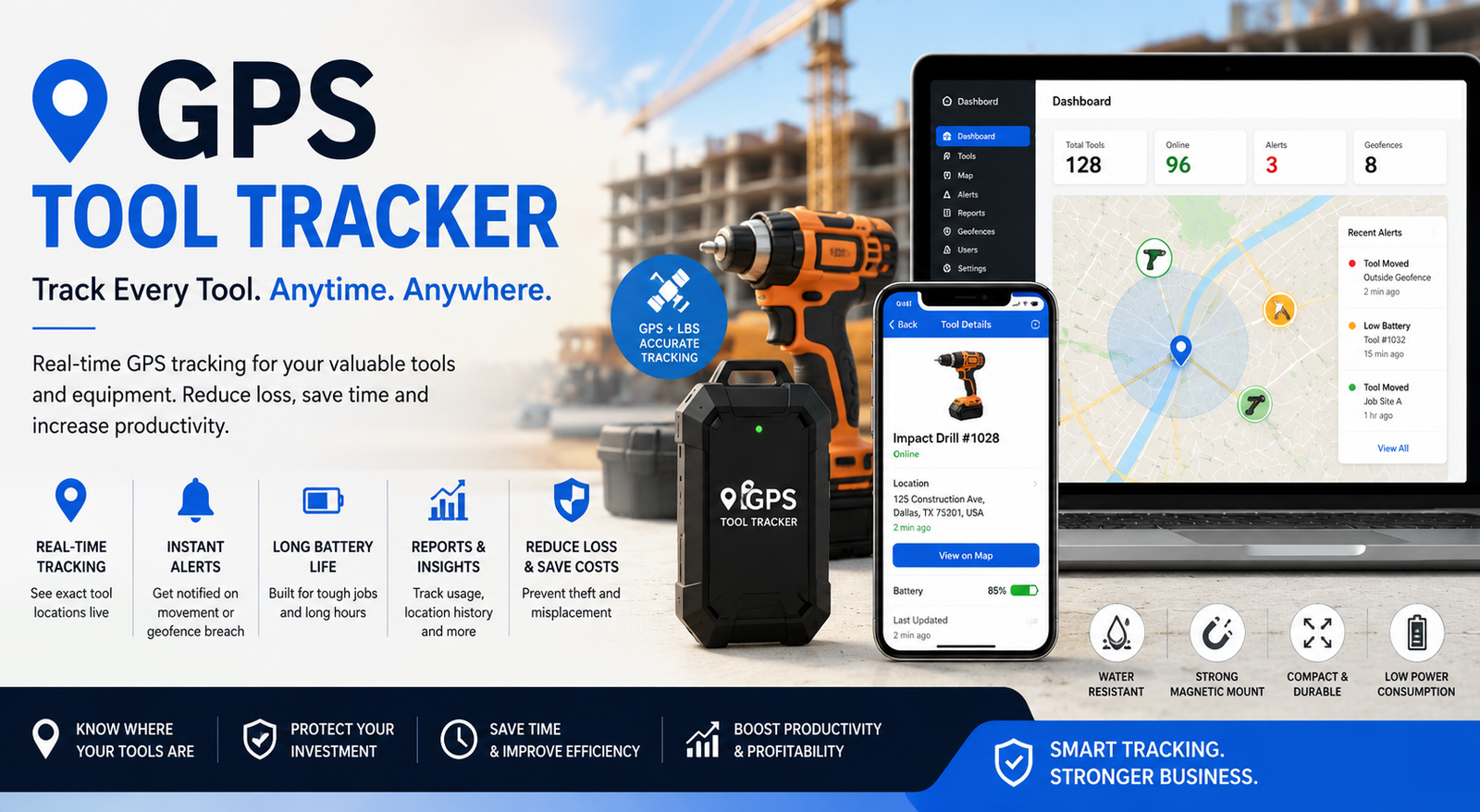
Tools and equipment are major investments for contractors, construction companies, mechanics, and service professionals. Unfortunately, expensive tools are also common targets for theft, especially on job sites, in vehicles, and at storage locations. Losing a toolbox, power tools, or specialised equipment can create unexpected replacement costs and project delays.
A GPS tool tracker provides a practical way to monitor valuable assets, improve security, and increase the chances of recovering stolen equipment. These devices use GPS technology to show the location of tools and equipment through a mobile app or online dashboard, helping businesses keep better control over their assets.
Whether you manage construction machinery, company vehicles, or portable equipment, a GPS tracking solution can provide better visibility and peace of mind. Modern trackers are available in different forms, including battery-powered devices, magnetic trackers, and a hardwire GPS tracker designed for permanent installations.
This guide explains how GPS tool trackers work, their benefits, important features, installation methods, and how to choose the right option for your needs.
What Is a GPS Tool Tracker?
A GPS tool tracker is a small tracking device designed to monitor the location of valuable tools, equipment, and assets. It uses GPS satellites and communication networks to send real-time location information to a smartphone application or web dashboard.
Unlike simple Bluetooth trackers that work only within a limited range, GPS trackers can provide location updates from almost anywhere with network coverage. This makes them ideal for protecting expensive equipment that may be moved between different job sites or locations.
A GPS tool tracker can be attached to:
- Power tools
- Toolboxes
- Construction equipment
- Trailers
- Machinery
- Company vehicles
- Rental equipment
Businesses often combine asset tracking with inventory management practices to reduce losses and improve operational efficiency.
How Does a GPS Tool Tracker Work?
GPS tracking technology works through a simple process:
1. Location Detection
The tracker receives signals from GPS satellites to determine its exact location. The device calculates its position using satellite data and built-in tracking technology.
2. Data Transmission
After collecting location information, the tracker sends data through cellular networks or other communication systems. Some advanced devices use multiple network connections for better coverage.
3. Monitoring Through an App
Users can view their equipment location through a tracking application or online dashboard. A GPS tool tracker blog app may provide features such as:
- Real-time location updates
- Movement alerts
- Location history
- Geofencing notifications
- Battery monitoring
For businesses managing multiple assets, these features make equipment tracking much easier.
Why Use a GPS Tool Tracker for Tools and Equipment?
A GPS tracker is not only about finding lost items. It helps businesses improve security, organization, and asset management.
Prevent Tool Theft
Construction tools and equipment can cost thousands of pounds, making theft a serious concern. A hidden GPS tracker allows owners to monitor movement and receive alerts if equipment leaves a specific area.
For example, a contractor can create a geofence around a construction site. If a toolbox moves outside the approved boundary after working hours, the owner receives an instant notification.
Improve Equipment Recovery
If tools are stolen, location information can help owners and authorities identify where the equipment is located. While a tracker cannot physically stop theft, it can significantly improve recovery opportunities.
Manage Multiple Assets Efficiently
Companies with many tools often struggle with knowing where equipment is stored or assigned. A GPS equipment tracker provides better visibility by showing where assets are located at any time.
This is especially useful for:
- Construction companies
- Equipment rental businesses
- Maintenance teams
- Delivery companies
Reduce Replacement Costs
Replacing stolen tools repeatedly can become expensive. Investing in tracking technology can help reduce unnecessary replacement expenses and improve asset protection.
Types of GPS Tool Trackers
Different tracking devices are designed for different applications. Choosing the right type depends on your equipment, usage, and tracking requirements.
Battery-Powered GPS Trackers
Battery-powered trackers are popular because they are easy to install and move between different tools.
They are suitable for:
- Portable equipment
- Toolboxes
- Machinery
- Temporary tracking needs
Benefits include:
- Simple installation
- No wiring required
- Flexible placement
The main consideration is battery life. Some devices require regular charging, while advanced models can operate for months or years.
Magnetic GPS Trackers
Magnetic trackers are designed for quick installation. They can be attached to metal surfaces such as equipment frames, trailers, and toolboxes.
They are commonly used by:
- Construction workers
- Fleet managers
- Equipment rental companies
Their hidden placement makes them useful for theft recovery situations.
Hardwire GPS Tracker
A hardwire GPS tracker connects directly to a vehicle or machine’s power source. These trackers are commonly installed in company vehicles, trucks, and heavy equipment.
Advantages include:
- Continuous power supply
- Reliable tracking
- Low maintenance
They are often used with fleet management solutions and fleet GPS tracking systems to monitor vehicles, drivers, and equipment.
Mini GPS Trackers
Mini trackers are designed for smaller valuable items. Their compact size allows them to fit into tight spaces.
Examples include:
- Cameras
- Specialized tools
- Electronic equipment
- Small machinery
GPS Tool Tracker Comparison
| Tracker Type | Best For | Installation | Battery/Power | Ideal User |
| Battery GPS Tracker | Portable tools | Easy | Rechargeable battery | Contractors |
| Magnetic GPS Tracker | Toolboxes and equipment | Very easy | Battery powered | Construction teams |
| Hardwire GPS Tracker | Vehicles and machinery | Professional installation | Continuous power | Businesses |
| Mini GPS Tracker | Small expensive items | Easy | Short to medium battery life | Individual users |
Important Features to Look For in a GPS Tool Tracker
Choosing the right tracker requires more than looking at price. The best device should match your specific tracking needs.
Real-Time Tracking
Real-time tracking allows users to see the current location of equipment instead of relying only on previous location data.
This feature is especially valuable for:
- Mobile work teams
- Construction equipment
- Company vehicles
Long Battery Life
Battery performance is an important factor for portable trackers. A device with poor battery life may stop working when you need it most.
Look for trackers offering:
- Extended standby time
- Low battery alerts
- Easy charging options
Geofencing Alerts
Geofencing allows users to create virtual boundaries. When equipment enters or leaves a defined area, the system sends an alert.
Example:
A company can set a warehouse boundary. If a tracked machine leaves the location unexpectedly, managers receive an alert.
Durable and Weather-Resistant Design
Tools and equipment often operate in challenging environments. A quality tracker should handle:
- Dust
- Rain
- Outdoor conditions
- Temperature changes
Mobile App and Dashboard Features
A good tracking platform should provide:
- Simple navigation
- Multiple device management
- Location history
- Reports
- Alerts
Many businesses compare platforms such as One Step GPS and other tracking solutions when choosing equipment monitoring services.
How to Install a GPS Tracker on Tools
Installation depends on the type of tracker you purchase.
Choose the Right Location
The tracker should be placed where it:
- Receives a strong signal
- Is protected from damage
- Is difficult for thieves to notice
Common locations include:
- Inside toolboxes
- Under equipment panels
- Inside storage compartments
Secure the Device
Depending on the tracker type, installation methods include:
- Magnetic mounting
- Adhesive mounting
- Screws
- Electrical connection
Test the Tracking System
After installation:
- Activate the device
- Connect it to the app
- Confirm location accuracy
- Test alerts
Regular testing ensures the tracker works properly when needed.
GPS Tool Tracker vs Bluetooth Tracker
Many people confuse GPS trackers with Bluetooth tracking devices. While both help locate items, they work differently.
| Feature | GPS Tracker | Bluetooth Tracker |
| Tracking Range | Worldwide coverage | Short distance |
| Theft Recovery | Better option | Limited |
| Internet Connection | Usually required | Usually phone dependent |
| Best Use | Equipment and vehicles | Small personal items |
For expensive tools and professional equipment, GPS tracking is usually the better choice because it provides wider coverage.
How Businesses Use GPS Equipment Trackers
Different industries benefit from GPS tracking technology.
Construction Companies
Construction businesses use trackers to monitor:
- Power tools
- Machinery
- Generators
- Trailers
Tracking helps reduce equipment loss and improves accountability between job sites.
Equipment Rental Companies
Rental companies use GPS equipment trackers to:
- Monitor rented assets
- Reduce theft risk
- Track returns
- Improve inventory control
Service Businesses
Companies such as electricians, plumbers, and HVAC professionals often carry expensive equipment in work vehicles.
A combination of tool tracking and GPS Tracker vehicle solutions helps protect both vehicles and onboard equipment.
Fleet and Vehicle Tracking Applications
Businesses managing multiple vehicles often use fleet GPS tracking systems to monitor:
- Vehicle locations
- Driver activity
- Routes
- Fuel usage
- Maintenance schedules
Professional vehicle tracking services combine GPS technology with reporting tools to help companies improve efficiency and security.
Are GPS Tool Trackers Worth Buying?
A GPS tool tracker is worth considering if you own expensive equipment, manage multiple assets, or frequently work in locations where theft is a concern.
It can be especially valuable for:
- Contractors with high-value tools
- Construction companies
- Rental businesses
- Companies managing vehicle equipment
The cost of a tracker is usually much lower than replacing stolen equipment. For many businesses, tracking technology becomes an important part of asset protection.
Common Mistakes When Buying a GPS Tool Tracker
Choosing Only Based on Price
The cheapest tracker may not provide reliable coverage, battery performance, or useful features.
Ignoring Subscription Costs
Some GPS devices require monthly service plans. Always consider the total ownership cost.
Buying the Wrong Tracker Type
A small portable tracker may not work well for heavy machinery, while a hardwired option may be unnecessary for simple tools.
Poor Installation
A badly placed tracker may have weak signals or become easy to remove.
Conclusion
A GPS tool tracker is a valuable solution for anyone looking to protect expensive tools, equipment, and business assets. Whether you are a contractor managing construction equipment or a company operating multiple vehicles, GPS tracking provides better visibility, improved security, and greater control.
The right tracker depends on your requirements, including battery life, installation method, tracking features, and budget. By choosing a reliable GPS solution and using proper installation practices, you can reduce equipment loss and protect your valuable investments.
Frequently Asked Questions
1. What is the best GPS tool tracker?
The best GPS tool tracker depends on your needs. Contractors may prefer magnetic or battery-powered trackers, while businesses managing vehicles and machinery may benefit from hardwired solutions.
2. Do GPS tool trackers prevent theft?
GPS trackers do not physically prevent theft, but they improve monitoring and increase the chances of recovering stolen equipment.
3. Do GPS trackers need WiFi?
Most GPS trackers do not require WiFi. Many use cellular networks to send location information to tracking apps.
4. How long does a GPS tool tracker battery last?
Battery life depends on the model, tracking frequency, and usage. Some portable trackers last weeks or months, while advanced asset trackers can last much longer.
5. Can I install a GPS tracker on my tools myself?
Many portable GPS trackers are designed for easy installation. Hardwired trackers usually require professional installation.
6. Are GPS trackers useful for company vehicles?
Yes. GPS trackers are widely used with vehicles to improve security, monitor routes, and manage business fleets.
You May Also Read: quickbooks time tracking
