


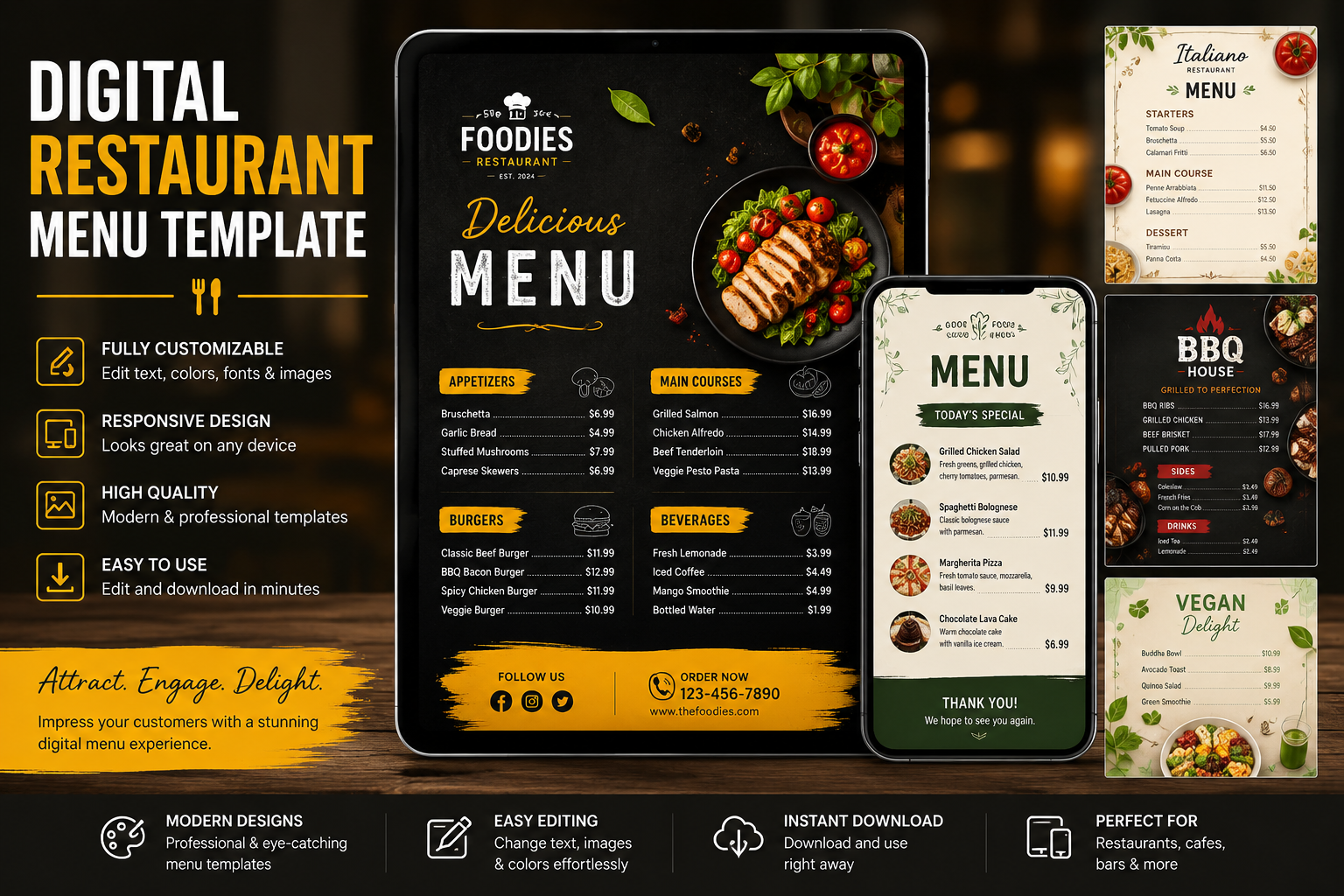
A well-designed digital restaurant menu template is no longer a luxury—it’s an essential tool for modern Digital Restaurant Menu Template. Whether you own a café, food truck, fine dining restaurant, bakery, or quick-service outlet, digital menus help you update items instantly, reduce printing costs, improve customer experience, and even increase sales through smarter menu design.
Today’s diners expect convenience. They want to scan a QR code, browse an attractive menu on their phone, and quickly decide what to order. A thoughtfully designed digital menu can influence purchasing decisions, highlight your most profitable dishes, and strengthen your Digital Restaurant Menu Template brand.
In this guide, you’ll learn everything you need to know about creating an effective digital restaurant menu template. You’ll discover design best practices, different template types, practical examples, expert tips, and the best tools for building menus that look professional and convert more customers.
What Is a Digital Restaurant Menu Template?
A digital restaurant menu template is a pre-designed menu layout that restaurants can customise with their branding, menu items, prices, and images before publishing online or displaying on digital screens. Instead of printing new menus every time prices or dishes change, businesses can update their digital menu within minutes.
Digital menu templates are commonly used with QR codes, tablets, self-order kiosks, websites, and online ordering platforms. They provide flexibility while maintaining a professional appearance that reflects your brand identity.
Unlike printed menus, digital templates can include interactive elements such as clickable categories, promotional banners, dietary labels, and high-quality food photography.
Digital Menus vs Traditional Printed Menus
| Feature | Traditional Menu | Digital Restaurant Menu |
| Updates | Requires reprinting | Instant edits |
| Cost | Ongoing printing expenses | Lower long-term cost |
| Customer Access | Physical menu only | Mobile, tablet, website, QR code |
| Promotions | Difficult to update | Easy to schedule and change |
| Sustainability | Uses paper | Environmentally friendly |
| Customer Experience | Static | Interactive and engaging |
For restaurants that frequently introduce seasonal specials or limited-time offers, digital menus save both time and money while ensuring customers always see the latest information.
Why Restaurants Are Switching to Digital Menu Templates
Restaurants across the world are adopting digital menus because they simplify daily operations while improving customer satisfaction.
One of the biggest advantages is flexibility. If an ingredient runs out or prices change, you can update your menu immediately without wasting printed materials. This is especially useful for restaurants with rotating menus or daily specials.
Digital menus also support contactless dining. Customers simply scan a QR code using their smartphone, reducing physical contact while providing a fast and convenient ordering experience.
Another important benefit is consistency. Multi-location restaurants can ensure every branch displays the same branding, pricing, and promotional offers. This creates a professional image and reduces operational errors.
Digital menus also allow restaurants to showcase high-quality food photography, making dishes more appealing and encouraging customers to spend more.
Benefits of Using a Digital Restaurant Menu Template
Faster Menu Updates
Restaurants frequently adjust pricing, seasonal ingredients, and promotional offers. With a digital menu template, these changes take only a few minutes instead of requiring expensive reprints.
For example, a seafood restaurant can instantly remove unavailable dishes during supply shortages without confusing customers or staff.
Better Customer Experience
Customers appreciate menus that are easy to navigate. Digital templates can organise dishes into logical categories, making it simple to browse appetisers, main courses, desserts, and beverages.
Large fonts, attractive images, and clear descriptions improve readability and help diners make faster decisions.
Increased Average Order Value
Strategically placing high-margin dishes near the top of each category encourages customers to notice them first.
Adding labels such as “Chef’s Recommendation,” “Best Seller,” or “Customer Favourite” can also influence purchasing decisions.
Restaurants can further increase revenue by displaying suggested pairings like drinks, desserts, or side dishes alongside main courses.
Improved Brand Identity
Every restaurant has its own personality. A modern café might prefer a clean minimalist layout, while an Italian restaurant may choose warm colours and rustic typography.
Digital templates allow businesses to customise fonts, colours, logos, and images while maintaining brand consistency across every customer touchpoint.
Better Mobile Experience
Since many customers access menus on smartphones, responsive digital templates automatically adjust to different screen sizes.
This creates a smoother browsing experience and reduces frustration caused by tiny text or poorly formatted layouts.
Types of Digital Restaurant Menu Templates
Choosing the right template depends on your restaurant’s service style and customer preferences.
QR Code Menu Template
QR menus are among the most popular options because customers can scan a code with their smartphone and immediately view the menu without downloading an app.
They’re perfect for cafés, restaurants, pubs, and casual dining establishments.
Online Ordering Menu Template
These templates integrate directly with ordering systems, allowing customers to place takeaway or delivery orders from the same interface.
Restaurants benefit from fewer phone calls and improved order accuracy.
Digital Display Menu
Fast-food restaurants often use digital screens behind the counter to showcase menus.
These templates allow businesses to highlight promotions, meal deals, and limited-time offers while updating prices instantly.
Tablet Menu Template
Fine dining restaurants increasingly use tablets to present interactive menus featuring detailed dish descriptions, wine pairings, and beautiful food photography.
Tablet menus create a premium dining experience while reducing paper waste.
Self-Service Kiosk Menu
Quick-service restaurants use kiosk templates to allow customers to browse, customise, and place orders independently.
These systems reduce waiting times while improving operational efficiency.
10 Digital Restaurant Menu Template Ideas
Every restaurant serves a different audience, so choosing the right design style is important.
Minimalist Café Template
Clean layouts with neutral colours and elegant typography create a relaxed atmosphere that suits coffee shops and brunch cafés.
Rustic Restaurant Template
Wood textures, handwritten fonts, and earthy colours work well for farm-to-table restaurants and traditional dining experiences.
Modern Fast Food Template
Bold colours, large pricing, and clear category sections help customers place orders quickly.
Pizza Restaurant Template
Feature popular combinations, meal deals, and topping options using colourful visuals and organised sections.
Bakery Template
Highlight fresh pastries, cakes, seasonal specials, and beverages with warm photography and soft pastel colours.
Fine Dining Template
Elegant typography, premium imagery, and generous spacing create a sophisticated appearance suitable for upscale restaurants.
Food Truck Template
Compact layouts designed for mobile viewing help customers quickly browse limited menus while standing in queues.
Sushi Restaurant Template
Minimal design combined with high-quality food photography showcases freshness and presentation.
Vegan Restaurant Template
Green accents, sustainability messaging, and dietary labels help communicate your brand values.
Family Restaurant Template
Bright colours, children’s menus, combo meals, and easy-to-read sections improve usability for families.
How to Design a High-Converting Digital Restaurant Menu
Creating an attractive menu is only part of the process. Successful digital menus also guide customers toward profitable purchasing decisions.
Keep Navigation Simple
Avoid overcrowding the page with too many menu categories.
Group similar dishes together using clear headings such as Starters, Main Courses, Desserts, Drinks, and Specials.
Simple navigation helps customers find what they’re looking for without feeling overwhelmed.
Use High-Quality Food Photography
Professional images create stronger emotional appeal than text alone.
Choose authentic photographs that accurately represent your dishes rather than generic stock images. Customers are more likely to order meals they can clearly visualise.
Highlight Best Sellers
Make popular dishes stand out using badges like:
- Best Seller
- Chef’s Choice
- New Arrival
- Limited Time
- Customer Favourite
These subtle visual cues naturally attract attention and can influence ordering decisions.
Apply Colour Psychology
Colours play an important role in restaurant marketing.
Warm colours such as red and orange stimulate appetite, while green communicates freshness and healthy ingredients. Dark colours paired with gold accents often create a luxurious feel suitable for premium dining.
Use Readable Typography
Fancy fonts may look attractive but can reduce readability.
Choose clean, professional fonts with enough spacing between menu items. Ensure text remains easy to read on both smartphones and tablets.
Optimise for Mobile Devices
Since most QR code menus are viewed on mobile phones, every template should load quickly and display correctly on smaller screens.
Buttons should be large enough to tap comfortably, and images should remain sharp without slowing page speed.
Use Strategic Menu Engineering
Place your highest-profit dishes where customers naturally look first, such as the top-right section of the screen or the beginning of each category.
This technique helps increase average order value without changing your pricing.
Best Tools to Create a Digital Restaurant Menu Template
The right design tool depends on your budget, technical skills, and business needs. Some platforms focus on simple drag-and-drop editing, while others include QR code generation, online ordering, and menu analytics.
| Tool | Best For | Free Version | Key Features |
| Canva | Beginners | Yes | Drag-and-drop templates, branding tools |
| Adobe Express | Professional designs | Yes | Premium graphics and custom layouts |
| Google Docs | Quick editing | Yes | Easy collaboration and sharing |
| Microsoft PowerPoint | Custom menu creation | Yes | Flexible layouts and offline editing |
| Figma | Designers and teams | Yes | Collaborative UI design and prototyping |
| FlipLink | Interactive menus | Yes | QR codes and digital flipbooks |
| FlipHTML5 | Digital catalogues | Yes | Interactive page-turning menus |
If you’re looking for a Free digital restaurant menu template blog, Canva and Google Docs are excellent starting points because they offer easy editing and a wide range of ready-made layouts.
Free vs Paid Digital Restaurant Menu Templates
Both free and paid templates have advantages. The right choice depends on the size of your restaurant and how often you update your menu.
| Feature | Free Templates | Paid Templates |
| Cost | Free | Subscription or one-time payment |
| Customisation | Basic | Extensive |
| Branding Options | Limited | Full branding support |
| Premium Graphics | Limited | Included |
| Team Collaboration | Basic | Advanced |
| Analytics | Rare | Often available |
| Technical Support | Limited | Dedicated support |
Small cafés and food trucks often succeed with free templates, while growing restaurant chains benefit from paid platforms that include advanced features such as analytics, integrations, and customer engagement tools.
Common Digital Menu Design Mistakes to Avoid
Even an attractive menu can underperform if basic design principles are ignored.
One common mistake is overcrowding the menu with too many items. Offering too many choices can overwhelm customers and make ordering more difficult. Focus on your most popular and profitable dishes.
Another issue is using low-quality food images. Blurry or poorly lit photographs reduce customer confidence and make meals less appealing. Invest in professional photography whenever possible.
Many restaurants also use fonts that are difficult to read on mobile devices. Decorative typography may suit a logo, but menu text should always prioritise clarity.
Failing to update prices or remove unavailable items can frustrate customers and create unnecessary confusion for staff. Regular menu maintenance is just as important as the initial design.
Finally, avoid inconsistent branding. Colours, logos, and typography should remain consistent across your website, social media, and digital menu to strengthen brand recognition.
Accessibility Best Practices for Digital Menus
An effective digital restaurant menu should be easy for everyone to use, including customers with visual or physical impairments.
Choose colour combinations with strong contrast so text remains readable in different lighting conditions. Avoid placing light text on bright backgrounds.
Use sufficiently large fonts that are comfortable to read on mobile screens. Clear headings and well-spaced sections also improve usability.
Include dietary labels for vegetarian, vegan, gluten-free, and allergen-sensitive dishes. This helps customers make informed choices quickly and builds trust in your restaurant.
Large touch-friendly buttons make navigation easier for mobile users, while descriptive image text can improve accessibility for customers using assistive technologies.
Designing with accessibility in mind creates a better experience for all diners, not just those with specific needs.
Menu Engineering Tips to Increase Sales
A digital menu should do more than display food—it should encourage profitable purchasing decisions.
Highlight your signature dishes using labels such as “Most Popular” or “Chef’s Special.” Customers naturally gravitate towards recommendations.
Position premium or high-margin items at the beginning of each category where they receive more attention.
Bundle complementary items such as drinks, desserts, or side dishes to increase average order value without appearing overly promotional.
Keep menu descriptions concise but engaging. Instead of simply listing ingredients, describe flavours and preparation methods to make dishes more appealing.
Review sales data regularly to identify which menu items perform best and update your layout based on customer behaviour.
Real-World Use Cases
Café
A neighbourhood café replaces printed menus with QR codes placed on each table. Seasonal drinks and breakfast specials can now be updated in minutes, reducing printing costs while keeping promotions current.
Food Truck
A food truck changes its digital menu throughout the day based on ingredient availability. Customers always see accurate options, reducing order cancellations and improving satisfaction.
Multi-Location Restaurant
A restaurant chain manages menus across several branches from a single dashboard. New promotions, pricing updates, and limited-time offers are published simultaneously, ensuring consistency across every location.
Digital Restaurant Menu Checklist
Before publishing your menu, make sure you can answer “yes” to the following:
- Mobile-friendly layout
- Easy-to-read fonts
- High-quality food images
- Accurate pricing
- Clear menu categories
- QR code tested successfully
- Dietary and allergen labels included
- Fast loading speed
- Consistent branding
- Contact details and ordering information visible
Using this checklist helps ensure your menu provides a professional and user-friendly experience.
Where to Find Downloadable Menu Resources
If you’re searching for a Digital restaurant menu template blog pdf, look for editable templates that can be exported as PDF files for digital displays or customer downloads.
Many restaurant owners also prefer a Digital restaurant menu template blog download that includes editable files for Canva, Google Docs, PowerPoint, or Microsoft Word. Choosing downloadable templates makes future updates much easier.
When comparing resources, focus on the Best digital restaurant menu template blog that offers practical design advice, editable examples, QR code guidance, and customisation tips rather than simply providing static layouts.
Conclusion
A well-crafted digital restaurant menu template is far more than a digital version of a printed menu. It is a powerful marketing and operational tool that helps restaurants improve customer experience, streamline updates, strengthen branding, and increase sales. Whether you choose a free template or invest in a premium solution, focus on mobile-friendly design, clear navigation, high-quality visuals, and strategic menu engineering. By regularly reviewing customer feedback and updating your menu to reflect seasonal offerings and changing preferences, you’ll create a dining experience that keeps customers engaged and encourages repeat visits.
Frequently Asked Questions
What is a digital restaurant menu template?
A digital restaurant menu template is a pre-designed layout that allows restaurants to display menu items online, through QR codes, tablets, websites, or digital screens.
Are digital restaurant menu templates free?
Yes. Many platforms provide free templates with basic editing features, while premium plans offer additional design options and business tools.
Can I edit my digital menu after publishing?
Absolutely. One of the biggest advantages of digital menus is the ability to update prices, descriptions, promotions, and availability instantly.
Which format is best for a digital menu?
PDF works well for simple menus, while responsive web-based menus provide the best experience on mobile devices and support interactive features.
Do QR code menus help restaurants?
Yes. QR code menus reduce printing costs, simplify updates, improve hygiene, and provide customers with fast access to your latest menu.
What should every digital menu include?
A well-designed menu should include clear categories, accurate pricing, appealing food descriptions, high-quality images, dietary information, and easy navigation.
You May Also Read: how to start a food service business
