

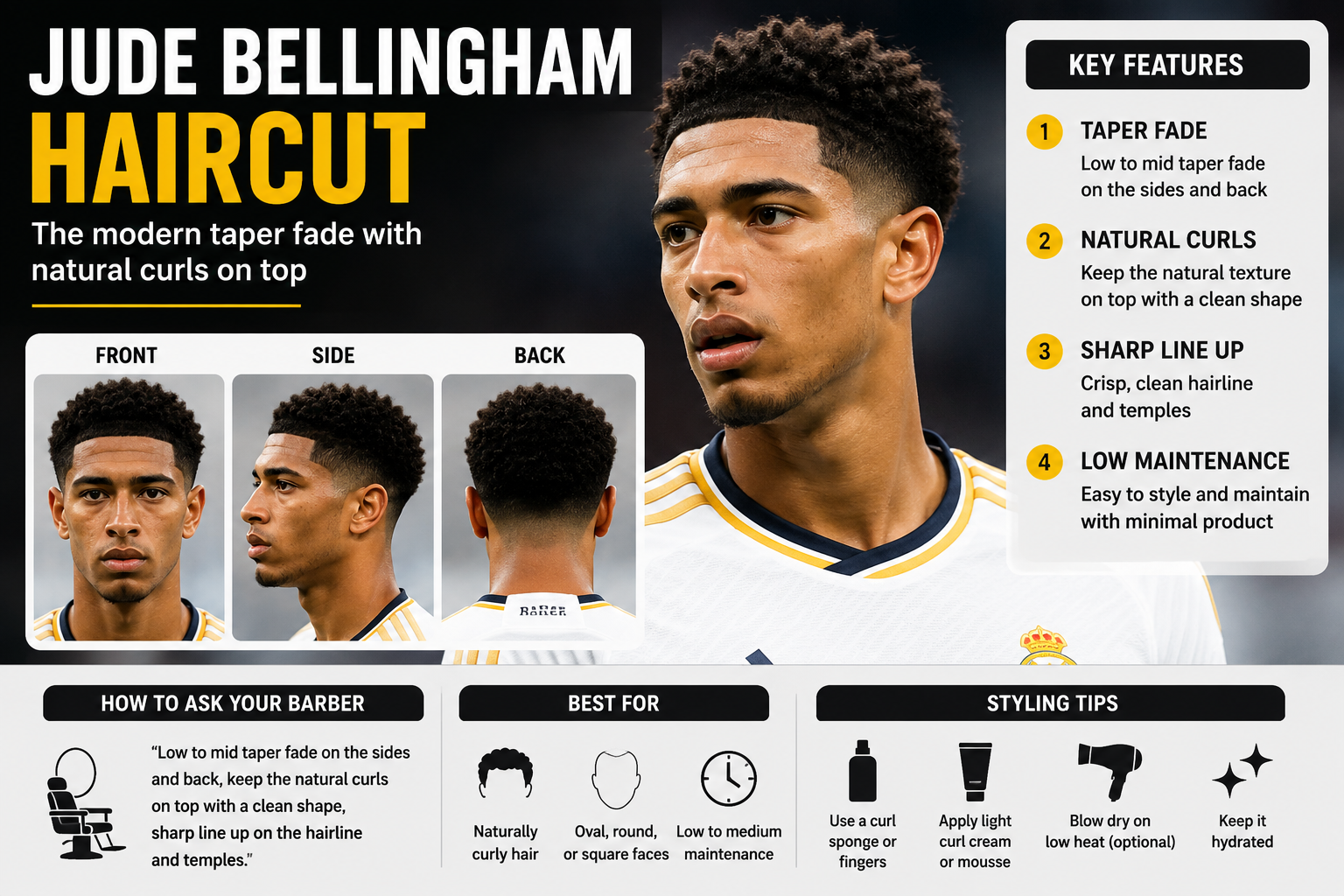
The rise of the “Jude Bellingham Haircut” trend says a lot about modern men’s grooming. Fans are no longer copying only celebrity actors or musicians. Footballers now shape fashion, hair culture, and street style worldwide, and Jude Bellingham Haircut has become one of the most influential names in that movement. Jude Bellingham Haircut blends athletic practicality with polished style, creating a look that works both on the pitch and in everyday life.
What makes the hairstyle especially appealing is its balance. It looks sharp without feeling over-styled, modern without appearing forced, and adaptable across multiple hair textures and face shapes. Whether someone wants a clean taper fade, textured crop, low-maintenance athletic cut, or stylish fade with volume on top, the haircut associated with Jude Bellingham Haircut delivers a versatile template that barbers can customize easily.
Why the Jude Bellingham Hairstyle Became So Popular
The global attention surrounding Jude Bellingham Haircut appearance comes from more than football fame alone. Jude Bellingham Haircut grooming style reflects the broader shift toward clean, wearable Jude Bellingham Haircut that combine structure with natural texture. Unlike exaggerated social media trends, his hairstyle feels realistic for everyday wear, which makes it highly relatable for students, professionals, and athletes alike.
Another reason the look gained momentum is visibility. Fans constantly see him during matches, interviews, campaigns, and social clips, which repeatedly reinforces the Jude Bellingham Haircut appeal. The style photographs well from every angle, especially under stadium lighting, helping the “jude bellingham haircut” become one of the most searched football-inspired hairstyles online.
The Core Features of the Jude Bellingham Haircut
At its foundation, the hairstyle usually combines a low or mid taper fade with textured curls or short natural volume on top. The sides stay neat and blended while the top retains movement and density. This contrast creates a modern silhouette that looks sharp without becoming too aggressive or overly dramatic.
The haircut also succeeds because it embraces natural hair behavior instead of fighting against it. Rather than flattening curls or forcing rigid structure, the style enhances texture. That detail is important because modern barbering trends increasingly favor authentic texture over overly sculpted finishes.
Understanding the Fade Structure
One of the defining elements of the Jude Bellingham Haircut is the fade. Most versions use a low taper fade or mid fade that gradually blends into the skin around the temples and neckline. This creates a clean finish while keeping enough fullness to avoid a harsh appearance.
The fade placement matters because it changes the overall personality of the cut. A lower fade creates a more subtle and professional look, while a higher fade produces stronger contrast and sharper definition. Many barbers recommend the lower variation because it mirrors the balanced appearance most closely associated with Jude Bellingham Haircut.
Texture and Volume on Top
The top section remains slightly longer to preserve texture and movement. This is where the Jude Bellingham Haircut gains personality. The natural curls or waves create dimension, helping the style avoid the flatness common in basic athletic haircuts.
Texture also improves versatility. The hair can be worn naturally loose, lightly defined with curl cream, or styled with matte products for a cleaner finish. That flexibility is a major reason why the “jude bellingham haircut” appeals to a wide audience rather than a narrow fashion niche.
Why the Haircut Works on Different Face Shapes
Many trending Jude Bellingham Haircut only suit a limited group of face shapes, but this one adapts surprisingly well. The fade narrows the sides of the head while the textured top adds controlled height, creating balanced proportions across oval, round, square, and diamond face structures.
For men with rounder faces, the extra height on top creates elongation. For sharper jawlines, the softer texture helps avoid an overly severe appearance. That universal adaptability is one reason barbers often recommend similar cuts to clients seeking a stylish but safe upgrade.
Hair Types That Match the Style Best
Naturally curly and coily hair textures fit the Jude Bellingham Haircut most easily because the shape relies heavily on texture. However, wavy hair can also achieve a similar result with proper layering and lightweight styling products. Even straight hair can recreate parts of the look by adding textured cutting techniques.
The key is movement rather than curl pattern alone. A skilled barber can adjust layering, weight distribution, and fade depth to mimic the overall aesthetic across different hair types. That customization potential makes the style far more accessible than many assume.
The Athletic Influence Behind the Look
Footballers need hairstyles that survive movement, sweat, weather, and constant activity. The Jude Bellingham Haircut associated with Jude Bellingham Haircut succeeds because it combines practicality with style. The shorter sides reduce maintenance while the textured top maintains individuality.
This athletic practicality influences broader men’s grooming trends. More men now want hairstyles that look polished without requiring excessive styling time. The Jude Bellingham Haircut represents that modern demand perfectly by balancing fashion with real-world convenience.
Comparing the Jude Bellingham Haircut to Other Footballer Styles
Many football-inspired hairstyles lean heavily toward extremes. Some players choose ultra-sharp skin fades, dramatic designs, bleached colors, or long braided styles. Jude Bellingham Haircut stands apart because it feels understated and wearable without losing modern appeal.
That subtlety gives it longevity. Trend-heavy haircuts often disappear quickly, but balanced cuts tend to remain stylish for years. The understated structure makes this Jude Bellingham Haircut adaptable to changing fashion movements while still feeling contemporary.
Key Elements Breakdown
| Haircut Feature | Description | Styling Impact |
| Low or Mid Fade | Gradual blend around sides and neckline | Clean, modern appearance |
| Textured Top | Natural curls or layered volume | Adds movement and personality |
| Defined Hairline | Crisp edging around forehead and temples | Sharpens facial structure |
| Natural Finish | Avoids excessive shine or stiffness | Creates relaxed sophistication |
| Balanced Contrast | Not overly disconnected | Makes the style versatile |
The balance between these elements explains why the haircut performs well across both casual and professional settings. It avoids extremes while still appearing fashionable and current.
Small adjustments to any of these features can dramatically change the overall effect. A tighter fade increases sharpness, while more volume on top creates a youthful and expressive finish.
What to Tell Your Barber
Many people struggle to recreate celebrity-inspired hairstyles because they describe them too vaguely. Instead of simply asking for the “jude bellingham haircut,” it helps to explain the technical details behind the style. Mention a low taper fade, textured top, natural curls, and a clean but soft transition.
Photos also help significantly. Barbers interpret terminology differently, so visual references reduce confusion. Combining reference images with clear instructions creates the best chance of achieving a close match to the desired look.
The Importance of Hairline Detailing
A sharp lineup enhances the haircut dramatically. The front hairline and temple area often receive subtle shaping that frames the face cleanly without appearing overly geometric or artificial.
This detail may seem minor, but it creates much of the polished appearance associated with professional footballers. Clean edges communicate precision and elevate even simple hairstyles into something more refined and intentional.
Styling Products That Work Best
The haircut generally looks best with lightweight products rather than heavy pomades or greasy gels. Curl cream, texture mousse, matte paste, or sea salt spray usually provide enough hold while maintaining natural movement.
Heavy products can flatten curls and reduce volume, which weakens the signature shape of the style. Modern textured hairstyles perform best when they retain flexibility and softness rather than rigid structure.
Morning Styling Routine
One reason the haircut appeals to busy people is its relatively simple daily routine. Most versions require only moisture, light shaping, and minimal product application. The haircut is designed to work with natural texture instead of requiring complete restyling every morning.
A quick refresh with water spray and curl cream often restores definition effectively. This ease of maintenance makes the hairstyle realistic for everyday wear rather than purely editorial or social-media-focused.
Maintenance Schedule for the Cut
Fades lose sharpness relatively quickly, especially around the neckline and temples. Most people maintaining the style visit the barber every two to three weeks for cleanup and reshaping.
The top section usually requires less frequent trimming because texture benefits from moderate growth. Regular maintenance primarily focuses on preserving the clean taper and structured outline that define the haircut’s overall appearance.
Why Younger Men Gravitate Toward the Style
Younger audiences often seek hairstyles that balance trend awareness with practicality. The “jude bellingham haircut” satisfies both goals because it feels current without appearing excessive or attention-seeking.
Social media also plays a major role. Clips from football matches, interviews, and campaigns spread rapidly online, creating repeated exposure to the haircut. Repetition strengthens familiarity, and familiarity often drives grooming trends.
The Role of Social Media in Haircut Trends
Platforms like TikTok and Instagram transformed how hairstyle trends spread globally. Football highlights now double as fashion showcases, exposing millions of viewers to athletes’ grooming choices within seconds.
This rapid visibility accelerates hairstyle adoption. A single viral clip can influence barber requests worldwide almost instantly. Jude Bellingham Haircut consistent media presence helped elevate Jude Bellingham Haircut haircut into a recognizable style category rather than just a celebrity look.
Professional vs Casual Styling Variations
The haircut adapts easily to different settings. For professional environments, the curls can be lightly controlled with matte cream for a cleaner silhouette. For casual settings, the texture can remain looser and more natural.
This versatility matters because modern grooming increasingly values adaptable hairstyles. Men want cuts that transition smoothly between work, social events, training sessions, and travel without needing dramatic restyling.
How the Haircut Fits Modern Men’s Fashion
Fashion trends increasingly favor understated confidence over loud styling choices. The haircut aligns perfectly with that shift because it looks polished without appearing overly engineered.
Streetwear, luxury sportswear, and minimalist fashion all pair naturally with textured taper fades. The hairstyle complements contemporary wardrobes by enhancing personal style instead of overpowering it.
Common Mistakes People Make
One frequent mistake is cutting the fade too high. Excessively high fades create a harsher appearance that differs significantly from the softer balance associated with Jude Bellingham’s hairstyle.
Another issue involves using too much product. Heavy styling can make curls stiff, greasy, or artificial. The best results come from enhancing natural texture rather than masking it under thick product layers.
Barber Techniques Behind the Look
Achieving the haircut properly requires blending skill and texture management. Barbers often combine clipper fading with scissor layering to maintain natural movement while controlling bulk around the crown and sides.
Texture refinement is especially important because poorly distributed weight can create awkward shape imbalance. Skilled barbers know how to preserve density while still maintaining clean structure throughout the cut.
How Curl Definition Impacts the Final Result
Curl definition influences whether the haircut appears premium or messy. Well-moisturized curls create controlled texture, while dry or undefined curls can weaken the haircut’s visual impact.
Hydration therefore becomes part of the styling process. Curl creams and leave-in conditioners help preserve bounce, softness, and shape throughout the day without creating greasy buildup.
Seasonal Differences in Styling
Summer often favors tighter fades and shorter tops because heat and humidity increase sweat and expansion. Winter styling sometimes allows slightly more length and fuller texture because cooler conditions reduce frizz and moisture loss.
These seasonal adjustments help maintain the haircut’s balance year-round. Small modifications preserve functionality while keeping the overall aesthetic consistent.
The Psychological Appeal of Clean Haircuts
Well-structured haircuts often influence self-perception and confidence. A clean fade and defined silhouette can make someone appear more disciplined, energetic, and polished without requiring dramatic transformation.
That psychological impact explains why athletic-inspired hairstyles remain popular beyond sports culture. They project focus, modernity, and effort while still appearing approachable and authentic.
Celebrity Influence Beyond Football
Although the haircut originates from football visibility, its influence now extends into broader entertainment and fashion culture. Influencers, musicians, and lifestyle creators increasingly adopt similar textured taper styles.
This crossover matters because it shifts the haircut from a niche sports trend into a mainstream grooming standard. Once styles move beyond their original cultural category, they typically gain greater longevity.
Why Simplicity Often Wins
Some hairstyles rely on extreme shapes or complicated styling to stand out temporarily. The Jude Bellingham Haircut-inspired look succeeds through refinement instead of exaggeration.
That simplicity creates timelessness. Hairstyles that emphasize proportion, texture, and clean execution usually age better than highly experimental trends tied to a specific moment in internet culture.
The Difference Between Taper and Skin Fade Variations
A taper fade gradually shortens hair around the edges while retaining more fullness overall. A skin fade removes hair almost completely near the bottom, creating stronger contrast and sharper transitions.
Most versions of the “jude bellingham haircut” stay closer to taper territory because the softer blend preserves balance. Extreme skin fades can distort the relaxed sophistication that defines the style.
Maintaining Healthy Hair Texture
Healthy curls require moisture and gentle handling. Sulfate-free shampoos, conditioners, and curl-supporting products help preserve elasticity and softness while preventing dryness.
Hair health directly affects style quality. Even the best haircut loses impact if the hair becomes brittle, frizzy, or dehydrated. Texture maintenance therefore matters as much as the cut itself.
The Role of Edge Control and Precision
Subtle edge detailing around the forehead and temples creates a polished appearance without looking overdesigned. Precision work frames the face and enhances overall symmetry.
This finishing detail separates average barbering from premium grooming. Small refinements often create the strongest visual impact because they sharpen the haircut’s overall presentation.
What Makes the Style Timeless
Timeless hairstyles usually share three traits: adaptability, practicality, and balanced proportion. The haircut associated with Jude Bellingham Haircut checks all three boxes effectively.
Because it avoids extreme length, dramatic coloring, or overly experimental structure, the style remains relevant across shifting fashion cycles. It feels current today without appearing locked into a single trend era.
Styling Advice for Straight Hair
Straight hair requires added texture to recreate the same visual depth. Layering techniques, texturizing scissors, and matte styling products help build movement and separation.
While the final result may differ slightly from naturally curly versions, the overall silhouette can still look very close. The key is avoiding flatness and creating enough dimension on top.
Styling Advice for Wavy Hair
Wavy hair naturally supports the haircut because it already contains movement and shape. Lightweight creams and diffusers can enhance texture while maintaining softness.
Many barbers consider wavy hair one of the easiest textures for adapting this style because it balances structure and flexibility without requiring extensive manipulation.
Styling Advice for Coily Hair
Coily hair creates excellent volume and definition for the haircut. Moisture retention becomes especially important because healthy coils enhance shape and improve overall finish.
A properly executed taper combined with hydrated coils creates one of the strongest versions of the style. The contrast between sharp edges and natural texture produces visual depth and sophistication.
How Fashion Trends Influence Men’s Haircuts
Men’s hairstyles increasingly follow broader fashion cycles rather than isolated grooming trends. Minimalist aesthetics, luxury sportswear, and clean silhouettes all influence haircut popularity.
The “jude bellingham haircut” fits perfectly within this landscape because it complements modern wardrobes without competing for attention. It supports overall style rather than dominating it.
The Connection Between Confidence and Grooming
People often underestimate how much grooming influences body language and confidence. A fresh haircut can subtly change posture, social energy, and self-perception.
This effect explains why consistent barber visits matter psychologically as well as aesthetically. Grooming routines create structure and personal investment, reinforcing self-confidence in everyday environments.
Why Barbers Recommend Textured Cuts
Textured cuts generally grow out better than rigid styles. As the hair gains length, natural movement keeps the shape looking intentional rather than awkward.
That growth flexibility makes textured hairstyles more forgiving. Clients can extend time between appointments without immediately losing the haircut’s core appearance.
Common Misconceptions About Footballer Haircuts
Some people assume football-inspired hairstyles require constant maintenance or expensive grooming routines. In reality, many athletic cuts prioritize efficiency because players need practical performance-focused styles.
As barber and grooming educator Matty Conrad once noted, “The best men’s hairstyles look effortless even when they’re carefully designed.” That principle perfectly describes the appeal of Jude Bellingham Haircut.
How the Haircut Photographs So Well
Clean fades and textured tops create strong contrast under lighting, which helps the haircut appear sharper in photos and videos. Stadium cameras and social content amplify those details dramatically.
The haircut’s structured outline also frames the face effectively, improving visual symmetry. This photographic strength contributes heavily to its online popularity and repeated social exposure.
The Influence of Youth Football Culture
Grassroots football culture strongly shapes hairstyle trends among teenagers and young adults. Local players often emulate professional stars not only in playing style but also in fashion and grooming.
Because Jude Bellingham Haircut represents discipline, confidence, and modern athleticism, Jude Bellingham Haircut naturally gained aspirational value among younger football audiences worldwide.
Why the Cut Works in Professional Environments
Some trendy hairstyles feel too experimental for workplaces or formal settings. This haircut avoids that issue because its clean taper and balanced texture appear polished and controlled.
That professional compatibility increases its mass appeal significantly. People want hairstyles that feel stylish without limiting social or career flexibility.
Fade Variations You Can Try
Different fade versions create slightly different personalities while maintaining the same overall inspiration. A low taper offers subtle refinement, while a mid fade creates more visual definition.
Burst fades, drop fades, and temple fades can also adapt the core look for different preferences. These variations allow personalization without abandoning the recognizable structure associated with the style.
The Best Beard Pairings for the Look
Short boxed beards, stubble, and defined goatees pair especially well with textured taper haircuts. These beard styles maintain the clean, athletic aesthetic without overpowering the hairstyle.
Long, heavy beards can sometimes disrupt balance by making the overall look appear too dense. Lighter facial hair generally complements the haircut’s sharp yet relaxed identity more effectively.
How Age Influences the Haircut
Younger wearers often prefer more volume and sharper fades, while older men may choose softer blends and slightly more conservative texture. The haircut adapts well across age groups because its foundation remains classic.
This age flexibility contributes to its staying power. A style that works across generations naturally sustains popularity longer than youth-exclusive trends.
Cultural Influence on Modern Barbering
Modern barbering increasingly blends influences from sports culture, streetwear, music, and luxury fashion. The haircut reflects this fusion by combining athletic practicality with refined presentation.
That cultural crossover explains why contemporary fades and textured cuts feel globally recognizable. They operate as both grooming choices and style statements within broader lifestyle culture.
Haircut Evolution Over Time
Jude Bellingham Haircut has evolved subtly over different seasons and competitions. Sometimes the fade appears tighter and cleaner, while other periods show fuller texture and softer transitions.
These variations reveal an important lesson about modern grooming: consistency matters less than maintaining a recognizable aesthetic identity. Small updates keep hairstyles fresh without losing familiarity.
Why Texture Is Dominating Men’s Grooming
For years, men’s hair trends emphasized slick backs, hard parts, and ultra-controlled finishes. Today, texture dominates because people prefer movement, softness, and more natural expression.
The “jude bellingham haircut” fits perfectly into this evolution. It embraces controlled texture instead of rigid structure, reflecting the broader direction of modern barber culture.
Travel-Friendly Grooming Benefits
The haircut works especially well for people with active lifestyles because it requires relatively little equipment or styling complexity. Basic hydration and light product application usually maintain the shape effectively.
That convenience matters for athletes, travelers, students, and professionals alike. Modern consumers increasingly prioritize low-maintenance grooming routines that still deliver premium results.
How Lighting Changes the Haircut’s Appearance
Lighting dramatically affects how fades and texture appear. Bright natural lighting enhances curl definition and depth, while harsher indoor lighting emphasizes edge precision and fade contrast.
This dynamic visual quality partly explains why the hairstyle looks different across interviews, match footage, and social photos. The structure adapts well to varying environments and camera conditions.
Long-Term Popularity Predictions
Some grooming trends disappear within months because they depend heavily on novelty. This haircut appears more sustainable because it builds on timeless barbering fundamentals rather than temporary gimmicks.
Texture, taper fades, and clean detailing have remained popular for years already. The style therefore benefits from both trend relevance and foundational barbering principles that rarely go out of fashion.
The Influence of Luxury Sportswear Aesthetics
Luxury sportswear blurred the line between athletic clothing and everyday fashion. Hairstyles evolved alongside this shift, favoring polished but practical looks that complement premium casual wear.
The haircut embodies that aesthetic perfectly. It feels athletic enough for sports culture yet refined enough for fashion campaigns, interviews, and formal appearances.
Grooming Products to Avoid
Heavy waxes, greasy pomades, and alcohol-heavy gels can damage texture quality. These products often flatten curls, reduce movement, and create artificial shine that conflicts with the haircut’s natural finish.
Instead, lightweight texture-focused products preserve softness and separation. Healthy movement remains central to achieving the haircut’s signature appearance.
Why the Haircut Appeals Across Cultures
The style transcends regional fashion differences because it relies on universally appealing grooming principles: clean structure, natural texture, and balanced proportion.
Unlike highly niche styles tied to specific subcultures, this haircut adapts easily across global fashion preferences. That worldwide compatibility contributed heavily to its rapid international popularity.
The Barber Consultation Process
Strong barber consultations matter more than many clients realize. Discussing hair density, growth patterns, maintenance habits, and styling preferences helps customize the haircut effectively.
A great barber interprets inspiration photos through the lens of individual hair characteristics rather than copying them identically. That personalization creates better long-term results.
Why Natural Finishes Feel More Modern
Modern grooming trends increasingly reject overly polished, artificial appearances. People now prefer styles that look clean but still retain natural movement and individuality.
The haircut associated with Jude Bellingham Haircut aligns perfectly with this philosophy. Its appeal comes largely from appearing effortlessly stylish rather than aggressively engineered.
How to Keep the Fade Sharp Between Appointments
Neckline cleanup, edge maintenance, and gentle brushing help extend the haircut’s freshness between barber visits. Small grooming habits preserve structure without requiring complete reshaping.
Moisture management also matters. Healthy texture maintains definition longer, reducing the messy appearance that sometimes develops as cuts grow out.
The Future of Football-Inspired Hairstyles
Football culture will likely continue shaping men’s grooming because athletes now function as global lifestyle influencers rather than purely sports figures. Hairstyles spread instantly through highlights, interviews, and social media content.
However, only certain cuts achieve long-term relevance. Styles that balance practicality with sophistication tend to survive trend cycles most effectively, which positions the “jude bellingham haircut” strongly for continued popularity.
Conclusion
The enduring appeal of the “jude bellingham haircut” comes from its rare combination of versatility, practicality, and modern style. It delivers enough structure to appear polished while preserving enough texture to feel natural and approachable. That balance makes it suitable for students, professionals, athletes, and anyone seeking a clean contemporary haircut without excessive maintenance.
More importantly, the style reflects broader changes in men’s grooming culture. Today’s most influential haircuts prioritize authenticity, movement, and adaptability over rigid perfection. Jude Bellingham Haircut captures that evolution perfectly, which explains why it continues gaining attention across football culture, fashion spaces, and barber shops worldwide.
FAQ
What is the jude bellingham haircut called?
The hairstyle is usually described as a textured crop or curly top with a low taper fade. Many barbers recognize the “jude bellingham haircut” as a modern textured taper with clean edges and natural volume.
How do I ask my barber for the style?
Ask for a low or mid taper fade with textured curls or layered volume on top. Bringing reference photos of the jude bellingham haircut will help your barber match the proportions more accurately.
Does the haircut work with straight hair?
Yes, although straight hair often needs layering and texture products to recreate the same movement. Matte paste and texturizing techniques can help achieve a similar silhouette.
How often should I maintain the haircut?
Most people refresh the fade every two to three weeks. The top section usually requires less frequent trimming because textured styles grow out naturally.
What products are best for this hairstyle?
Lightweight curl creams, matte styling paste, sea salt spray, and leave-in conditioners work best. Heavy gels and greasy pomades can reduce the natural movement that defines the haircut.
Is the haircut suitable for professional settings?
Yes, the haircut balances modern style with clean structure. Its polished taper and controlled texture make it appropriate for offices, events, and formal environments.
Why is the hairstyle so popular online?
The haircut gained visibility through football broadcasts, social media clips, interviews, and fashion campaigns. Its clean yet relaxed appearance makes it highly shareable and widely appealing.
You May Also Read Image Search Techniques


