

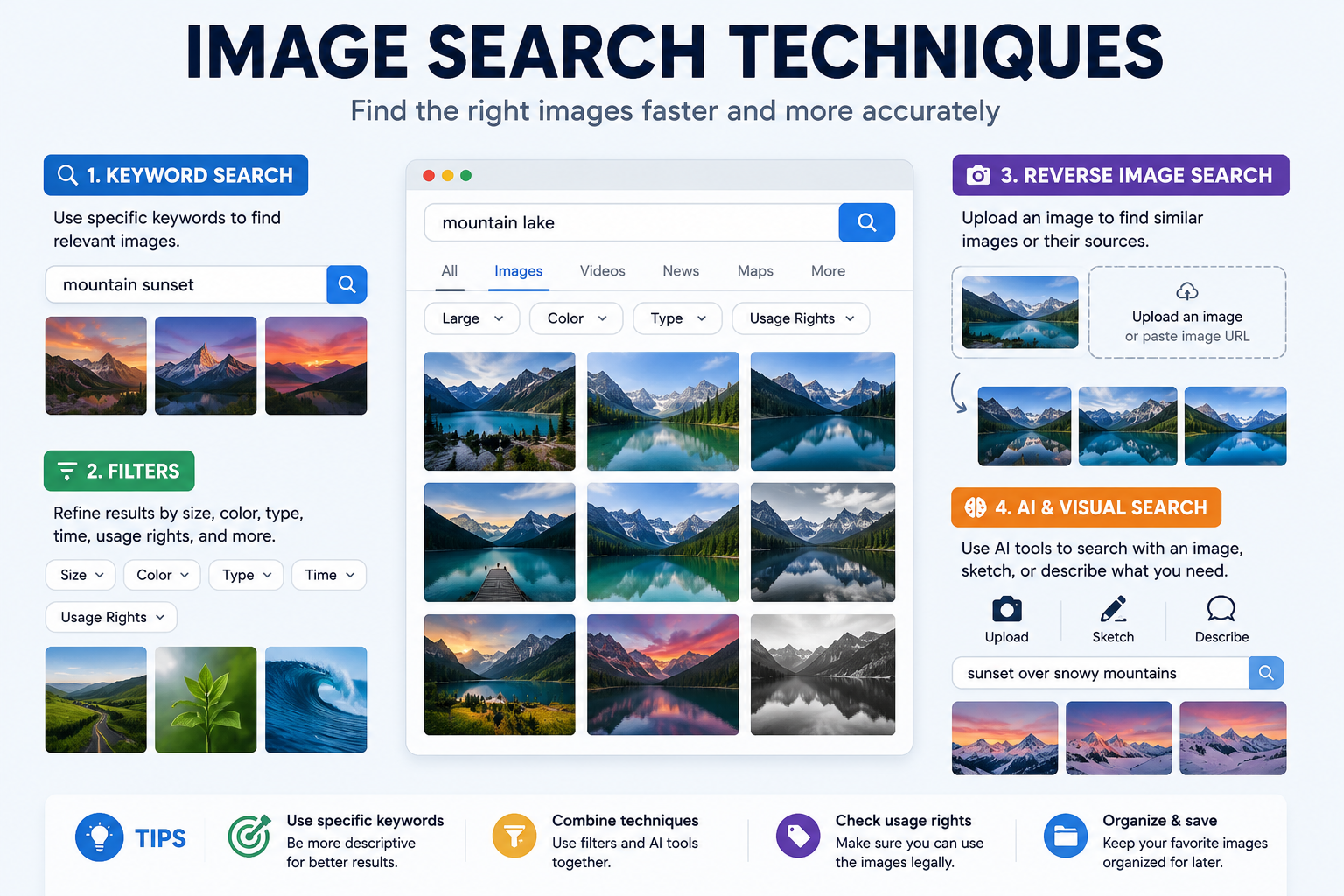
Image Search Techniques Finding the right image online sounds simple until you need something highly specific, copyright-safe, high resolution, visually similar, historically accurate, or commercially usable. Modern search engines process billions of visual files every day, yet most users only scratch the surface of what is possible. Understanding advanced image search techniques can dramatically improve research quality, marketing performance, design workflows, ecommerce intelligence, journalism, SEO strategy, and digital investigations.
Whether you are a student, marketer, photographer, researcher, content creator, ecommerce seller, or casual web user, mastering visual discovery methods gives you a major advantage. The web is becoming increasingly visual, and image-based information retrieval now influences everything from search rankings and shopping decisions to AI-generated media and brand visibility. This guide explores practical strategies, tools, workflows, optimization methods, and professional insights that transform ordinary searching into precision visual intelligence.
Why Image Search Matters More Than Ever
The internet has evolved from a text-first environment into a visually driven ecosystem where photos, graphics, screenshots, diagrams, memes, and product images shape user behavior. Consumers often evaluate visuals before reading copy, which makes image discovery an essential skill across industries. Businesses use visuals to build trust, journalists verify breaking news through photos, and designers rely on image research for creative direction.
At the same time, search engines have become dramatically more sophisticated. Artificial intelligence can now recognize objects, faces, landmarks, text inside images, color patterns, products, and contextual relationships. Effective image search techniques help users tap into these systems intelligently rather than relying on vague keyword guessing. The difference between beginner and expert search behavior often determines whether someone finds generic content or highly relevant visual assets.
Understanding How Image Search Engines Work
Most users think image search operates like a simple database lookup, but modern systems use layered technologies including computer vision, metadata analysis, contextual indexing, machine learning, and semantic interpretation. Search engines analyze filenames, surrounding webpage text, alt text, captions, EXIF data, and visual composition simultaneously to rank results.
Visual recognition has advanced so rapidly that search systems can often identify objects even when metadata is poor or missing. This shift means strong image search techniques combine keyword strategy with visual matching principles. An image of a mountain cabin may appear in results for “remote winter retreat” even if those exact words never appear in the file name because algorithms understand scene composition and context.
The Evolution of Visual Discovery Online
Early image search systems relied heavily on filenames and surrounding text because computers struggled to interpret image content directly. This created a landscape full of inaccurate or manipulated results. Users frequently encountered irrelevant visuals because indexing depended more on webpage content than image analysis.
Today, AI-driven recognition models dramatically improve accuracy. Search engines can identify objects, emotional tone, geographic landmarks, clothing styles, animals, products, and even artistic aesthetics. The evolution of image search techniques reflects this technological leap, shifting from basic keyword matching toward contextual visual understanding that mirrors human perception more closely than ever before.
Core Principles Behind Effective Image Search Techniques
Strong visual searching begins with precision. Generic queries like “cat” or “car” produce overwhelming results, while descriptive phrasing narrows intent dramatically. Users who specify lighting, angle, style, era, resolution, or usage purpose usually obtain more relevant outcomes.
Equally important is iterative refinement. Professionals rarely succeed with a single search attempt. They modify keywords, reverse search related visuals, filter by usage rights, and explore visually similar images. Effective image search techniques depend on experimentation, contextual thinking, and understanding how search engines interpret intent rather than literal wording alone.
Keyword-Based Image Search Strategies
Keyword search remains foundational despite advances in AI visual recognition. The quality of search results often depends on how clearly a user communicates intent through language. Descriptive modifiers dramatically improve relevance and reduce clutter.
For example, searching “minimalist Scandinavian living room natural lighting” produces significantly more refined results than searching “living room.” The best image search techniques often involve stacking contextual descriptors such as color palette, composition, mood, location, time period, orientation, industry, or artistic style.
Using Long-Tail Search Queries for Better Results
Long-tail queries help users bypass oversaturated results pages dominated by broad commercial content. Specific phrasing reduces ambiguity and aligns more closely with niche search intent. This approach is especially valuable for academic research, editorial design, and ecommerce sourcing.
A marketer searching “organic skincare flat lay pastel background” is far more likely to find commercially useful visuals than someone typing “skincare images.” Advanced image search techniques rely heavily on long-tail specificity because modern algorithms reward semantic clarity and contextual precision.
Reverse Image Search Explained
Reverse image search allows users to upload an image instead of typing keywords. The system analyzes visual patterns and searches for matching or related images across the internet. This capability has transformed journalism, ecommerce verification, digital forensics, and copyright enforcement.
Professionals use reverse searching to identify image origins, locate higher-resolution versions, detect fake profiles, verify product authenticity, and uncover unauthorized content reuse. Among all modern image search techniques, reverse searching is arguably one of the most powerful because it bypasses language limitations entirely.
Best Uses for Reverse Image Search
One of the most practical applications involves verifying authenticity. Journalists frequently use reverse image tools to confirm whether viral photos are recent or recycled from older events. Ecommerce buyers also use reverse searching to compare product listings across platforms.
Designers and photographers benefit as well. They can locate duplicates, discover attribution issues, or find edited variants of original work. Effective image search techniques increasingly include reverse lookup workflows because visual matching often uncovers information unavailable through text queries alone.
Comparing Popular Image Search Platforms
Different search engines excel in different areas. Some prioritize artistic inspiration while others focus on commercial products, technical accuracy, or academic resources. Understanding these distinctions improves efficiency and search quality.
The table below highlights major differences among widely used platforms.
| Platform | Primary Strength | Best Use Case | Weakness |
| Google Images | Broad indexing and AI recognition | General visual research | Can return repetitive commercial content |
| Bing Visual Search | Strong object recognition | Product identification | Smaller index than Google |
| Visual inspiration discovery | Design and lifestyle research | Limited factual verification | |
| TinEye | Reverse image tracking | Copyright and origin checks | Smaller visual database |
| Shutterstock | Professional stock assets | Commercial publishing | Premium licensing costs |
| Getty Images | Editorial photography | Journalism and media | Expensive licensing |
| Unsplash | Free creative photography | Blogs and marketing | Limited niche content |
| Wikimedia Commons | Educational visuals | Academic and public-use research | Inconsistent quality |
Understanding platform strengths is a core part of advanced image search techniques because no single tool dominates every use case.
Filtering Results for Precision
Search filters dramatically reduce noise and improve efficiency. Most major search engines allow filtering by size, color, usage rights, upload date, orientation, file type, and geographic region. Many users ignore these features despite their enormous value.
For instance, filtering for transparent PNG files saves designers significant editing time, while date filters help journalists locate recent imagery during breaking events. Effective image search techniques prioritize filter usage because narrowing search parameters often matters more than adding additional keywords.
Searching by Image Size and Resolution
Resolution matters for publishing, printing, presentations, and ecommerce listings. Low-resolution images may appear acceptable in thumbnails but fail under professional usage conditions. Searching specifically for large dimensions improves output quality and reduces pixelation issues.
Professional creators often seek at least 2000 pixels on the longest side for flexible use. Some search engines allow exact dimension filtering, which becomes particularly useful for website banners, presentation slides, and high-definition printing. Smart image search techniques always account for end-use requirements before selecting assets.
Finding Copyright-Free and Licensed Images
Copyright misunderstandings remain widespread online. Many users incorrectly assume images found through search engines are free to use commercially. In reality, search engines index content rather than grant usage rights.
The safest approach involves filtering for Creative Commons licenses or using reputable stock libraries. Understanding licensing categories is essential because improper usage can trigger legal disputes, takedown notices, or financial penalties. Responsible image search techniques include verifying usage rights before publication or distribution.
Using Visual Similarity Search Features
Modern search engines increasingly offer “visually similar” recommendations based on composition, colors, patterns, and object recognition. This feature is invaluable for mood boards, product comparisons, creative exploration, and trend analysis.
A fashion retailer might upload a handbag photo and discover visually similar products across multiple stores. Designers frequently use this functionality to expand inspiration collections rapidly. Visual similarity tools represent one of the most efficient image search techniques for exploratory research workflows.
Searching for Products Through Images
Visual commerce has changed how consumers shop online. Instead of describing products verbally, users can now photograph an item and instantly discover similar products, pricing, and retailers. This approach simplifies fashion discovery, furniture sourcing, and electronics identification.
Retailers increasingly optimize product photos specifically for visual search systems. Clear backgrounds, multiple angles, and detailed metadata improve discoverability. As ecommerce evolves, image search techniques are becoming central to consumer purchasing behavior and retail SEO strategy.
Image Search Techniques for SEO Professionals
SEO experts rely heavily on image discovery for competitive analysis, backlink opportunities, content optimization, and visual trend monitoring. Images influence search visibility through alt text relevance, engagement metrics, structured data, and page speed considerations.
Analyzing competitors’ visual assets often reveals overlooked opportunities. Marketers can identify which infographics attract backlinks, which image styles generate engagement, and which visual formats dominate search results. Strategic image search techniques therefore contribute directly to broader organic traffic growth.
Optimizing Images for Search Visibility
Image optimization extends beyond file compression. Search engines analyze filenames, alt text, captions, schema markup, surrounding content, and contextual relevance when ranking visuals. Proper optimization increases visibility in both standard and image-specific search results.
Descriptive filenames like “modern-home-office-desk-setup.jpg” outperform generic labels such as “IMG0023.jpg.” Similarly, natural alt text improves accessibility and indexing quality simultaneously. Effective image search techniques often overlap with image SEO best practices because discoverability depends on contextual clarity.
The Role of AI in Modern Image Search
Artificial intelligence now powers much of the visual web. Deep learning systems recognize objects, environments, emotions, facial features, and stylistic patterns at astonishing scale. AI models continuously improve by analyzing user behavior and visual relationships across billions of indexed images.
This transformation means search intent is increasingly interpreted semantically rather than literally. A user searching “cozy workspace aesthetic” may receive results aligned with mood and style rather than exact phrase matching. Modern image search techniques work best when users understand this AI-driven contextual behavior.
“Images are no longer just visual assets; they are searchable data points interpreted through machine intelligence.”
Searching for Faces and People
Facial recognition capabilities vary significantly across platforms due to privacy regulations and ethical considerations. Some systems allow users to identify celebrities or public figures, while others limit facial matching functionality entirely.
Responsible usage matters greatly in this area. Ethical image search techniques respect privacy boundaries, copyright protections, and legal frameworks. Professionals should avoid invasive identification practices and understand the jurisdictional restrictions surrounding biometric technologies.
Finding Original Sources of Images
Tracing an image back to its original source helps verify authenticity, discover higher-quality versions, and identify creators. Reverse image search tools often reveal the earliest indexed instance of a photo or illustration.
This process is particularly valuable for researchers, journalists, and copyright holders. Misattributed or manipulated visuals spread rapidly online, making source verification essential. One of the most overlooked image search techniques involves comparing upload timelines across multiple indexed sources to identify likely origins.
Detecting Fake or Manipulated Images
Digital manipulation has become increasingly sophisticated. AI-generated visuals, edited photographs, and misleading composites complicate online verification. Searchers must therefore combine visual analysis with metadata inspection and contextual research.
Warning signs include inconsistent lighting, unnatural shadows, distorted anatomy, duplicated patterns, or mismatched reflections. Reverse searching often reveals older versions or alternate contexts for suspicious visuals. Strong image search techniques now require a basic understanding of digital misinformation patterns.
Image Search Techniques for Researchers
Academic researchers rely heavily on visual archives, historical photography collections, scientific diagrams, and digitized manuscripts. Specialized databases often outperform general search engines for scholarly work because they provide higher contextual accuracy and metadata quality.
Researchers benefit from using advanced search operators, institutional repositories, and museum collections. Combining traditional keyword methods with reverse searching improves discovery efficiency significantly. In research environments, image search techniques support evidence gathering, comparative analysis, and historical verification.
Using Search Operators for Advanced Results
Search operators refine queries dramatically by limiting domains, excluding terms, or targeting specific file types. Many professionals underutilize these capabilities despite their precision benefits.
For example, searching “renewable energy infographic filetype:png site:edu” narrows results toward educational PNG graphics from academic domains. Advanced image search techniques frequently combine multiple operators to isolate highly relevant visual resources quickly.
Mobile Image Search Trends
Smartphones have transformed image discovery behavior. Users now search visually in real-world environments by photographing landmarks, products, plants, food, or text. Mobile camera integration has blurred the boundary between physical and digital information retrieval.
Apps powered by AI can identify species, translate text, compare prices, and recommend products instantly. Mobile-first image search techniques increasingly prioritize convenience, immediacy, and contextual awareness rather than traditional desktop keyword workflows.
Voice Search and Visual Search Integration
Voice assistants and image recognition technologies are converging rapidly. Users can now combine spoken queries with camera-based input to refine searches contextually. This hybrid interaction model reflects broader trends in multimodal AI systems.
For example, someone might point a phone camera at a chair and ask, “Where can I buy this in black?” Such interactions redefine user expectations around search behavior. Forward-looking image search techniques increasingly accommodate conversational and visual input simultaneously.
The Psychology Behind Visual Searching
Humans process visuals faster than text, which explains why image-driven interfaces feel intuitive and engaging. Search engines capitalize on this cognitive preference by emphasizing thumbnails, previews, and visual recommendations.
Emotional resonance also influences click behavior significantly. Images conveying authenticity, aspiration, or clarity tend to attract more engagement. Understanding psychological response patterns helps users refine image search techniques for marketing, branding, and content strategy purposes.
Image Search for Ecommerce Businesses
Online retailers increasingly depend on image optimization for traffic and conversions. Consumers often search visually before making purchase decisions, especially in fashion, furniture, beauty, and lifestyle categories.
High-quality product photography improves discoverability within visual search systems. Multiple angles, clean backgrounds, and descriptive metadata enhance indexing accuracy. Ecommerce-focused image search techniques therefore combine SEO, UX design, and visual merchandising principles.
Common Mistakes People Make During Image Searches
One of the biggest mistakes involves using overly broad queries that generate overwhelming or irrelevant results. Another frequent issue is ignoring licensing restrictions and assuming indexed content is free to reuse.
Users also often fail to verify authenticity, resolution quality, or original source context. Effective image search techniques avoid these pitfalls by emphasizing specificity, validation, filtering, and ethical usage practices throughout the research process.
How Social Platforms Influence Visual Discovery
Social media platforms increasingly function as search engines themselves. Users search Instagram, Pinterest, TikTok, and other networks for products, aesthetics, tutorials, travel inspiration, and trend analysis.
Hashtags, captions, engagement metrics, and recommendation algorithms shape visual visibility heavily. Businesses optimizing for modern discovery ecosystems must understand how social indexing intersects with traditional image search techniques and platform-specific search behaviors.
AI-Generated Images and Search Challenges
AI-generated visuals introduce both opportunities and complications. Synthetic imagery expands creative possibilities but also raises concerns around misinformation, copyright ambiguity, and authenticity verification.
Search engines are gradually adapting by labeling AI-generated content and improving detection methods. As generative AI becomes mainstream, image search techniques will increasingly involve distinguishing between authentic photography, edited media, and fully synthetic visuals.
Ethical Considerations in Image Searching
Ethics matter deeply in visual discovery. Users should respect intellectual property rights, privacy expectations, and contextual integrity when sourcing images online. Misusing visuals can damage reputations and spread misinformation rapidly.
Ethical image search techniques include proper attribution, license verification, source checking, and avoiding deceptive manipulation. Responsible usage strengthens digital trust and supports creators whose work powers the visual internet ecosystem.
Building Efficient Image Research Workflows
Professionals who conduct frequent visual research benefit from structured workflows. Organizing search sessions, saving references, tagging inspiration assets, and documenting sources improve long-term efficiency substantially.
Creative teams often maintain categorized visual libraries to streamline collaboration and reduce duplicate searching. Strong image search techniques become even more powerful when integrated into repeatable organizational systems rather than isolated browsing habits.
Using Metadata to Improve Search Accuracy
Metadata provides contextual information about images including location, device details, timestamps, authorship, and technical settings. While some metadata gets stripped during uploads, remaining data can still support verification and discovery.
Photographers and archivists frequently rely on metadata for cataloging and authenticity analysis. Advanced image search techniques sometimes involve examining EXIF information alongside visual and contextual clues to validate content origins.
The Future of Image Search Technology
Visual search is moving toward increasingly immersive experiences powered by augmented reality, multimodal AI, and contextual personalization. Search systems will likely become more predictive, conversational, and environment-aware over time.
Consumers may soon rely on real-time visual assistance integrated into wearable devices or smart glasses. As these technologies evolve, image search techniques will shift from reactive searching toward continuous contextual interpretation embedded within everyday life.
How Businesses Use Competitive Image Intelligence
Brands increasingly analyze competitors’ visuals to understand trends, positioning strategies, engagement patterns, and content performance. Image intelligence helps marketers identify market gaps and emerging aesthetic preferences.
For example, travel companies may study which destination photography styles dominate engagement across search platforms. Competitive image search techniques provide actionable insights that shape campaigns, product presentation, and brand storytelling strategies.
Image Search in Journalism and Investigations
Investigative journalists use visual verification extensively during breaking news events. Reverse searching, geolocation analysis, shadow examination, and metadata review help confirm whether images accurately represent claimed events.
This discipline has become essential in combating misinformation and manipulated media. Professional investigative image search techniques combine technical analysis with contextual reasoning to establish credibility and prevent false reporting.
Accessibility and Inclusive Image Optimization
Accessibility improves both usability and discoverability. Descriptive alt text helps visually impaired users navigate content while also supporting search engine indexing accuracy.
Inclusive visuals and clear descriptions create better experiences for broader audiences. Forward-thinking image search techniques therefore align accessibility standards with SEO strategy, reinforcing both ethical and practical benefits simultaneously.
Why Context Matters in Image Discovery
Images rarely exist independently from surrounding context. Search engines analyze nearby text, captions, page themes, and user engagement signals to interpret relevance accurately.
A photograph of a crowded street might appear in searches related to tourism, protests, urban planning, or nightlife depending on contextual framing. Sophisticated image search techniques recognize that meaning emerges through both visual content and associated narrative environments.
Creating Search-Friendly Original Images
Original visuals can generate substantial organic traffic when optimized effectively. Infographics, charts, tutorials, screenshots, and branded photography often attract backlinks and social shares when they solve user problems clearly.
Creators should prioritize descriptive filenames, responsive sizing, structured metadata, and meaningful alt text. Search-friendly production strategies complement advanced image search techniques by improving both discoverability and audience engagement.
The Relationship Between Image Search and Content Marketing
Visual assets strengthen content performance by improving readability, retention, and social sharing potential. Search-optimized visuals also expand opportunities for organic discovery beyond traditional text rankings.
Marketers increasingly develop image-first strategies that integrate infographics, diagrams, and branded photography into broader SEO campaigns. Effective image search techniques help content teams identify gaps, trends, and high-performing visual formats within their industries.
Understanding Color and Aesthetic Search Patterns
Users frequently search based on aesthetic intent rather than object identification. Queries involving mood, color palette, or visual atmosphere have grown dramatically across creative industries and ecommerce.
Terms like “earth tone workspace,” “moody café interior,” or “minimal luxury branding” reflect emotionally driven search behavior. Advanced image search techniques therefore require sensitivity to aesthetic language and stylistic nuance rather than purely descriptive terminology.
Using Image Search for Educational Purposes
Teachers, students, and educational creators depend on visuals to simplify complex concepts and improve engagement. Diagrams, maps, illustrations, and historical photographs enrich learning experiences substantially.
Educational image search techniques emphasize source credibility, factual accuracy, and licensing transparency. Academic users benefit from prioritizing museum archives, university repositories, and reputable educational platforms over generic image collections.
How Algorithms Personalize Image Results
Search engines increasingly personalize results based on location, device type, search history, and engagement patterns. Two users entering identical queries may receive noticeably different image outcomes.
Personalization improves relevance but can also create filter bubbles that limit exposure to diverse perspectives. Strategic image search techniques sometimes involve private browsing or alternative platforms to reduce personalization bias during research.
The Importance of Visual Literacy in the Digital Age
Visual literacy refers to the ability to interpret, analyze, and evaluate images critically. In an era dominated by social media and AI-generated media, these skills have become essential for informed digital participation.
People who understand composition, manipulation indicators, context framing, and emotional influence navigate online information more effectively. Modern image search techniques increasingly overlap with broader digital literacy competencies required for trustworthy online research.
Conclusion
Visual discovery has evolved into one of the most important digital skills of the modern internet era. From reverse searching and AI-powered recognition to licensing analysis and ecommerce optimization, today’s image search techniques extend far beyond simple keyword entry. Professionals across journalism, marketing, education, ecommerce, research, and creative industries now depend on advanced visual search strategies to work more efficiently and make better decisions.
As search technology continues evolving through artificial intelligence, multimodal interfaces, and augmented reality, visual literacy will become even more valuable. Users who understand how search engines interpret imagery, metadata, context, and intent gain a meaningful advantage in finding accurate, relevant, high-quality visual information. Mastering image search techniques is no longer optional for serious digital work; it is a foundational competency for navigating the visual web intelligently.
FAQ
What are image search techniques?
Image search techniques are methods used to find relevant visual content online through keywords, reverse image search, filters, metadata analysis, and AI-powered visual recognition tools.
How does reverse image search work?
Reverse image search analyzes the visual characteristics of an uploaded image and compares them against indexed content online to find matches or similar visuals using advanced image search techniques.
Which platform is best for image searching?
The best platform depends on the goal. Google Images works well for general use, TinEye excels in reverse lookup, and stock platforms are ideal for licensed commercial visuals.
Why are filters important in image searching?
Filters help narrow results by size, color, file type, usage rights, or date, making image search techniques more accurate and efficient for professional research.
Can image search help detect fake images?
Yes. Reverse lookup tools, metadata inspection, and contextual analysis are valuable image search techniques for identifying manipulated or misleading visuals online.
Are images found online free to use?
No. Many images remain protected by copyright even if they appear in search results. Always verify licensing terms before using visuals commercially.
How do businesses benefit from visual search?
Businesses use image search techniques for SEO, competitive analysis, ecommerce optimization, trend discovery, branding, and customer engagement strategies.
You May Also Read Best Ensalada de Arvejas y Jamon Near Me


