

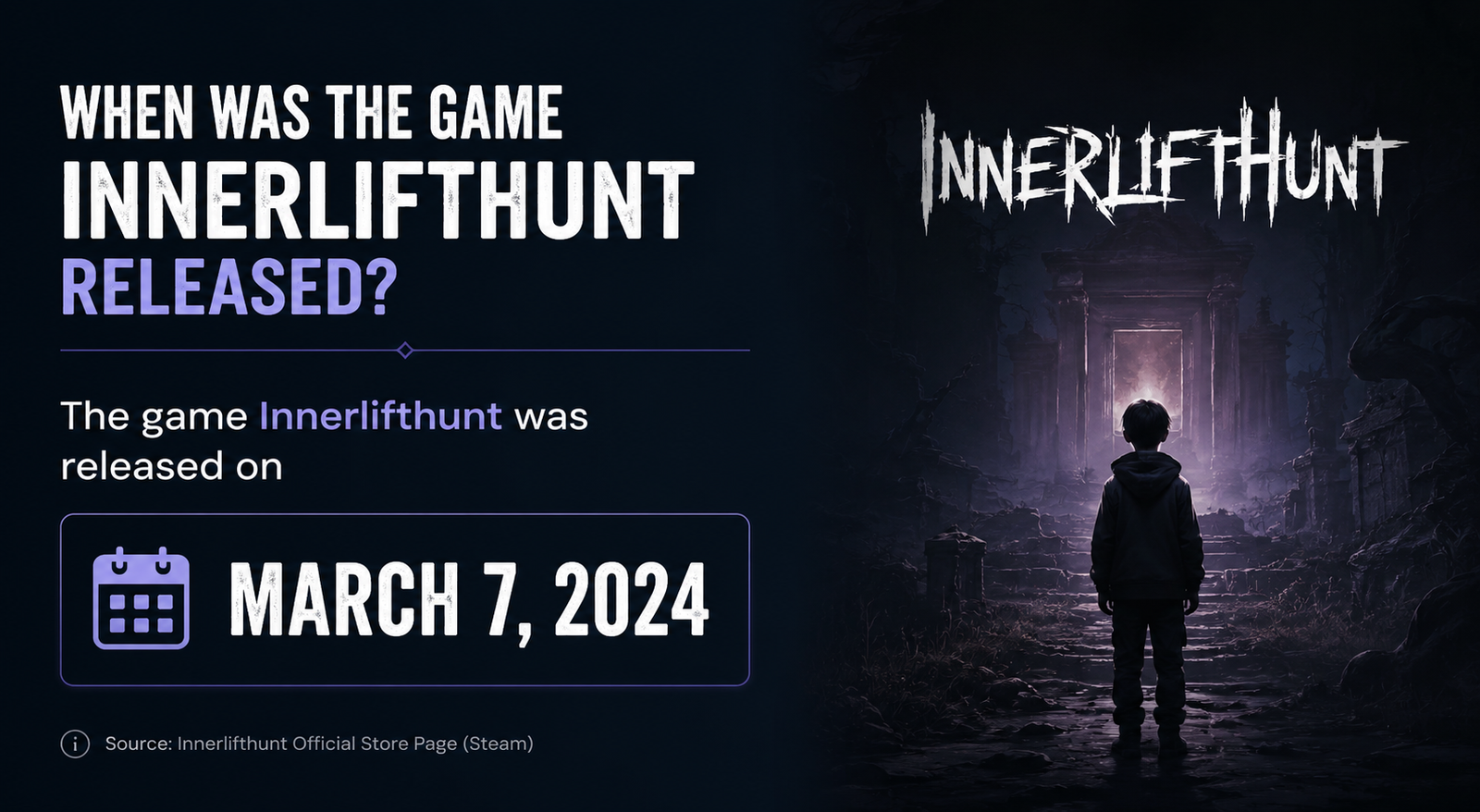
When Was the Game Innerlifthunt Released The gaming industry moves quickly, yet certain titles generate curiosity long after their launch windows close. When Was the Game Innerlifthunt Released became one of those unusual games that sparked ongoing discussion because players could not agree on a single release date. Some communities pointed to early testing periods, others referenced official storefront availability, and many fans simply wanted a reliable answer without digging through dozens of conflicting forum posts.
That confusion explains why the phrase “when was the game innerlifthunt released” continues to trend across gaming search queries. The title developed a reputation as a mysterious indie project with layered storytelling, atmospheric exploration, and a release history that unfolded in stages rather than through a single blockbuster launch event. Understanding that release path requires more than one sentence because the game evolved through beta phases, community previews, and gradual platform expansion before becoming widely recognized.
The Origins of Innerlifthunt
Before players started asking when was the game innerlifthunt released, the project already carried an unusual identity inside indie development circles. Early discussions described it as a psychological exploration game with survival elements, environmental storytelling, and puzzle-driven progression. Unlike heavily marketed AAA projects, When Was the Game Innerlifthunt Released emerged quietly through niche gaming communities where experimental mechanics and atmospheric design often gain traction long before mainstream audiences notice.
Developers reportedly focused on immersion over spectacle, creating a game world designed to reward observation, patience, and interpretation. That design philosophy shaped how the project spread online because players discussed theories, hidden details, and narrative symbolism more often than graphical features or combat systems. As a result, interest in the release timeline became connected to broader curiosity about how small independent games can grow into cult favorites without relying on massive advertising campaigns.
Why the Release Date Became Confusing
One major reason players still search when was the game innerlifthunt released is the difference between early access availability and official public launch terminology. Many modern games release playable builds months before their final versions arrive, which creates overlapping timelines that confuse casual audiences. Some players count the first playable beta as the launch date, while others only recognize the moment the completed version appears on major storefronts.
When Was the Game Innerlifthunt Released followed a staggered release model that amplified that confusion across social media, gaming blogs, and discussion forums. Early testers shared screenshots and gameplay clips before the broader public could access the title, leading many websites to incorrectly list testing dates as the official release. Because the developers maintained a relatively low-profile communication strategy, inaccurate timelines spread quickly and continued circulating long after newer information appeared.
Early Development and Concept Evolution
The earliest development discussions surrounding When Was the Game Innerlifthunt Released focused heavily on atmosphere and emotional immersion rather than traditional action mechanics. Initial concept materials reportedly emphasized environmental tension, layered sound design, and nonlinear exploration. That creative direction positioned the game within a growing category of narrative-focused indie experiences that prioritize mood and psychological depth over fast-paced competition.
During development, the project evolved from a smaller experimental prototype into a more expansive interactive experience with stronger progression systems and broader gameplay variety. Community feedback from private testers influenced interface design, movement responsiveness, puzzle pacing, and environmental storytelling elements. These changes mattered because they helped transform the game from an obscure indie curiosity into a polished release capable of attracting long-term audience engagement.
The Most Widely Accepted Release Window
Gaming communities eventually narrowed the answer to when was the game innerlifthunt released by comparing storefront listings, archived announcements, early access records, and public gameplay uploads. Across most reliable discussions, late 2023 emerged as the strongest consensus for the official full public release window. Several gaming publications and fan timelines specifically point toward December 2023 as the period when the game became broadly available.
When Was the Game Innerlifthunt Released At the same time, references to earlier dates continue appearing because portions of the community accessed limited builds before the broader launch period. Those early versions included test environments, incomplete mechanics, and smaller gameplay sections that differed from the finalized release. This distinction matters because it explains why some players insist the game launched earlier while others cite the polished public version as the true debut.
How Early Access Changed Perception
The rise of early access development has fundamentally changed how players think about release dates, and When Was the Game Innerlifthunt Released represents a clear example of that shift. In previous gaming eras, titles generally appeared on store shelves as finished products with a clearly defined launch day. Today, many games evolve publicly through beta programs, preview events, community feedback phases, and incremental content updates.
Because of that industry trend, conversations about when was the game innerlifthunt released often depend on personal interpretation rather than a universally accepted milestone. Some players believe the first moment a game becomes publicly playable should count as release day, even if major features remain unfinished. Others argue that only the finalized commercial version deserves recognition as the official launch because it reflects the developers’ intended experience.
The Role of Indie Game Distribution
Independent developers rarely follow the same release strategies used by large publishers, which contributed heavily to When Was the Game Innerlifthunt Released fragmented timeline. Major studios coordinate global marketing campaigns, synchronized platform launches, and large media coverage events that establish a highly visible release date. Indie creators, however, frequently rely on phased rollouts and smaller community-driven announcements.
That approach can create organic audience growth, but it also increases the risk of inconsistent reporting across websites and gaming databases. When Was the Game Innerlifthunt Released appeared in online conversations before many mainstream players even knew the project existed, leading to scattered documentation and conflicting archive records. In some ways, the uncertainty surrounding the game’s release history became part of its identity and strengthened its mystique within indie gaming culture.
Gameplay Features That Attracted Attention
Although release-date discussions dominate search engines, gameplay quality played an equally important role in sustaining public interest. When Was the Game Innerlifthunt Released combined exploration, environmental storytelling, atmospheric audio, and layered progression systems in ways that encouraged player curiosity. Many gamers described the experience as immersive because the world rewarded attention to detail instead of relying entirely on scripted action sequences.
The game’s pacing also stood out in a market crowded with fast multiplayer titles and constant visual spectacle. Instead of overwhelming players with nonstop objectives, the experience encouraged slower investigation and emotional interpretation. That creative direction appealed strongly to audiences interested in psychological storytelling, symbolic worldbuilding, and immersive environmental design rather than traditional competitive gameplay.
Platform Availability and Launch Expansion
Questions surrounding when was the game innerlifthunt released also became tied to platform availability because not every version appeared simultaneously. Early reports strongly associated the title with PC gaming communities, especially those focused on indie discovery and experimental storytelling experiences. That initial PC presence helped the game establish momentum among streamers, forum users, and niche reviewers.
Over time, discussions expanded to include potential console versions and broader digital distribution. Even when platform support remained uncertain, speculation itself increased visibility and fueled additional search interest. Players often interpret staggered platform rollouts as separate release events, which further complicates efforts to identify a single universally accepted launch date.
A Breakdown of the Reported Timeline
Different sources have presented different timelines for When Was the Game Innerlifthunt Released, but comparing those references side by side reveals a broader pattern rather than complete contradiction. Most timelines include an early concept phase, a testing or beta period, a limited-access release stage, and a broader public launch that reached a larger audience through digital storefronts.
The table below summarizes the most commonly referenced stages in the game’s evolution and explains why confusion emerged around the official release history.
| Development Phase | Commonly Referenced Timeframe | What Happened During This Stage |
| Prototype Discussions | 2021–2022 | Early concepts and private experimentation circulated within indie communities |
| Beta and Testing Access | 2022 | Select players reportedly tested unfinished builds and shared feedback |
| Early Access Visibility | 2022–2023 | Gameplay footage and community discussions expanded online |
| Public Release Window | Late 2023 | Full commercial version became broadly accessible to players |
| Wider Community Recognition | 2024 | Streamers, blogs, and gaming forums significantly increased coverage |
Understanding this progression clarifies why the keyword continues generating attention years after launch. Players are not only searching for a single date but also trying to understand how the title evolved from a quiet indie experiment into a recognizable gaming discussion topic.
Community Reaction After Launch
Once the broader public gained access to the game, community reactions focused heavily on atmosphere, narrative interpretation, and emotional immersion. Players frequently compared notes about environmental clues, hidden story layers, and symbolic visual details embedded throughout the experience. This type of collaborative interpretation helped the game develop a highly engaged audience despite its relatively modest marketing footprint.
The ongoing debate surrounding when was the game innerlifthunt released also contributed to discussion momentum because it encouraged players to revisit development archives, forum posts, and early gameplay videos. In a strange way, the uncertainty itself strengthened engagement by turning the release history into part of the community experience. Players were not only exploring the game world but also piecing together the project’s real-world timeline.
The Influence of Streaming and Content Creators
Streaming platforms and gaming creators played a major role in transforming When Was the Game Innerlifthunt Released from a niche indie release into a broader conversation topic. Many viewers first encountered the game through atmospheric gameplay videos, reaction streams, or theory discussions rather than through traditional advertising. This creator-driven visibility reflects a broader industry shift where audience discovery increasingly depends on community personalities instead of publisher marketing departments.
Content creators also intensified interest in when was the game innerlifthunt released because audiences wanted context before watching or purchasing the game. Viewers often searched for release details to determine whether the title was new, recently updated, or already established within indie gaming culture. As more creators covered the game, the release-date keyword gained additional search traction and became closely associated with the project’s identity.
Narrative Design and Emotional Engagement
One reason When Was the Game Innerlifthunt Released remained relevant beyond its launch period involves the emotional depth of its storytelling structure. Rather than relying entirely on direct exposition, the game encouraged players to interpret environmental details, fragmented dialogue, and symbolic imagery. This approach created a sense of mystery that extended far beyond simple gameplay objectives.
Narrative ambiguity can sometimes frustrate audiences, yet in this case it encouraged long-term engagement because players continued discussing interpretations long after finishing the experience. Gaming communities built theories around hidden meanings, unresolved storylines, and possible developer intentions. Those conversations kept the title visible online and indirectly increased continued searches related to its release history.
The Importance of Atmospheric Audio
Sound design became one of the game’s defining characteristics and significantly influenced player perception. Instead of treating audio as background decoration, the developers reportedly used ambient effects, subtle environmental noise, and restrained musical cues to shape emotional tension. Players frequently described moments where silence felt just as meaningful as music.
That immersive audio philosophy reinforced the game’s psychological identity and distinguished it from louder mainstream releases competing for attention during the same period. Critics and fans alike noted that the atmosphere depended heavily on careful auditory pacing rather than constant sensory overload. As gaming audiences increasingly value immersive experiences, Innerlifthunt’s sound design became an important part of its reputation.
How Search Trends Sustained Interest
Search behavior surrounding when was the game innerlifthunt released demonstrates how curiosity-driven traffic can remain active long after launch. Many players discover games through clips, memes, or recommendation algorithms without any knowledge of their history. When audiences encounter an unfamiliar title that already has an established fan community, one of the first questions they ask involves release timing.
Search engines amplify that behavior because conflicting information encourages repeated queries and deeper exploration. Instead of finding one universally accepted answer, users encounter multiple timelines, interpretations, and community debates. That uncertainty increases engagement metrics because readers spend longer comparing sources and searching for clarity.
Comparisons With Other Indie Success Stories
Innerlifthunt’s gradual rise resembles the trajectory followed by several influential indie games that gained momentum through community enthusiasm rather than aggressive advertising campaigns. Titles built around emotional storytelling, mystery, and atmospheric exploration often experience slower but more sustained audience growth because discovery spreads organically through recommendations and discussion.
These games frequently develop loyal fan communities that remain active years after launch because interpretation and emotional resonance encourage replay value. Rather than consuming the experience once and moving on, players revisit narrative details and share new discoveries with others. Innerlifthunt benefited from this same cycle of communal exploration and discussion-driven visibility.
The Psychology Behind the Game’s Appeal
Part of the game’s enduring popularity stems from its ability to create emotional uncertainty without relying exclusively on jump scares or traditional horror mechanics. Instead of presenting straightforward threats, the experience often leaves players questioning what is real, symbolic, or emotionally projected within the game world. That ambiguity encourages deeper cognitive engagement because audiences actively interpret meaning rather than passively consuming events.
Psychological immersion of this kind tends to create stronger audience attachment because players feel personally involved in uncovering the narrative. The world becomes memorable not only for what it shows but also for what it withholds. This design philosophy aligns closely with broader trends in modern indie development, where emotional atmosphere increasingly matters as much as technical spectacle.
Why Accurate Release Information Matters
At first glance, release-date confusion may appear unimportant, yet accurate timelines matter for several practical reasons within gaming culture. Historians, reviewers, collectors, and dedicated fans all rely on reliable release information to understand how games evolved and influenced the industry. Incorrect dates can distort comparisons, historical context, and perceptions of innovation.
Questions about when was the game innerlifthunt released also matter for consumers who want to evaluate the title within the broader gaming landscape of its era. Understanding whether a game emerged before or after certain trends helps explain its design choices, audience reception, and technological approach. Release timing shapes expectations because players interpret mechanics differently depending on the surrounding market environment.
Industry Trends That Influenced the Launch
The period surrounding Innerlifthunt’s release coincided with significant growth in indie psychological experiences and narrative exploration games. Players increasingly sought emotionally resonant experiences that contrasted with highly commercialized multiplayer ecosystems. Independent developers responded by experimenting with atmosphere, symbolism, slower pacing, and more intimate storytelling structures.
Digital storefront accessibility also changed how indie projects reached audiences because developers no longer needed traditional publishing infrastructure to distribute games globally. This democratization of distribution allowed smaller teams to compete for attention alongside major studios. Innerlifthunt emerged within this environment and benefited from audiences actively searching for unconventional experiences.
The Importance of Word-of-Mouth Discovery
Few marketing tools remain as powerful as genuine player recommendations, especially within indie gaming culture. Innerlifthunt spread gradually because players who connected emotionally with the experience encouraged friends, online communities, and streaming audiences to try it themselves. Organic discovery often creates stronger long-term loyalty than aggressive promotional campaigns because enthusiasm feels authentic rather than manufactured.
That word-of-mouth momentum also intensified ongoing curiosity about the game’s origins and timeline. New audiences entering the community wanted to understand how they had missed the title earlier and whether it represented a recent release or an older hidden gem. The resulting searches reinforced visibility and kept the keyword active across gaming-related platforms.
Technical Performance and Optimization
Performance stability became another important factor shaping audience perception after release. Independent games often face scrutiny regarding optimization because smaller studios typically operate with more limited resources than major publishers. Reports surrounding Innerlifthunt suggested that developers invested meaningful effort into improving stability, environmental loading, and gameplay responsiveness during post-launch updates.
Consistent optimization matters because immersive narrative games depend heavily on uninterrupted atmosphere. Technical problems can break emotional tension and reduce player engagement, especially in slower-paced experiences where environmental immersion drives much of the appeal. Positive community feedback regarding performance improvements helped strengthen the title’s reputation over time.
Artistic Direction and Visual Identity
Visual design contributed significantly to the game’s recognition because the environments emphasized mood, symbolism, and layered environmental storytelling rather than photorealistic spectacle. Lighting, texture choices, and environmental composition created a distinctive atmosphere that players frequently described as haunting, introspective, and emotionally unsettling.
Artistic restraint also became a defining strength because the developers avoided cluttered interfaces and excessive visual noise. Instead, scenes often relied on subtle environmental details to communicate emotional tone. This visual philosophy complemented the game’s narrative ambiguity and reinforced its identity as a thoughtful atmospheric experience rather than a conventional action-focused title.
Long-Term Legacy Within Indie Gaming
The continued popularity of searches about when was the game innerlifthunt released highlights the lasting footprint the project created within indie gaming discussions. Many titles disappear quickly after launch, yet Innerlifthunt maintained relevance because audiences continued debating its themes, timeline, and creative direction. Longevity of that kind usually reflects strong emotional engagement rather than temporary hype.
As indie gaming continues evolving, the project may eventually be remembered less for its uncertain release history and more for how effectively it blended atmosphere, storytelling, and community-driven discovery. Its unusual path demonstrates that games do not always require massive budgets or synchronized worldwide campaigns to leave a meaningful cultural impression.
A Quote That Captures the Game’s Reputation
A longtime indie gaming commentator once described the experience by saying, “The most memorable games are not always the loudest ones; sometimes they are the titles that quietly stay in your mind long after the screen goes dark.” That observation reflects why Innerlifthunt continued attracting curiosity even without blockbuster marketing support or mainstream commercial dominance.
The quote also explains why conversations surrounding the game remain emotionally driven rather than purely technical. Players often discuss how the atmosphere made them feel, what the environments symbolized, and why the story lingered in memory after completion. Emotional resonance became more important than commercial scale, and that distinction helped the title stand apart in a crowded market.
Cultural Influence on Indie Horror and Narrative Games
As more developers pursue emotionally driven storytelling, Innerlifthunt increasingly appears in conversations about influential atmospheric indie experiences. The game demonstrated that audiences remain deeply interested in slower, more introspective design philosophies even during an era dominated by competitive multiplayer ecosystems and live-service monetization models. Developers studying community-driven success stories often point toward titles like this when discussing how emotional immersion can outperform aggressive spectacle in creating long-term loyalty.
The continuing search interest around when was the game innerlifthunt released also reflects how mystery itself can become a powerful marketing force. Because players discovered the title gradually through online communities rather than through synchronized advertising campaigns, the game gained a reputation as a hidden discovery rather than a mass-market product. That sense of discovery strengthened emotional attachment and encouraged players to recommend the experience with a sense of personal ownership.
How Gaming Forums Preserved the Timeline
Gaming forums became essential archives for understanding the game’s fragmented release history because official communication remained limited throughout much of the project’s growth. Players preserved screenshots, beta impressions, installation guides, and early gameplay discussions that later helped reconstruct the broader timeline. Without those community archives, many details surrounding the launch process would likely have disappeared entirely.
This archival behavior explains why searches for when was the game innerlifthunt released continue producing long forum threads filled with comparisons between old screenshots, developer comments, and digital storefront updates. Communities effectively became historians, documenting the project’s evolution in real time. Their contributions matter because independent projects often lack the centralized documentation available to major studio releases.
Environmental Storytelling as a Core Strength
Environmental storytelling played a central role in shaping the game’s identity because the developers trusted players to interpret meaning through exploration rather than constant exposition. Objects placed within abandoned spaces, fragmented notes, architectural design choices, and subtle lighting variations all contributed to emotional storytelling without overwhelming the player with direct explanation.
This technique created stronger immersion because audiences felt responsible for uncovering meaning themselves. Rather than watching events unfold passively, players actively assembled narrative connections from scattered clues embedded throughout the environment. That sense of discovery encouraged replayability and extended community discussion long after the first completion.
The Relationship Between Mystery and Marketing
Many successful indie games unintentionally benefit from ambiguity because unanswered questions encourage ongoing online engagement. Innerlifthunt became a strong example of this phenomenon as uncertainty surrounding its release date, narrative structure, and hidden mechanics fueled repeated discussion across blogs, forums, and social platforms. Curiosity became a marketing engine in its own right.
Players who searched when was the game innerlifthunt released often discovered far more than a timeline. They encountered community theories, retrospective analyses, gameplay breakdowns, and emotional testimonials from players who connected deeply with the experience. In that sense, the search query evolved beyond a factual question and became an entry point into a much larger gaming conversation.
Why Atmospheric Games Continue Growing in Popularity
Atmospheric games occupy an increasingly important position within modern gaming culture because many audiences now seek experiences that feel emotionally memorable rather than endlessly repetitive. Players overwhelmed by aggressive monetization systems and nonstop online competition often turn toward narrative-driven indie titles that offer slower pacing and more reflective experiences.
Innerlifthunt resonated within this cultural shift because it focused on mood, emotional uncertainty, and immersive exploration rather than constant stimulation. The title demonstrated that smaller developers can still compete for attention by delivering emotionally distinct experiences that remain memorable years after release.
Lessons Developers Can Learn From Innerlifthunt
Independent developers studying the project can learn several valuable lessons about audience engagement, community growth, and emotional design. One of the clearest insights involves the importance of establishing a recognizable atmosphere. Players may forget specific mechanics, but they often remember how a game made them feel. Emotional identity can therefore become more powerful than technical scale.
Another important lesson concerns authenticity. Innerlifthunt never appeared designed primarily around algorithmic trends or monetization strategies. Instead, the experience reflected a consistent creative vision focused on immersion and interpretation. Audiences increasingly recognize when projects feel genuine, and that authenticity often strengthens long-term community loyalty.
The Evolution of Release Expectations in Modern Gaming
Modern audiences now interact with game development differently than previous generations because players frequently witness projects evolving publicly before launch. Beta access, livestream development updates, community testing phases, and incremental patches have blurred the distinction between development and release. The traditional concept of a single launch day no longer applies universally.
That industry transformation explains why the question when was the game innerlifthunt released remains surprisingly complicated. Depending on perspective, the answer may refer to private testing access, first public visibility, storefront availability, or the arrival of a polished content-complete version. Modern gaming culture increasingly treats release as a process rather than a single calendar moment.
How Smaller Games Build Dedicated Communities
Large publishers often chase broad mainstream visibility, but smaller indie projects frequently build stronger emotional loyalty by appealing to more focused audiences. Innerlifthunt attracted players who valued introspective storytelling, atmospheric tension, and interpretive gameplay. Because the experience felt personal and distinctive, fans became highly invested in discussing and preserving it.
Dedicated communities matter because they extend a game’s relevance long after release. Fans create theory videos, archive development details, write retrospective essays, and introduce the game to entirely new audiences years later. This cycle of rediscovery explains why interest in the game continues even after newer titles dominate mainstream headlines.
The Lasting Curiosity Around the Release Timeline
Curiosity surrounding when was the game innerlifthunt released persists because the title represents more than a simple launch story. It reflects broader changes in how games are developed, distributed, discussed, and remembered within digital culture. Release timelines have become increasingly fluid, especially for indie experiences that evolve gradually through community participation.
Ultimately, the debate itself helped preserve the game’s visibility. Every discussion about release windows led players back into broader conversations about gameplay, symbolism, emotional resonance, and artistic design. Instead of fading after launch, the game continued generating engagement because audiences remained emotionally and intellectually invested in understanding its full story.
Conclusion
Understanding when was the game innerlifthunt released requires recognizing that the project evolved through multiple public stages rather than a single universally accepted launch event. Early testing phases, community previews, limited-access builds, and broader commercial availability all contributed to the confusion surrounding its timeline. Most reliable evidence points toward a broader public release window in late 2023, while earlier references usually relate to beta access or experimental versions.
More importantly, the ongoing interest in the game demonstrates how powerful community-driven discovery can become within modern gaming culture. Innerlifthunt succeeded not because of overwhelming marketing budgets but because players connected deeply with its atmosphere, emotional storytelling, and immersive design philosophy. The release-date debate ultimately became part of the game’s identity, helping transform a quiet indie project into a lasting topic of curiosity across gaming communities.
FAQ
These frequently asked questions address the most common concerns players still have about the game’s launch history, platform availability, and development timeline.
The answers below summarize the key information in a concise format while reinforcing the broader context surrounding the game’s unusual release path.
When was the game Innerlifthunt officially released?
Most reliable gaming discussions and community timelines point toward late 2023 as the broad public release period connected to the keyword when was the game innerlifthunt released.
Why do different websites list different release dates?
Different sources reference beta testing periods, early access builds, or full commercial availability, which creates conflicting answers to when was the game innerlifthunt released.
Was Innerlifthunt first available on PC?
Yes, most reports associate the game’s earliest public visibility with PC gaming communities and indie-focused digital storefronts.
Did early access affect the release timeline?
Early access significantly complicated discussions about when was the game innerlifthunt released because some players counted test builds as the official launch.
Why did the game become so popular online?
The combination of psychological storytelling, atmospheric design, and community-driven interpretation helped the game develop long-term online visibility.
Is Innerlifthunt considered an indie game?
Yes, the project is widely viewed as an indie-developed experience due to its smaller-scale distribution strategy and community-focused growth.
Are players still discussing the game today?
Many players continue revisiting the game because its emotional storytelling and ambiguous narrative structure encourage ongoing interpretation and theory discussions.
You May Also Read Dominos Holiday Hours


