

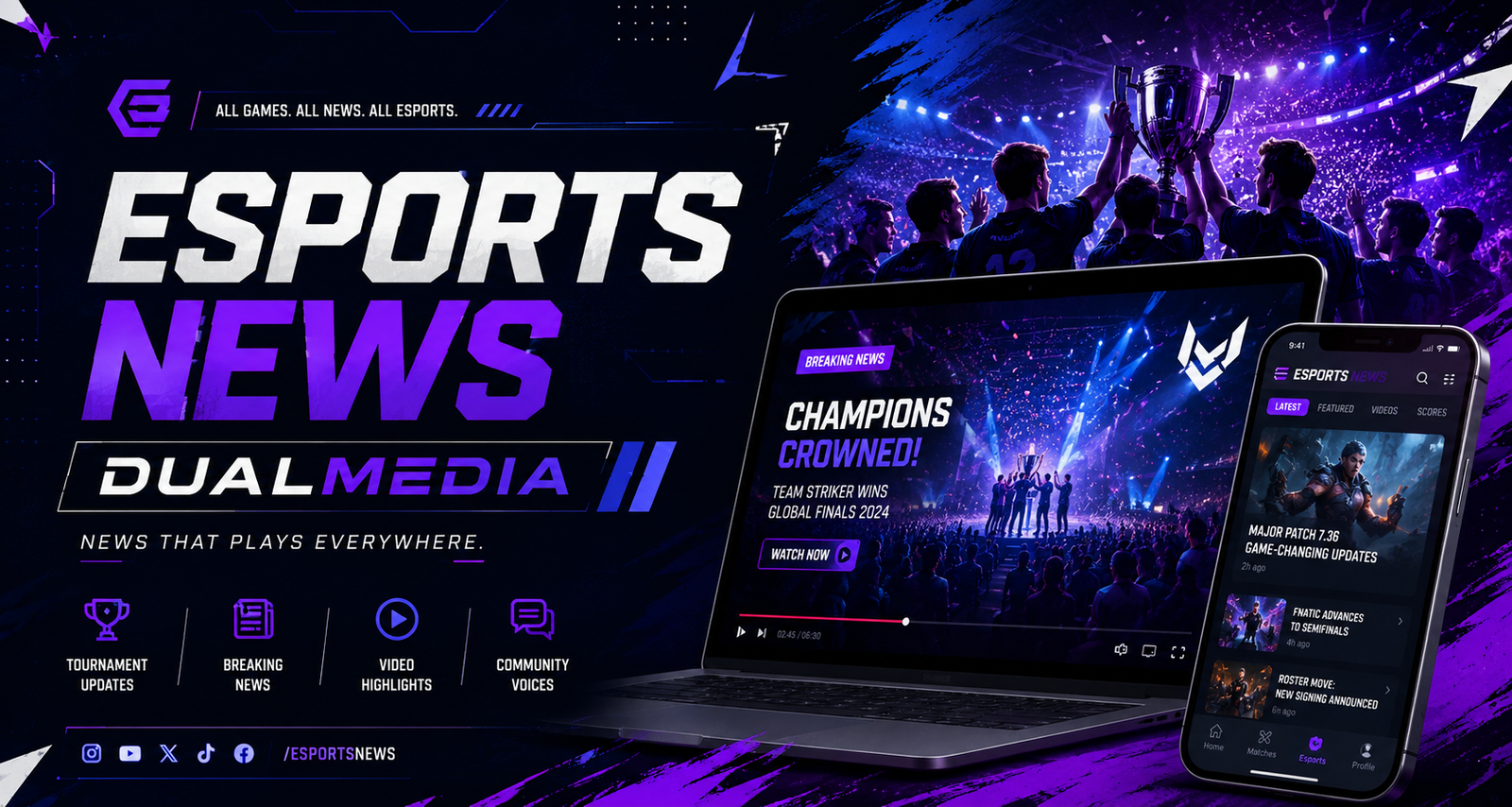
The Esports News DualMedia industry has transformed from a niche entertainment category into a global digital ecosystem powered by tournaments, creators, publishers, streaming platforms, and real-time communities. In the middle of this rapid evolution, esports journalism has become one of the most influential forces shaping how fans consume competitive gaming content. The rise of esports news dualmedia reflects a modern approach to reporting that combines traditional journalism with multimedia storytelling, social engagement, live analysis, streaming integration, and audience-driven coverage.
Gaming audiences no longer rely on a single source for updates. Instead, they move seamlessly between articles, livestreams, short-form videos, podcasts, creator commentary, social media clips, statistical breakdowns, and tournament recaps. This changing behavior has forced esports publishers and media brands to rethink how news is produced and distributed. As a result, esports news dualmedia has emerged as a framework that blends written reporting with immersive digital experiences designed for modern gaming audiences.
Understanding the Meaning of Esports News DualMedia
The term esports news dualmedia refers to a hybrid content strategy that combines traditional esports reporting with multiple forms of digital media delivery. Instead of relying only on text-based journalism, modern esports platforms now integrate video analysis, live commentary, visual storytelling, social media engagement, podcasts, community discussions, and interactive experiences into a unified reporting ecosystem.
This approach reflects how esports fans actually consume content today. A competitive gaming enthusiast may read a tournament recap, watch post-match interviews on YouTube, discuss roster changes on social media, and listen to a podcast breakdown during the same day. Dualmedia coverage acknowledges that audiences want information delivered across different formats without sacrificing speed, accuracy, or entertainment value.
The Evolution of Competitive Gaming Journalism
Esports journalism has come a long way from forum posts and fan blogs discussing local tournaments. In the early days of competitive gaming, coverage was fragmented and largely community-driven. Fans relied on message boards, IRC chats, and independent websites to stay updated on player performances and tournament results.
As esports expanded globally, professional media organizations began investing in dedicated gaming divisions. Publishers recognized that competitive gaming audiences were highly engaged and digitally native. This led to the development of structured reporting, investigative journalism, live event coverage, player interviews, and multimedia storytelling strategies that now define esports news dualmedia.
Why Modern Esports Audiences Prefer Multimedia Coverage
Gaming communities are highly interactive, fast-moving, and visually oriented. Traditional written articles still matter, but audiences increasingly expect deeper engagement through videos, graphics, livestreams, highlight reels, and social interaction. Fans want to see gameplay moments, hear analyst reactions, and engage with content creators in real time.
This shift has created an environment where multimedia integration is no longer optional. Successful esports media brands understand that readers may enter through different content channels. Some discover stories through TikTok clips, while others rely on long-form analytical articles or livestream discussions. The flexibility of esports news dualmedia helps publishers meet audiences wherever they consume content.
The Core Components of Esports News DualMedia
A successful dualmedia strategy depends on integrating several content layers into one cohesive ecosystem. Written reporting remains the foundation because it delivers context, accuracy, historical information, and detailed analysis that shorter formats cannot always provide.
Video content adds emotional depth and immediacy to esports storytelling. Match highlights, breakdown videos, interviews, documentaries, and live reactions allow audiences to connect more deeply with players, teams, and tournaments. Together, these formats create a more immersive news experience that increases retention and audience loyalty.
How Streaming Platforms Changed Esports Journalism
Streaming platforms revolutionized competitive gaming by making live tournaments accessible worldwide. Services like Twitch and YouTube Gaming transformed esports from isolated local events into global entertainment spectacles followed by millions of viewers simultaneously.
This accessibility fundamentally changed how journalism operates in the esports world. Reporters can now analyze live matches instantly, create real-time updates, interact directly with audiences, and provide post-game commentary within minutes. The speed and transparency of streaming culture became a major catalyst behind the growth of esports news dualmedia.
The Role of Social Media in Esports Reporting
Social media platforms play a central role in modern gaming journalism because esports conversations happen continuously. Fans react instantly to roster changes, controversial plays, tournament announcements, sponsorship deals, and patch updates.
Journalists and esports organizations use platforms like X, Instagram, TikTok, and Reddit to distribute breaking news rapidly while encouraging community engagement. Social media also serves as a discovery engine that directs audiences toward longer articles, videos, interviews, and live broadcasts connected to esports news dualmedia.
Why Speed Matters in Competitive Gaming News
Esports audiences expect information immediately. Unlike traditional sports, competitive gaming evolves at an incredibly fast pace due to patch updates, meta changes, roster transfers, and constant tournament schedules.
A delayed article can quickly lose relevance if another creator posts highlights, clips, or commentary first. Modern esports publishers therefore prioritize rapid multimedia workflows that allow simultaneous article publication, video production, social posting, and livestream discussion. This operational speed is one reason esports news dualmedia has become the dominant content model.
The Influence of Major Esports Titles on Media Coverage
Popular competitive games heavily influence media trends because each title attracts distinct communities with different viewing habits and content preferences. Games like League of Legends, Counter-Strike, Valorant, Dota 2, and Call of Duty all generate unique reporting ecosystems.
Some audiences prefer statistical analysis and tactical breakdowns, while others focus on personality-driven storytelling and creator reactions. Successful publishers adapt their multimedia strategies according to the culture of each gaming community, allowing esports news dualmedia to remain flexible and audience-centered.
How Tournament Organizers Shape News Cycles
Tournament organizers have become media powerhouses in their own right. Large esports events now include professional broadcast teams, documentary crews, social media departments, player interview stations, and behind-the-scenes content operations.
This creates an always-active content environment where news stories continue before, during, and after competitions. Publishers working within esports news dualmedia ecosystems often collaborate closely with tournament organizers to provide live updates, exclusive interviews, and integrated event coverage.
The Rise of Creator-Led Esports Journalism
Traditional journalism no longer dominates competitive gaming coverage. Content creators, streamers, analysts, former professional players, and influencers now shape public narratives as strongly as dedicated news outlets.
Many fans trust creator commentary because it feels more personal and authentic. Streamers can react live to breaking stories, explain gameplay strategies, and connect emotionally with viewers. This creator economy has become deeply connected to esports news dualmedia because modern audiences consume professional reporting and creator opinions simultaneously.
Comparing Traditional Sports Media and Esports Media
| Aspect | Traditional Sports Media | Esports News DualMedia |
| Primary Delivery | Television and print | Multi-platform digital ecosystem |
| Audience Engagement | Mostly passive | Highly interactive and community-driven |
| Content Speed | Scheduled updates | Real-time coverage |
| Fan Interaction | Limited | Continuous social engagement |
| Analytics Integration | Moderate | Extremely detailed and data-focused |
| Creator Influence | Secondary | Major driving force |
| Platform Diversity | Television-centered | Streaming, social, podcasts, video, text |
| Community Participation | Event-based | Constant online interaction |
The comparison highlights why esports media evolved differently from traditional sports journalism. Competitive gaming audiences are digitally native and expect continuous interaction rather than one-way broadcasting.
The flexibility of esports news dualmedia allows publishers to blend professional reporting with community-driven engagement in ways traditional sports networks are only beginning to adopt.
The Importance of Real-Time Analytics in Esports Coverage
Modern esports journalism relies heavily on advanced statistics and live data tracking. Fans want more than match results because they seek deeper insights into player performance, tactical strategies, economy management, objective control, and team coordination.
Analytics platforms provide detailed breakdowns that enrich articles, videos, and livestream discussions. This data-driven storytelling approach strengthens esports news dualmedia by combining visual analysis with expert commentary that appeals to highly engaged gaming audiences.
Mobile Consumption and the Shift Toward Short-Form Content
Mobile devices changed how gaming fans consume news. Many users now follow tournaments, roster updates, and highlights through smartphones rather than desktop websites.
This shift increased demand for short-form videos, quick updates, vertical clips, and visually optimized content. Publishers using esports news dualmedia strategies must design experiences that function effectively across multiple screen sizes and user behaviors.
Why Personality-Driven Reporting Works in Esports
Competitive gaming culture values authenticity and community connection. Audiences often follow specific journalists, creators, or analysts because of their personalities and perspectives rather than the platform itself.
This dynamic encourages conversational reporting styles that feel accessible while still maintaining expertise. Strong voices help publishers stand out in crowded markets and create deeper audience loyalty within esports news dualmedia ecosystems.
The Growing Role of Podcasts in Gaming Journalism
Podcasts have become an important part of esports coverage because they allow long-form discussion that shorter content formats cannot support. Analysts, former players, hosts, and journalists use podcasts to explore roster moves, tournament trends, controversies, and industry developments in greater depth.
Many esports fans listen during commutes, workouts, or gaming sessions, making podcasts an efficient way to maintain daily engagement. As a result, podcasting has become a major pillar of esports news dualmedia strategies.
How Video Essays Elevated Esports Storytelling
Video essays introduced cinematic storytelling techniques into competitive gaming journalism. Instead of only reporting scores or tournament outcomes, creators now produce documentaries exploring player journeys, team rivalries, strategic evolution, and emotional narratives.
These long-form visual stories attract both hardcore fans and casual viewers because they humanize the esports ecosystem. Video essays also demonstrate how esports news dualmedia can combine entertainment and journalism without sacrificing informational depth.
The Economics Behind Esports Media Growth
The expansion of esports journalism is closely tied to advertising, sponsorships, affiliate partnerships, and platform monetization. Gaming audiences are highly valuable because they are digitally engaged, globally connected, and active across multiple platforms.
Brands increasingly invest in esports coverage because multimedia ecosystems generate stronger engagement metrics than traditional advertising channels. This financial support has enabled esports news dualmedia platforms to hire professional reporters, editors, analysts, and production teams.
Sponsorship Integration in Competitive Gaming Coverage
Sponsorships are deeply embedded in esports culture. Hardware companies, energy drink brands, apparel businesses, and technology firms regularly collaborate with tournaments, creators, and publishers.
Modern media organizations must balance commercial partnerships with editorial integrity. Audiences quickly recognize overly promotional content, so successful esports news dualmedia outlets focus on transparency and authentic brand integration.
The Influence of Regional Esports Markets
Esports operates as a global industry, but regional markets maintain distinct cultures and priorities. South Korea emphasizes structured professional leagues, North America focuses heavily on entertainment and creators, while Europe blends traditional esports infrastructure with grassroots communities.
Regional diversity affects content strategy because audiences respond differently to humor, storytelling styles, analytical depth, and social engagement. Effective esports news dualmedia publishers tailor their approaches according to local audience preferences.
Why Community Trust Matters in Gaming Journalism
Trust is essential in esports reporting because rumors spread rapidly through online communities. False roster leaks, misleading tournament reports, and inaccurate insider claims can damage publisher credibility.
Reliable journalism requires verification, sourcing, and accountability even in fast-moving environments. Publishers that consistently deliver accurate reporting build long-term authority, which is one of the strongest competitive advantages in esports news dualmedia.
Investigative Journalism in the Esports Industry
As esports matured, investigative reporting became increasingly important. Journalists now examine issues such as player contracts, labor conditions, financial disputes, cheating scandals, organizational misconduct, and regulatory concerns.
This type of reporting strengthens the legitimacy of competitive gaming journalism by demonstrating that esports coverage extends beyond entertainment. Serious investigations help position esports news dualmedia as a mature media sector capable of meaningful accountability.
The Relationship Between Publishers and Game Developers
Game developers hold enormous influence over esports ecosystems because they control updates, tournament structures, monetization systems, and competitive rules.
Journalists must therefore navigate complex relationships with publishers while maintaining editorial independence. Balanced reporting becomes especially important when covering controversial updates, community backlash, or esports policy changes within esports news dualmedia environments.
Why Patch Updates Drive Continuous News Cycles
Unlike traditional sports, esports games evolve constantly through balance patches and gameplay adjustments. A single update can completely reshape competitive strategies, team strengths, and player roles.
This creates nonstop demand for analysis, predictions, tutorials, and expert commentary. Publishers using esports news dualmedia frameworks can rapidly respond through articles, videos, livestreams, and social breakdowns that explain evolving metas to audiences.
The Impact of Artificial Intelligence on Esports Journalism
Artificial intelligence is increasingly influencing media production, analytics, translation, clipping tools, and personalized content recommendations. AI-assisted workflows help publishers create highlights faster and analyze audience behavior more effectively.
At the same time, audiences still value human expertise, humor, emotional intelligence, and storytelling authenticity. The future of esports news dualmedia will likely involve a hybrid model where AI improves efficiency while journalists focus on creativity and strategic analysis.
Audience Retention Strategies in Competitive Gaming Media
Keeping audiences engaged requires more than publishing breaking news. Successful esports publishers create interconnected ecosystems where one piece of content naturally leads to another.
For example, a roster change article may connect to a video analysis, social discussion thread, livestream debate, and podcast episode. This layered approach increases watch time, session duration, and community interaction across esports news dualmedia platforms.
Why Visual Branding Matters for Esports Publications
Gaming audiences respond strongly to visual identity because esports culture is deeply connected to aesthetics, design, and digital presentation. Clean overlays, recognizable thumbnails, consistent typography, and dynamic graphics improve content recognition.
Strong branding also creates trust and professionalism in highly competitive online spaces. Media outlets that invest in visual consistency often perform better within esports news dualmedia ecosystems because audiences remember and revisit recognizable brands.
The Growing Importance of Short-Form Video Platforms
TikTok, Instagram Reels, and YouTube Shorts transformed how esports highlights spread online. Quick clips can generate millions of views within hours, introducing tournaments and players to entirely new audiences.
Publishers now design content specifically for algorithm-driven discovery. Short-form storytelling has therefore become a critical component of esports news dualmedia because it drives awareness, engagement, and cross-platform traffic.
Women in Esports Journalism and Media Leadership
The esports industry has historically struggled with inclusivity challenges, but more women are now leading coverage, hosting broadcasts, conducting interviews, and managing major media organizations.
This broader representation strengthens journalism by bringing diverse perspectives into storytelling and community discussions. Inclusive reporting practices also help esports news dualmedia evolve into a more welcoming environment for wider audiences.
Esports News Consumption Among Younger Audiences
Younger audiences consume media differently than previous generations. Many viewers discover esports through creators, social clips, or gaming communities before ever reading traditional news websites.
This behavior requires publishers to prioritize accessibility, entertainment, and platform-native storytelling. Modern esports news dualmedia strategies succeed because they adapt to how younger users naturally navigate digital ecosystems.
The Importance of Live Event Coverage
Live tournaments remain the emotional center of competitive gaming culture. Crowds, stage production, player reactions, and dramatic moments create stories that resonate beyond match statistics.
Journalists covering live events must balance speed with narrative depth. Effective esports news dualmedia reporting combines instant updates with behind-the-scenes storytelling that captures the atmosphere and human side of competition.
How Team Branding Influences Media Attention
Popular esports organizations attract massive coverage because strong branding creates loyal fan communities. Teams with compelling personalities, entertaining creators, and recognizable identities generate consistent engagement across platforms.
Media outlets often prioritize stories involving major organizations because audiences already feel emotionally invested. This relationship between branding and visibility plays a major role in esports news dualmedia traffic dynamics.
The Role of Memes and Internet Culture in Esports Journalism
Esports communities thrive on humor, memes, inside jokes, and viral moments. Internet culture spreads rapidly across gaming audiences and often becomes part of mainstream reporting.
Publishers that understand community humor can connect more effectively with audiences while still maintaining professionalism. Humor-driven engagement has become an important dimension of esports news dualmedia communication.
Why Long-Form Features Still Matter
Despite the rise of short-form content, long-form journalism remains valuable because it provides depth, emotional storytelling, and investigative detail that quick updates cannot achieve.
Feature articles exploring player careers, organizational history, or industry controversies often become evergreen resources that continue generating traffic long after publication. This balance between quick updates and deep storytelling defines strong esports news dualmedia strategies.
The Importance of Accessibility in Esports Content
Accessibility extends beyond device compatibility. Publishers must also consider language barriers, subtitles, readability, visual clarity, and user experience.
Global esports audiences include viewers from many cultural and linguistic backgrounds. Accessible design and localization therefore play critical roles in expanding the reach of esports news dualmedia platforms.
Educational Content and Skill-Based Journalism
Many esports fans actively seek educational content that improves gameplay understanding. Tutorials, tactical breakdowns, patch analyses, and coaching insights attract highly engaged audiences.
This educational layer differentiates esports journalism from purely entertainment-driven reporting. Skill-focused analysis strengthens esports news dualmedia by providing long-term value beyond temporary headlines.
The Relationship Between Betting and Esports Coverage
Esports betting has grown significantly alongside competitive gaming, creating new ethical and regulatory challenges for journalists and publishers.
Responsible media organizations avoid sensationalism while maintaining transparency around sponsorships and predictions. Ethical reporting standards are increasingly important as esports news dualmedia continues expanding into mainstream markets.
Why Audience Participation Drives Engagement
Esports communities expect interaction rather than passive consumption. Fans want polls, livestream chats, Q&A sessions, fantasy discussions, prediction contests, and social debates.
Interactive engagement strengthens community loyalty because audiences feel directly connected to the media ecosystem. This participatory culture is central to the success of esports news dualmedia.
Challenges Facing Modern Esports Journalism
The esports media landscape is highly competitive and financially volatile. Rapid platform changes, algorithm shifts, sponsorship dependency, and audience fragmentation create ongoing challenges for publishers.
Maintaining quality while producing fast multimedia content can also strain editorial teams. Sustainable esports news dualmedia operations therefore require strong leadership, adaptable business models, and diversified revenue streams.
The Future of Virtual and Augmented Reality in Esports Media
Virtual reality and augmented reality technologies may eventually reshape how fans experience competitive gaming coverage. Interactive viewing environments could allow audiences to explore matches from multiple perspectives in real time.
These immersive technologies align naturally with esports culture because gaming audiences are already comfortable with digital experimentation. Future esports news dualmedia experiences may blend journalism with interactive entertainment environments.
The Power of Storytelling in Competitive Gaming
At its core, esports thrives on human stories. Fans connect emotionally with underdog victories, rivalries, career comebacks, strategic genius, and personal sacrifice.
Strong journalism transforms matches into narratives that audiences remember long after tournaments end. This emotional dimension is one of the greatest strengths of esports news dualmedia because it turns competitive gaming into meaningful cultural storytelling.
Common Misconceptions About Esports Journalism
Some critics still dismiss esports reporting as less legitimate than traditional sports journalism. However, modern esports coverage involves investigative work, live broadcasting, statistical analysis, multimedia production, and international reporting.
The complexity of competitive gaming ecosystems requires highly specialized knowledge. Skilled journalists working within esports news dualmedia environments often balance technical expertise with entertainment-focused communication.
The Importance of Ethical Reporting Standards
Ethical journalism remains essential regardless of industry type. Esports reporters must navigate conflicts of interest, sponsorship influence, anonymous leaks, and online harassment challenges.
Transparent sourcing and responsible reporting strengthen credibility over time. As esports continues entering mainstream entertainment culture, ethical standards will become even more important for esports news dualmedia organizations.
Quote on the Future of Esports Media
“Esports is not just about games anymore. It is about communities, stories, creators, technology, and digital culture moving together in real time.”
This perspective captures why multimedia journalism has become so influential in competitive gaming. Fans no longer separate entertainment, analysis, and social engagement because all three experiences now exist simultaneously within esports news dualmedia ecosystems.
How Search Engines Influence Esports Publishing Strategies
Search optimization plays a major role in competitive gaming journalism because evergreen guides and tournament coverage attract substantial organic traffic.
Publishers carefully structure headlines, metadata, semantic keywords, and user engagement signals to improve visibility. Effective SEO ensures that esports news dualmedia content reaches audiences searching for tournament updates, guides, player information, and industry analysis.
Evergreen Content Versus Breaking News
Breaking news drives immediate traffic spikes, but evergreen content creates long-term authority and stable search performance. Guides, historical features, strategic analyses, and educational resources continue attracting visitors long after publication.
Successful publishers balance both approaches to maintain sustainable growth. This combination of timely reporting and evergreen value is central to effective esports news dualmedia planning.
The Rise of Independent Esports Publications
Independent media brands have become increasingly influential because audiences appreciate niche expertise and community authenticity. Smaller outlets often build strong loyalty through specialized coverage and direct engagement.
These independent publishers demonstrate that credibility and audience trust can compete with large corporate operations. Their success continues shaping the direction of esports news dualmedia across global markets.
Why Data Visualization Improves Audience Understanding
Complex gameplay strategies and tournament statistics can overwhelm casual audiences without proper presentation. Data visualization tools help simplify information through charts, graphics, overlays, and visual storytelling.
Well-designed visuals make esports coverage more engaging and easier to understand. This integration of analytics and design is another reason esports news dualmedia feels dynamic and accessible.
The Influence of Global Events on Esports Coverage
Economic trends, technological developments, and cultural shifts all influence the esports industry. Changes in streaming policies, advertising markets, and global connectivity directly impact how media organizations operate.
Publishers must remain adaptable because the digital entertainment landscape evolves rapidly. Flexible strategies allow esports news dualmedia platforms to respond effectively to industry disruptions and emerging opportunities.
Building Long-Term Audience Loyalty
Audience loyalty develops through consistency, authenticity, and community connection. Fans return to platforms that deliver reliable reporting while also creating enjoyable experiences.
Strong relationships are built over time through interaction, transparency, and recognizable editorial voices. Long-term trust is ultimately one of the most valuable assets within esports news dualmedia ecosystems.
Conclusion
The rise of esports news dualmedia represents a major transformation in how competitive gaming stories are created, distributed, and consumed. Modern audiences no longer rely on single-format journalism because they expect interconnected experiences that combine written reporting, video storytelling, social interaction, podcasts, livestreams, analytics, and creator perspectives.
As esports continues growing globally, multimedia journalism will remain central to the industry’s future. Publishers that prioritize authenticity, adaptability, accessibility, and audience engagement will continue shaping the next generation of competitive gaming media. The future of esports journalism is not limited to articles or broadcasts alone. It exists within dynamic ecosystems where information, entertainment, technology, and community interaction converge in real time.
FAQ
What does esports news dualmedia mean?
Esports news dualmedia refers to a multimedia approach to esports journalism that combines written articles, videos, livestreams, social media content, podcasts, and interactive digital experiences.
Why is esports news dualmedia important today?
Esports news dualmedia is important because modern gaming audiences consume content across multiple platforms and formats rather than relying on traditional text-only reporting.
How do streaming platforms influence esports journalism?
Streaming platforms allow journalists, creators, and analysts to provide real-time tournament coverage, live reactions, interviews, and audience interaction within esports news dualmedia ecosystems.
What role do content creators play in esports coverage?
Creators contribute heavily to esports news dualmedia by offering commentary, analysis, entertainment, livestream discussions, and community-driven perspectives that complement professional journalism.
Can esports journalism compete with traditional sports media?
Yes, esports journalism continues growing rapidly because esports news dualmedia combines fast digital reporting, analytics, audience interaction, and multimedia storytelling in ways traditional sports media increasingly adopts.
What is the future of esports news dualmedia?
The future of esports news dualmedia will likely include stronger AI integration, immersive technologies, personalized experiences, and even deeper connections between journalism, creators, and gaming communities.
You May Also Read Playing Games On Blog Playbattlesquare


