

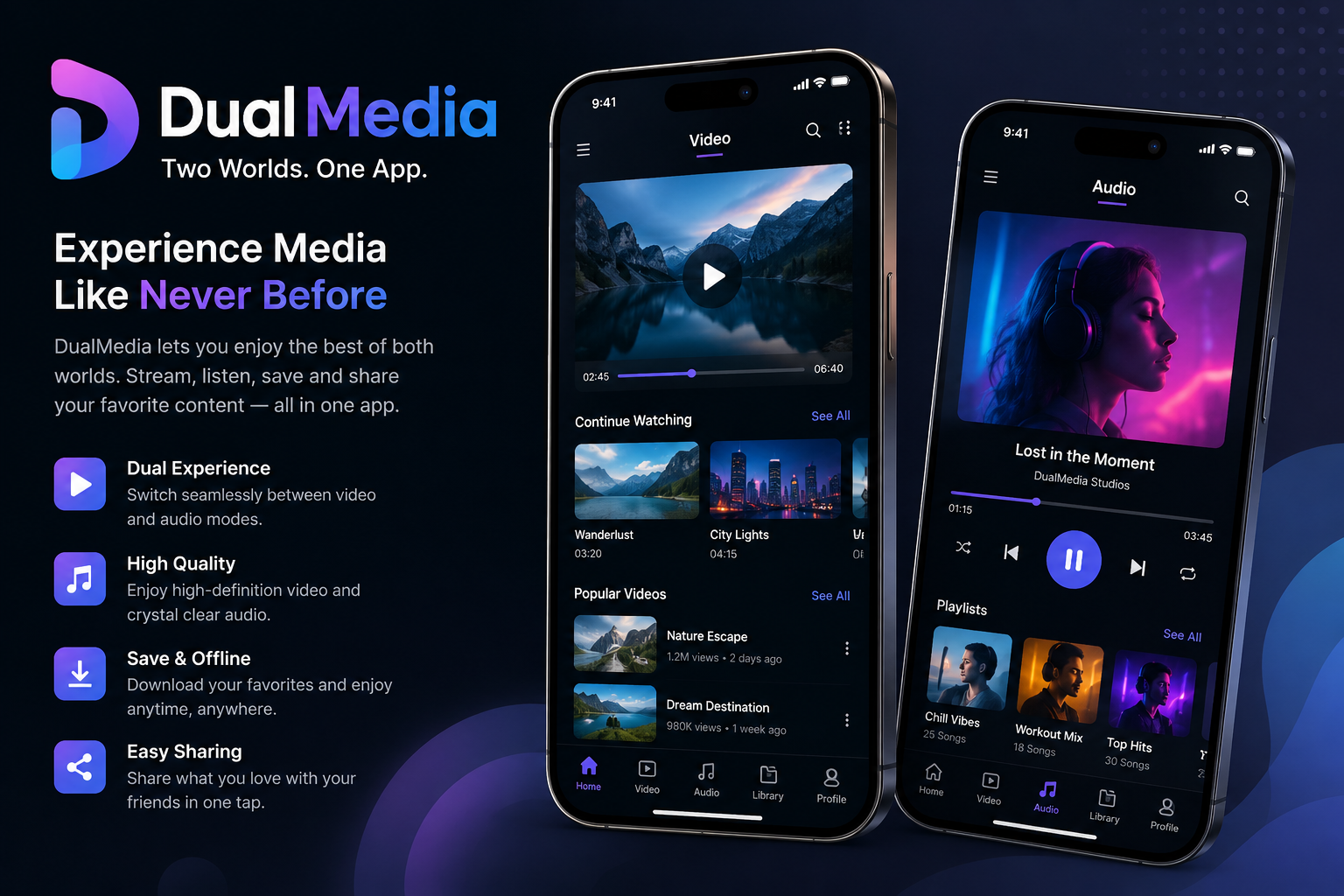
Application Mobile DualMedia The digital world has shifted dramatically toward mobile-first engagement, and businesses now rely on advanced mobile ecosystems to deliver seamless communication, entertainment, productivity, and media-sharing experiences. Within this evolving environment, application mobile dualmedia solutions are becoming increasingly important for organizations seeking synchronized multimedia functionality across devices, platforms, and user touchpoints.
From enterprise communication systems to streaming platforms and interactive customer applications, modern mobile ecosystems demand flexibility, speed, and intelligent content delivery. Companies, developers, startups, and marketers are exploring ways to integrate multimedia frameworks into highly responsive mobile experiences that feel intuitive, personalized, and scalable.
Understanding the Meaning of Application Mobile DualMedia
The term application mobile dualmedia generally refers to mobile applications designed to manage, distribute, synchronize, or enhance multimedia experiences across multiple digital environments. These applications often combine communication tools, streaming capabilities, interactive media, cloud synchronization, and cross-device compatibility within a unified ecosystem.
In practical terms, a dualmedia mobile platform may allow users to consume content on one device while interacting through another. It can also describe systems that merge video, audio, messaging, social engagement, and data integration into a seamless mobile workflow that improves convenience and user engagement.
Why Mobile Multimedia Platforms Matter More Than Ever
Modern users consume digital content constantly throughout the day, moving between smartphones, tablets, laptops, smart TVs, and wearable devices. Businesses therefore need systems that maintain continuity while supporting rich multimedia interactions without interruptions or compatibility issues.
The rise of mobile-first behavior has also changed customer expectations. Users now demand faster loading speeds, personalized recommendations, instant synchronization, intuitive navigation, and integrated communication tools. Application mobile dualmedia systems help meet these expectations by combining flexibility with multimedia optimization.
The Evolution of Mobile Application Ecosystems
Early mobile applications were designed primarily for basic tasks such as messaging, calling, and lightweight browsing. Over time, developers integrated advanced cloud computing, artificial intelligence, adaptive streaming, and interactive interfaces that transformed mobile apps into complete digital ecosystems.
Today, multimedia-centric platforms support real-time collaboration, remote learning, live commerce, digital entertainment, and immersive communication. The evolution of application mobile dualmedia architecture reflects this broader shift toward interconnected experiences that prioritize convenience and engagement.
Core Features Found in DualMedia Mobile Applications
Most advanced multimedia applications share a collection of essential features that improve usability and scalability. These commonly include synchronized playback, cloud-based storage, adaptive media compression, secure authentication systems, and cross-platform compatibility for Android and iOS environments.
Many platforms also integrate AI-driven recommendations, multilingual support, offline access, real-time analytics, and automated content optimization. These features collectively improve user retention while helping businesses manage large-scale media distribution efficiently.
How Cross-Platform Compatibility Enhances User Experience
One of the biggest advantages of modern multimedia applications is their ability to function consistently across multiple devices and operating systems. Users expect a smooth transition between devices without losing preferences, playback progress, or communication history.
Application mobile dualmedia frameworks achieve this through cloud synchronization, responsive architecture, and adaptive user interfaces. This continuity improves user satisfaction while strengthening brand trust and long-term engagement metrics.
The Role of Cloud Infrastructure in Mobile Multimedia Apps
Cloud computing has become the backbone of advanced multimedia ecosystems because it allows mobile applications to scale dynamically without overwhelming device resources. Media files, user data, analytics, and streaming services can all operate efficiently through distributed cloud infrastructure.
This architecture enables faster content delivery, real-time updates, improved security, and seamless collaboration across regions. Businesses using application mobile dualmedia systems often rely heavily on cloud-native technologies to ensure high availability and operational stability.
Multimedia Streaming and Real-Time Interaction
Streaming technology has transformed how users engage with digital platforms. Instead of downloading large media files, users can instantly access video, audio, and live broadcasts through optimized streaming protocols designed for mobile performance.
Real-time interaction further enhances engagement by integrating live chat, reactions, collaborative tools, and instant notifications. These capabilities are central to application mobile dualmedia platforms because they create interactive experiences rather than passive consumption environments.
Security Challenges in Multimedia Mobile Applications
As mobile applications manage increasing volumes of user data and multimedia content, cybersecurity becomes a critical priority. Unauthorized access, data leaks, and insecure APIs can damage user trust and create compliance risks for organizations.
Developers therefore implement encryption protocols, secure authentication layers, tokenized access systems, and behavioral monitoring tools to protect digital environments. Strong security frameworks are essential for maintaining credibility in any application mobile dualmedia ecosystem.
User Interface Design and Mobile Engagement
A visually cluttered or confusing application interface can quickly reduce user retention. Modern multimedia platforms therefore prioritize minimalist design principles, responsive layouts, intuitive navigation, and accessibility-focused interactions that simplify user journeys.
Effective user interface strategies also improve emotional engagement. When users can quickly locate content, personalize experiences, and navigate without friction, they spend more time interacting with the platform and are more likely to remain loyal.
Artificial Intelligence and Personalized Content Delivery
Artificial intelligence has dramatically improved content discovery and personalization within multimedia applications. Recommendation engines now analyze viewing habits, behavioral trends, location signals, and interaction patterns to deliver more relevant experiences.
Application mobile dualmedia systems increasingly rely on machine learning to optimize media suggestions, improve advertising relevance, automate moderation, and predict user behavior. This personalization enhances engagement while increasing conversion opportunities for businesses.
The Importance of Mobile Performance Optimization
Users abandon applications quickly when they experience slow loading speeds, buffering, crashes, or excessive battery consumption. Performance optimization is therefore one of the most important aspects of multimedia application development.
Developers focus on lightweight architecture, compressed media delivery, optimized APIs, and efficient caching strategies to improve responsiveness. High-performing application mobile dualmedia platforms typically achieve stronger user retention and higher app store ratings.
How Businesses Use DualMedia Mobile Solutions
Organizations across multiple industries now depend on multimedia mobile systems to improve communication, branding, and customer engagement. Retail companies use them for live commerce experiences, while educational institutions rely on interactive learning environments.
Healthcare providers, entertainment platforms, financial services, and media publishers also benefit from multimedia-driven engagement strategies. The flexibility of application mobile dualmedia technology allows businesses to adapt solutions according to industry-specific requirements.
Common Industries Adopting Multimedia Mobile Platforms
The entertainment industry remains one of the largest adopters of multimedia mobile ecosystems because streaming, gaming, and live broadcasting rely heavily on synchronized media delivery. However, many other sectors are rapidly embracing these technologies.
Education platforms use multimedia applications for remote instruction and collaboration, while enterprise organizations implement them for internal communication and training. Healthcare, tourism, sports media, and e-commerce brands also leverage application mobile dualmedia systems to strengthen digital engagement.
Comparison of Traditional Apps vs DualMedia Mobile Platforms
| Feature | Traditional Mobile Apps | DualMedia Mobile Platforms |
| Media Integration | Limited | Advanced multimedia support |
| Device Synchronization | Minimal | Real-time synchronization |
| User Engagement | Basic interactions | Interactive and immersive |
| Cloud Connectivity | Optional | Core infrastructure |
| AI Personalization | Limited | Extensive automation |
| Scalability | Moderate | High scalability |
| Streaming Capability | Basic | Adaptive streaming |
| Collaboration Tools | Rare | Frequently integrated |
| Analytics | Simple metrics | Advanced behavioral insights |
| Cross-Platform Experience | Inconsistent | Unified experience |
This comparison highlights why many businesses are transitioning toward advanced multimedia ecosystems that support richer and more adaptable digital experiences.
The Growing Demand for Interactive Mobile Experiences
Consumers increasingly prefer applications that allow them to participate actively rather than simply consume information. Interactive features such as live chat, polls, reactions, collaborative editing, and immersive media environments significantly improve engagement metrics.
Application mobile dualmedia systems are especially effective because they combine communication and entertainment into a unified experience. This integration encourages longer session durations and deeper user interaction.
Mobile Commerce and Multimedia Integration
E-commerce has evolved far beyond static product pages and simple checkout systems. Modern mobile commerce now incorporates livestream shopping, interactive product demonstrations, video catalogs, and AI-driven recommendations that enhance purchasing decisions.
Businesses using multimedia mobile platforms can create richer shopping experiences that feel personalized and engaging. This approach improves customer confidence while increasing conversion rates and average order value.
The Influence of 5G on Multimedia Mobile Applications
The expansion of 5G connectivity is accelerating the development of high-performance multimedia applications. Faster network speeds reduce latency, improve streaming quality, and support more complex real-time interactions.
Application mobile dualmedia platforms benefit significantly from these advancements because they can deliver ultra-high-definition media, low-latency collaboration, and immersive interactive experiences with greater efficiency than previous mobile generations.
Offline Accessibility and Smart Synchronization
Reliable internet access is not always available, particularly for users traveling or living in regions with inconsistent connectivity. Modern multimedia applications therefore prioritize offline functionality combined with intelligent synchronization systems.
Users can download content, save interactions, and continue using certain features without an active connection. Once connectivity returns, application mobile dualmedia systems synchronize data automatically to maintain continuity and consistency.
Mobile Analytics and Behavioral Insights
Analytics tools help organizations understand how users interact with multimedia platforms. Businesses analyze engagement patterns, session duration, navigation behavior, and content preferences to optimize performance and improve user satisfaction.
Advanced application mobile dualmedia ecosystems often integrate predictive analytics and AI-driven reporting that identify emerging trends before they become obvious. This proactive approach supports smarter business decisions and long-term growth strategies.
The Role of APIs in Multimedia Application Development
Application programming interfaces enable mobile systems to communicate with external platforms, payment gateways, cloud services, and third-party tools. APIs are essential for building scalable multimedia ecosystems that support flexibility and interoperability.
Developers use APIs to integrate social media sharing, messaging services, payment systems, AI modules, and streaming infrastructure. Well-designed API architecture significantly improves the adaptability of application mobile dualmedia platforms.
User Retention Strategies for Multimedia Applications
Acquiring users is expensive, which makes retention one of the most important success metrics for mobile platforms. Businesses therefore focus on delivering personalized experiences, consistent updates, and intuitive functionality that encourage long-term engagement.
Push notifications, reward systems, content recommendations, and community-driven interactions all contribute to stronger retention rates. Application mobile dualmedia systems excel in this area because they create dynamic and continuously evolving user experiences.
Accessibility and Inclusive Mobile Design
Digital accessibility is becoming a central priority for application developers worldwide. Multimedia platforms must support users with different physical abilities, language preferences, and technological limitations to ensure inclusive experiences.
Features such as voice navigation, subtitles, screen reader compatibility, scalable text, and multilingual interfaces improve accessibility while expanding audience reach. Inclusive application mobile dualmedia design also strengthens brand reputation and compliance readiness.
The Future of AI-Powered Multimedia Applications
Artificial intelligence will continue shaping the future of mobile experiences through smarter automation, predictive personalization, and adaptive interfaces. AI-driven systems can already generate subtitles, moderate content, personalize recommendations, and optimize streaming quality in real time.
As machine learning evolves further, application mobile dualmedia ecosystems will likely become even more responsive, context-aware, and emotionally intelligent. This progression may redefine how users interact with digital environments entirely.
Challenges Developers Face in Multimedia App Development
Creating multimedia-rich mobile platforms is technically demanding because developers must balance performance, scalability, security, and user experience simultaneously. Media processing, device compatibility, and network optimization all require careful engineering decisions.
Another challenge involves maintaining consistency across rapidly evolving mobile operating systems and hardware environments. Successful application mobile dualmedia platforms require continuous testing, optimization, and infrastructure refinement.
Monetization Strategies for Mobile Multimedia Platforms
Businesses use multiple monetization approaches depending on their audience, industry, and engagement model. Subscription services, advertising, freemium access, sponsorships, in-app purchases, and premium features are all common strategies.
The most effective monetization models align naturally with user behavior rather than interrupting the experience excessively. Application mobile dualmedia systems often achieve stronger revenue potential because multimedia engagement creates more interaction opportunities.
How Data Compression Improves Mobile Experiences
Media-heavy applications consume substantial bandwidth and storage resources, which can negatively affect performance. Efficient data compression techniques reduce file sizes while preserving quality, enabling smoother playback and faster loading times.
Compression technologies are especially important for users in bandwidth-limited environments. Application mobile dualmedia platforms that optimize media delivery effectively can expand accessibility and improve satisfaction across diverse user groups.
The Psychology Behind Multimedia Engagement
Humans naturally respond more strongly to visual and interactive experiences than plain text or static interfaces. Multimedia applications capitalize on this behavior by combining motion, sound, personalization, and interaction to create emotionally engaging environments.
This psychological engagement increases attention span, memory retention, and platform loyalty. Businesses leveraging application mobile dualmedia strategies can therefore build stronger emotional connections with their audiences.
Mobile Collaboration Tools and Remote Work Trends
Remote work and distributed teams have increased demand for mobile collaboration tools that support communication, media sharing, and real-time interaction. Businesses now require flexible platforms capable of supporting productivity across multiple devices and locations.
Multimedia-enabled mobile ecosystems facilitate virtual meetings, collaborative editing, live presentations, and shared workspaces. Application mobile dualmedia systems have become especially valuable in hybrid work environments where mobility and communication are essential.
The Impact of Augmented Reality on Mobile Applications
Augmented reality is introducing new forms of multimedia interaction by blending digital elements with real-world environments. Retail brands use AR for virtual product visualization, while educational platforms create immersive learning experiences.
As smartphone hardware continues improving, application mobile dualmedia ecosystems may integrate AR more extensively to enhance engagement, storytelling, and customer interaction across industries.
Consumer Expectations in Modern Mobile Environments
Today’s users expect mobile applications to be fast, intuitive, visually appealing, and deeply personalized. Delays, technical issues, or inconsistent experiences can quickly drive users toward competing platforms.
Businesses therefore prioritize seamless onboarding, responsive design, and adaptive functionality. Application mobile dualmedia frameworks help organizations meet these evolving expectations by delivering integrated and highly responsive experiences.
The Relationship Between UX and App Store Rankings
User experience directly influences app store visibility because ratings, reviews, retention, and engagement metrics affect ranking algorithms. Applications with poor usability often struggle to maintain visibility despite strong marketing campaigns.
Multimedia applications that prioritize performance, personalization, and intuitive design generally achieve stronger organic growth. Application mobile dualmedia systems therefore contribute indirectly to discoverability and long-term market competitiveness.
Enterprise Mobility and Multimedia Communication
Large organizations increasingly depend on mobile multimedia solutions for internal communication, employee training, and customer interaction. Enterprise mobility strategies now emphasize flexible access, cloud collaboration, and secure media sharing.
These systems improve operational efficiency while enabling distributed teams to communicate effectively from virtually any location. Application mobile dualmedia platforms often support enterprise scalability through centralized management and advanced analytics.
Why Scalability Matters in Multimedia Ecosystems
Applications experiencing rapid user growth must handle increasing traffic, content delivery demands, and interaction complexity without sacrificing performance. Scalability therefore becomes a critical factor in long-term sustainability.
Cloud-native infrastructure, distributed networks, and modular development frameworks help application mobile dualmedia systems expand efficiently while maintaining reliability and responsiveness under heavy usage conditions.
The Role of Content Moderation in Interactive Platforms
User-generated content can improve engagement significantly, but it also introduces moderation challenges related to safety, compliance, and brand reputation. Multimedia applications must therefore implement effective moderation systems to maintain healthy digital environments.
AI-driven moderation tools can identify harmful content, spam, misinformation, and abusive behavior quickly. Strong moderation strategies help application mobile dualmedia platforms maintain trust and encourage positive community participation.
Emerging Trends Shaping Mobile Multimedia Innovation
Several emerging trends are influencing the future direction of multimedia mobile applications. These include AI-generated content, immersive commerce, decentralized digital ecosystems, adaptive streaming, and hyper-personalized user journeys.
Developers and businesses that adapt early to these trends are more likely to remain competitive in rapidly evolving digital markets. Application mobile dualmedia technology sits at the center of many of these innovations because it connects media, mobility, and interaction.
Common Misconceptions About Multimedia Mobile Platforms
Some businesses assume multimedia applications are relevant only for entertainment brands or large enterprises with massive budgets. In reality, even small businesses can benefit from multimedia engagement strategies that improve communication and customer interaction.
Another misconception is that multimedia platforms automatically reduce performance. Modern application mobile dualmedia systems can achieve impressive speed and efficiency through optimized architecture and intelligent resource management.
Building Trust Through Consistent Mobile Experiences
Consistency plays a major role in user satisfaction and brand loyalty. When applications maintain stable performance, intuitive interfaces, and reliable synchronization across devices, users feel more confident engaging regularly with the platform.
This reliability becomes especially important in competitive markets where switching costs are low. Businesses investing in application mobile dualmedia infrastructure often strengthen trust through consistent multimedia experiences.
The Economic Impact of Mobile Multimedia Technologies
The global mobile economy continues expanding rapidly as multimedia applications drive digital commerce, advertising revenue, remote work infrastructure, and content distribution. Businesses across sectors now depend heavily on mobile engagement for revenue generation.
Application mobile dualmedia ecosystems contribute to this growth by enabling scalable communication, immersive marketing, and highly interactive customer experiences that increase digital participation.
Real-World Example of Multimedia Application Success
Consider a retail company launching a live shopping platform integrated with interactive chat, personalized recommendations, and synchronized mobile streaming. Customers can watch product demonstrations, ask questions in real time, and complete purchases without leaving the application.
This kind of experience demonstrates the practical value of application mobile dualmedia systems because it combines communication, entertainment, and commerce into a seamless customer journey that encourages engagement and conversion.
The Importance of Continuous Application Updates
Mobile technology evolves rapidly, which means applications require ongoing updates to maintain compatibility, security, and relevance. Businesses that neglect updates often experience declining engagement and increased technical issues.
Frequent optimization also allows developers to introduce new features, improve performance, and adapt to changing user expectations. Application mobile dualmedia ecosystems benefit especially from continuous innovation because multimedia standards evolve quickly.
Quote on the Future of Multimedia Mobility
“The future of mobile technology belongs to platforms that combine communication, intelligence, and immersive media into a single seamless experience.”
This perspective reflects the growing importance of integrated mobile ecosystems that prioritize interaction, personalization, and cross-platform continuity rather than isolated functionality.
Why Businesses Should Invest in Multimedia Mobile Innovation
Companies that embrace multimedia mobile innovation position themselves more effectively for future digital trends. Enhanced engagement, stronger analytics, scalable communication, and improved customer experiences all contribute to competitive advantage.
Application mobile dualmedia platforms offer strategic flexibility because they can evolve alongside technological advancements and shifting consumer behavior. This adaptability makes them increasingly valuable for long-term growth planning.
Conclusion
The mobile landscape has evolved far beyond simple communication tools into highly interactive digital ecosystems powered by multimedia engagement, cloud infrastructure, artificial intelligence, and cross-platform synchronization. Businesses and developers now recognize that users expect seamless experiences capable of adapting to their lifestyles, preferences, and devices.
Application mobile dualmedia solutions represent an important step in this evolution because they combine media-rich functionality with scalable mobile performance and intelligent interaction. From entertainment and commerce to education and enterprise collaboration, these systems are reshaping how people consume content and engage with digital environments.
As technologies such as AI, 5G, augmented reality, and predictive analytics continue advancing, multimedia mobile platforms will become even more sophisticated. Organizations that invest strategically in these ecosystems today will likely gain stronger customer engagement, operational flexibility, and long-term digital relevance in the years ahead.
FAQ
What is application mobile dualmedia?
Application mobile dualmedia refers to multimedia-focused mobile applications that combine communication, media delivery, synchronization, and interactive digital experiences across devices and platforms.
Why are multimedia mobile applications important?
Multimedia applications improve engagement, personalization, and communication by integrating video, audio, streaming, collaboration, and interactive functionality into seamless mobile experiences.
How does application mobile dualmedia improve user experience?
Application mobile dualmedia systems enhance user experience through real-time synchronization, responsive interfaces, AI personalization, and cross-device accessibility that create smoother digital interactions.
Which industries benefit most from multimedia mobile platforms?
Entertainment, education, healthcare, e-commerce, enterprise communication, tourism, and media industries all benefit significantly from multimedia mobile application ecosystems.
Is application mobile dualmedia suitable for small businesses?
Yes, small businesses can use application mobile dualmedia strategies to improve customer interaction, mobile marketing, live engagement, and multimedia communication without requiring massive infrastructure.
What technologies power modern multimedia mobile applications?
Modern multimedia applications rely on cloud computing, artificial intelligence, adaptive streaming, APIs, 5G connectivity, data compression, and advanced security frameworks.
What is the future of application mobile dualmedia?
The future of application mobile dualmedia involves deeper AI integration, immersive experiences, augmented reality, predictive personalization, and increasingly seamless cross-platform interaction.
You May Also Read Dan and Shay Tragedy


