

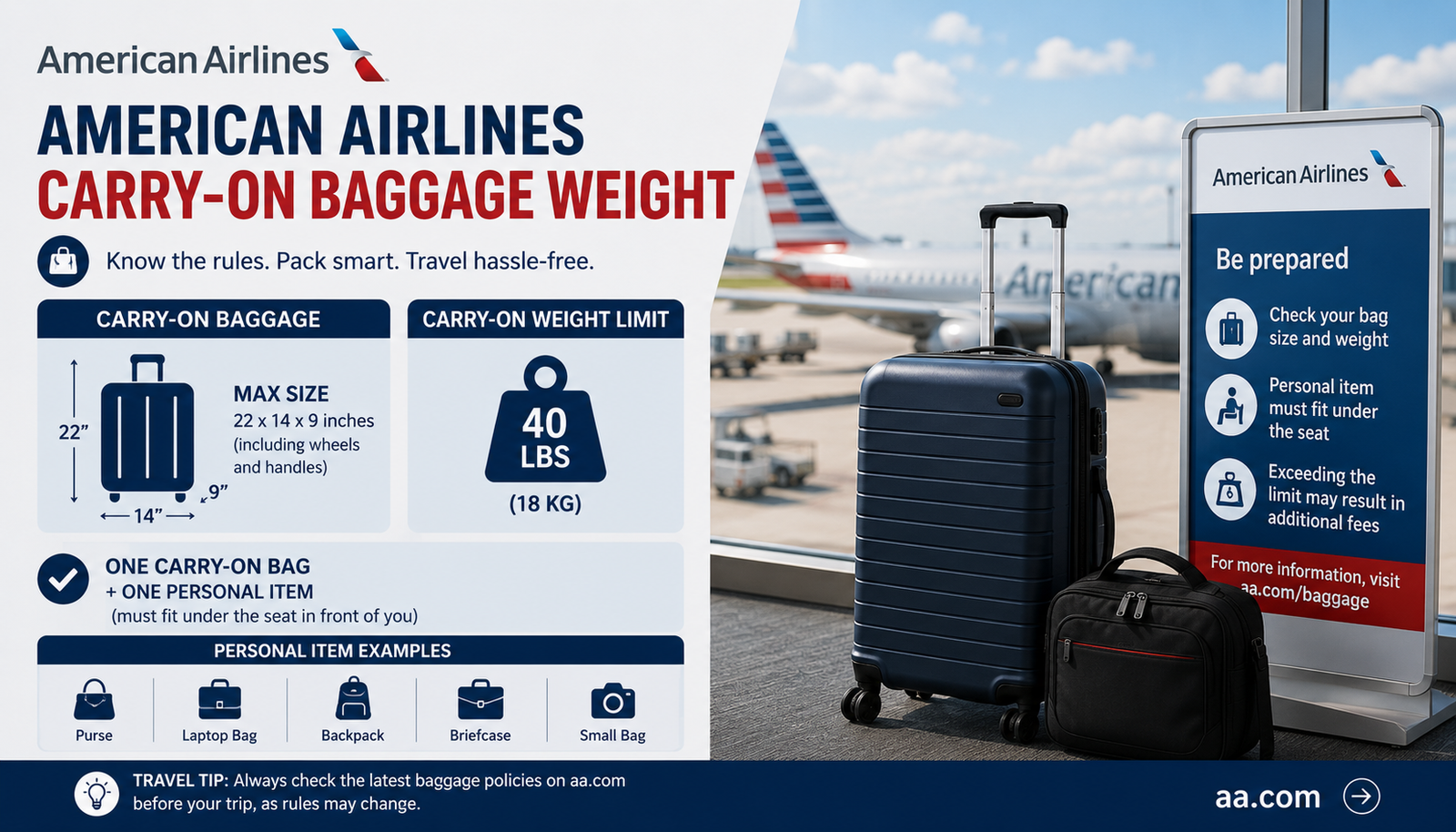
American Airlines Carry-On Baggage Weight Travelers often focus on ticket prices, boarding groups, and seat selection, but baggage policies can shape the entire airport experience. Understanding american airlines carry-on baggage weight rules helps passengers avoid gate-check surprises, additional fees, and stressful repacking moments before boarding. Whether you are flying domestically across the United States or connecting internationally, knowing the airline’s carry-on expectations can make travel smoother and more predictable.
Modern airline baggage policies continue evolving as aircraft cabins become more crowded and travelers increasingly rely on carry-on luggage instead of checked bags. American Airlines Carry-On Baggage Weight maintains relatively traveler-friendly cabin baggage standards compared with some global carriers, yet many passengers still misunderstand how size limits, personal items, and weight considerations work together. This guide breaks down every important detail in a practical, easy-to-understand format while helping travelers pack more efficiently and confidently.
Understanding American Airlines Carry-On Baggage Rules
American Airlines Carry-On Baggage Weight allows most passengers to bring one carry-on bag and one personal item onboard without additional charges. The airline primarily enforces size restrictions rather than a universal weight limit for standard domestic flights, which creates confusion among travelers researching american airlines carry-on baggage weight requirements before departure.
The carry-on bag must fit in the overhead bin, while the personal item should fit under the seat in front of you. Typical personal items include purses, laptop bags, small backpacks, or briefcases. Although weight is not routinely checked on many routes, passengers are still expected to lift their bags safely into overhead compartments without assistance from airline staff.
Official Carry-On Size Dimensions Explained
The standard carry-on dimensions for American Airlines Carry-On Baggage Weight are 22 x 14 x 9 inches, including handles and wheels. These measurements align with common U.S. airline standards and are designed to maximize overhead storage space while maintaining cabin safety and boarding efficiency.
Many travelers mistakenly assume soft bags receive more flexibility, but oversized luggage can still be denied at the gate regardless of material. Measuring your bag before travel is essential because even slightly oversized wheels or rigid handles can push luggage beyond the permitted dimensions, especially on smaller regional aircraft.
Does American Airlines Have a Carry-On Weight Limit?
One of the most searched travel questions involves whether American Airlines Carry-On Baggage Weight enforces a strict carry-on weight cap. In most cases, the airline does not publish a universal domestic weight restriction for standard cabin baggage, which means the focus remains largely on dimensions and passenger handling capability.
However, international routes may involve different limitations due to airport infrastructure, partner American Airlines Carry-On Baggage Weight, or local regulations. Certain destinations, particularly those involving smaller aircraft or codeshare agreements, may impose stricter cabin baggage weight checks. Travelers researching american airlines carry-on baggage weight policies should always verify rules for specific international itineraries before departure.
Personal Item Rules and Space Limitations
Personal items receive less attention than carry-on suitcases, yet they remain a critical part of the baggage policy. The personal item must fit completely underneath the seat ahead of you without blocking cabin pathways or reducing emergency access.
Common acceptable personal items include compact totes, camera bags, diaper bags, and slim backpacks. Oversized duffel bags disguised as personal items often trigger gate scrutiny, especially on full flights where cabin storage space becomes limited and enforcement intensifies.
Items That Do Not Count Toward Carry-On Allowance
American Airlines Carry-On Baggage Weight permits certain essential items beyond the standard carry-on and personal item allowance. Medical devices, mobility aids, diaper bags for infants, and approved assistive equipment generally do not count against standard baggage limits.
Passengers carrying jackets, umbrellas, or airport purchases may also bring them onboard in reasonable quantities. Understanding these exceptions can help travelers pack strategically while staying compliant with american airlines carry-on baggage weight expectations and cabin space restrictions.
Carry-On Rules for Basic Economy Passengers
Basic Economy travelers on American Airlines Carry-On Baggage Weight still receive access to standard carry-on privileges on most routes, which differentiates the airline from several low-cost competitors. This policy offers meaningful value for travelers hoping to avoid checked baggage expenses while flying on lower fares.
However, boarding position matters significantly for Basic Economy passengers because overhead bin space may become limited later in the boarding process. If compartments fill before boarding concludes, gate agents may require bags to be checked without advance notice.
Regional Aircraft and Limited Storage Space
Smaller regional jets create unique baggage challenges because overhead compartments often cannot accommodate standard roller bags. Even luggage meeting official size guidelines may require temporary gate-checking due to aircraft configuration limitations.
This situation commonly occurs on short-haul domestic routes operated by regional partners. Travelers should pack valuables, medications, electronics, and travel documents in easily removable sections so essential items remain accessible if cabin bags must be checked at the aircraft door.
Comparison of American Airlines Carry-On Policies
| Baggage Type | Standard Allowance | Typical Restrictions | Storage Location |
| Carry-On Bag | 1 per passenger | 22 x 14 x 9 inches | Overhead compartment |
| Personal Item | 1 per passenger | Must fit under seat | Under-seat storage |
| Medical Devices | Additional allowance | Must meet safety guidelines | Cabin-approved areas |
| Diaper Bag | Additional for infants | Reasonable size expected | Under seat or overhead |
| Duty-Free Purchases | Usually permitted | Subject to space availability | Cabin storage |
This structure gives travelers flexibility while maintaining organized cabin operations. Understanding the distinctions between baggage categories helps passengers avoid confusion during security screening and boarding procedures.
Why Weight Rules Matter Even Without Enforcement
Some passengers assume unrestricted weight means they can pack excessively heavy bags. In reality, extremely heavy luggage creates safety concerns for both travelers and airline personnel, particularly during boarding and turbulence.
Gate agents may intervene if bags appear too large or difficult to handle safely. Even without formal weighing, practical enforcement still exists. Travelers should approach american airlines carry-on baggage weight considerations realistically rather than treating the absence of routine scales as unlimited packing freedom.
Smart Packing Strategies for Carry-On Travelers
Efficient packing begins with choosing lightweight luggage rather than filling oversized hard-shell cases with unnecessary items. Compression cubes, layered clothing combinations, and travel-sized toiletries can dramatically reduce total bag bulk without sacrificing convenience.
Frequent travelers often follow the “versatile wardrobe” approach by selecting neutral clothing pieces that combine into multiple outfits. This method reduces packing volume while keeping luggage lighter and easier to maneuver through crowded terminals and connecting flights.
Best Types of Carry-On Bags for American Airlines
Four-wheel spinner luggage remains popular because it navigates airports smoothly while minimizing physical strain. Soft-sided bags provide slight flexibility during overhead storage, which can help travelers fit bags into tighter compartments on crowded flights.
Backpacks designed specifically for air travel have also gained popularity among business travelers and digital nomads. Many include laptop compartments, charging ports, and compression systems that maximize cabin storage efficiency while remaining compliant with airline sizing rules.
Common Mistakes Travelers Make
One of the most frequent mistakes involves ignoring wheel and handle dimensions when measuring luggage. Manufacturers sometimes advertise internal storage capacity rather than total exterior size, leading travelers to unknowingly exceed airline standards.
Another common issue occurs when passengers overpack expandable luggage. Bags that technically meet requirements while empty may become oversized once expanded and fully loaded, especially when packed with bulky winter clothing or souvenirs.
International Flights and Partner Airline Variations
International travel introduces additional complexity because codeshare and alliance partners may apply separate baggage policies. A flight booked through American Airlines Carry-On Baggage Weight but operated by another carrier may enforce stricter carry-on weight requirements.
Travelers connecting through international hubs should carefully review the operating airline’s rules rather than relying solely on American American Airlines Carry-On Baggage Weight standards. This becomes especially important for routes involving Europe, Asia, or smaller regional operators with limited cabin space.
Business Travelers and Cabin Efficiency
Business travelers often prioritize carry-on luggage to avoid baggage claim delays and reduce the risk of lost luggage. Rolling directly from the airport to meetings becomes significantly easier when travel essentials remain accessible throughout the journey.
Efficient carry-on packing also supports productivity by keeping electronics, documents, chargers, and presentation materials within reach. Professionals who frequently fly American Airlines Carry-On Baggage Weight often develop highly refined packing systems tailored around airline dimension standards.
Family Travel and Carry-On Challenges
Families face unique challenges when balancing children’s items, entertainment, snacks, and essential travel supplies within cabin baggage limits. Parents frequently rely on strategic distribution of items across multiple approved personal bags and carry-ons.
Traveling with children may also involve strollers, diaper bags, and child safety equipment, some of which receive special handling accommodations. Understanding these exceptions can significantly reduce stress during airport transitions and boarding procedures.
TSA Screening and Packing Efficiency
Even perfectly sized bags can create delays if packed inefficiently for security screening. Liquids, electronics, and prohibited items remain among the most common causes of TSA inspection delays for carry-on passengers.
Keeping laptops accessible and organizing liquids in compliant transparent bags can accelerate checkpoint processing considerably. Travelers focused on american airlines carry-on baggage weight should also remember that dense, cluttered bags often trigger additional manual inspections.
Seasonal Travel and Carry-On Considerations
Winter travel presents particular challenges because coats, boots, and layered clothing consume substantial luggage space. Travelers often underestimate how quickly cold-weather items increase carry-on bulk and reduce available packing capacity.
Summer travelers encounter different issues, including sunscreen liquid limits, sports equipment, and higher passenger volumes on vacation routes. Seasonal demand can influence boarding efficiency and overhead compartment availability on popular flights.
The Rise of Carry-On-Only Travel
Over the past decade, many travelers have intentionally shifted toward carry-on-only strategies to save time and reduce airline fees. Social media, minimalist travel trends, and remote work flexibility have accelerated interest in lighter, more mobile travel habits.
This trend has increased competition for overhead bin space across the airline industry. As cabins become fuller, enforcement of sizing policies may become more consistent even if strict weighing procedures remain uncommon on many American Airlines Carry-On Baggage Weight routes.
How Frequent Flyers Optimize Cabin Packing
Experienced travelers often maintain pre-packed travel kits containing chargers, adapters, toiletries, and travel essentials. This reduces packing errors while improving consistency across repeated trips.
Many frequent flyers also intentionally leave unused space in carry-ons for airport purchases or return-trip flexibility. Overstuffed luggage becomes harder to fit into overhead compartments and increases the likelihood of gate-checking on crowded flights.
Airport Boarding Dynamics and Overhead Space
Boarding order plays a surprisingly important role in carry-on success. Passengers boarding early usually secure nearby overhead space, while later groups may need to store bags several rows away from assigned seats.
This issue becomes especially relevant on fully booked flights and busy holiday travel periods. Travelers concerned about cabin storage often purchase priority boarding upgrades specifically to improve overhead bin access and reduce stress during boarding.
Accessibility and Mobility Considerations
Passengers with medical equipment or mobility needs receive additional accommodation protections under airline and federal regulations. Devices such as CPAP machines, wheelchairs, and assistive mobility aids generally receive separate handling allowances.
Understanding these rights can help travelers navigate airport procedures more confidently. Clear communication with airline staff before departure often simplifies boarding arrangements and minimizes confusion regarding special equipment.
Travel Expert Perspective on Carry-On Policies
Travel consultants frequently advise clients to prioritize consistency over maximizing packing volume. A slightly smaller, well-organized bag often performs better than oversized luggage packed to absolute capacity.
As travel strategist Rick Steves famously noted, “You’ll never meet a traveler who, after five trips, wishes they had packed more.” That philosophy aligns closely with practical approaches to managing american airlines carry-on baggage weight considerations while maintaining comfort and flexibility.
Technology and Modern Travel Organization
Technology has transformed how travelers manage cabin baggage preparation. Mobile apps now help passengers track packing lists, monitor baggage dimensions, and verify airline-specific requirements before departure.
Smart luggage innovations have also emerged, including built-in scales, charging ports, and GPS tracking systems. While convenient, travelers should ensure these features comply with airline battery regulations and safety standards before flying.
Choosing Between Checked Bags and Carry-Ons
Carry-on travel offers convenience, but checked baggage remains beneficial for long trips, bulky equipment, or international journeys involving multiple climate zones. The ideal strategy depends on trip duration, flexibility, and personal travel style.
Some travelers intentionally combine a compact carry-on with a lightweight checked suitcase to balance mobility and storage capacity. This hybrid approach reduces cabin stress while preserving access to critical travel essentials during flights.
Airline Policy Changes and Future Trends
Airline baggage policies continue evolving alongside changing traveler behavior and aircraft design. As passenger demand for cabin space grows, American Airlines Carry-On Baggage Weight may introduce more advanced storage systems or revised boarding strategies.
Future developments could include expanded digital baggage verification tools, automated sizing technology, or enhanced overhead compartment designs. Staying informed about policy updates helps travelers avoid unexpected disruptions and remain compliant with changing standards.
Practical Packing Checklist for American Airlines Flights
Travelers benefit from preparing a consistent pre-flight checklist before every journey. Verifying dimensions, reviewing liquids, charging electronics, and organizing travel documents can prevent last-minute airport complications.
A thoughtful checklist also reduces the temptation to overpack. Many travelers discover they consistently use only a fraction of the items initially placed in their carry-on bags, especially on short domestic trips.
Misconceptions About Carry-On Weight Rules
One widespread misconception is that absence of weighing means no practical limitations exist. In reality, visibly oversized or excessively heavy bags can still create boarding issues and attract attention from gate personnel.
Another misunderstanding involves assuming all international flights follow identical standards. Different destinations, airport authorities, and partner American Airlines Carry-On Baggage Weight may apply separate rules, making itinerary-specific research essential before travel.
Conclusion
Understanding american airlines carry-on baggage weight policies goes beyond memorizing a single number or size limit. Successful cabin travel depends on balancing airline requirements, smart packing habits, boarding strategy, and realistic expectations about overhead space availability. American Airlines Carry-On Baggage Weight generally emphasizes bag dimensions rather than strict domestic weight enforcement, but travelers should still pack responsibly and remain aware of route-specific variations.
Modern travel rewards flexibility and preparation. Passengers who choose properly sized luggage, organize belongings strategically, and understand airline expectations enjoy smoother airport experiences with fewer delays and less stress. Whether traveling for business, family vacations, or international adventures, mastering carry-on rules can significantly improve the overall journey.
FAQ Section
What is the official American Airlines carry-on size limit?
American Airlines Carry-On Baggage Weight measuring up to 22 x 14 x 9 inches, including wheels and handles. These dimensions help ensure the bag fits safely in overhead compartments.
Does American Airlines enforce a carry-on weight limit?
For most domestic routes, there is no published universal american airlines carry-on baggage weight restriction. However, passengers must be able to lift bags safely into overhead bins without assistance.
Can Basic Economy passengers bring a carry-on bag?
Yes, most Basic Economy passengers on American Airlines Carry-On Baggage Weight may bring one standard carry-on and one personal item onboard without additional fees.
Are backpacks considered personal items?
Small backpacks can qualify as personal items if they fit completely underneath the seat in front of you. Larger travel backpacks may count as standard carry-ons instead.
What happens if my carry-on is too large?
Oversized carry-on luggage may need to be checked at the gate. This can delay boarding and may involve additional fees depending on the route and fare type.
Do international American Airlines flights have different baggage rules?
Some international routes and partner-operated flights may apply different american airlines carry-on baggage weight standards. Travelers should always verify rules for their exact itinerary before departure.
Can I bring medical devices in addition to my carry-on?
Yes, approved medical devices and assistive equipment generally do not count toward standard baggage allowances, provided they meet safety requirements.
You May Also Read Droven IO Artificial Intelligence News


